
What Kind of Feeder Has Side Holes?
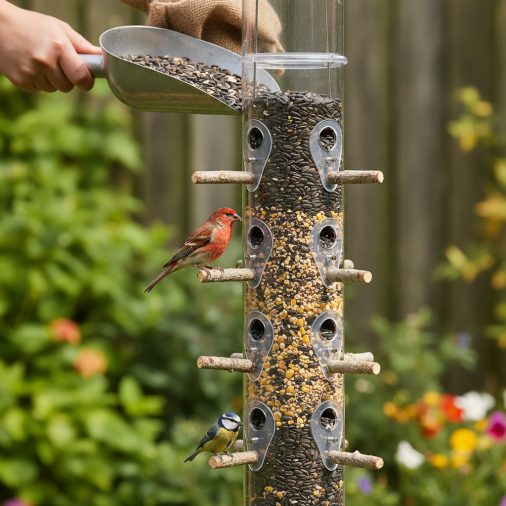
Tools That Make Filling Easier
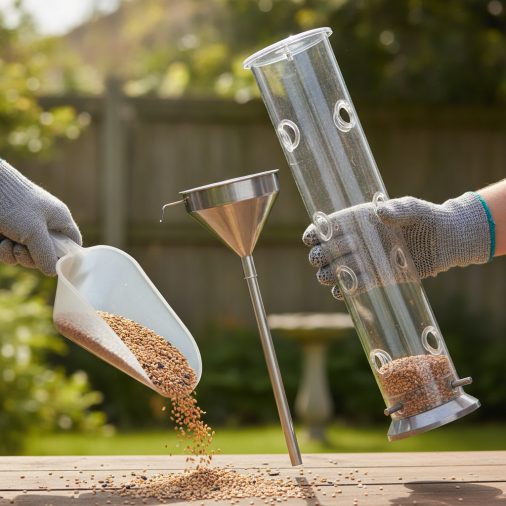
Step-by-Step: How to Fill a Tall Bird Feeder With Side Holes
1. Remove the feeder from the pole or hook if possible. This gives you better control and reduces mess. 2. Check for old or damp seed before adding fresh seed. If you find compacted, wet, or moldy seed near the ports or at the bottom, empty the feeder completely and clean it before refilling. 3. Remove the top cap or lid. Most tube feeders have a twist-off or pull-off cap. Some have a hanger wire that threads through the cap—set this aside carefully so you don’t lose it. 4. Use a funnel or narrow-spouted scoop to guide seed into the tube. Pour slowly and steadily. 5. Fill only to just below the lowest feeding port. This is the most important step. Seed packed above the port openings can block birds from accessing the ports and traps moisture inside the tube. Seed at or just below the lowest port is accessible and rotates naturally. 6. Replace the cap firmly. A loose cap allows rainwater in, which ruins seed quickly. 7. Rehang or remount the feeder and check that it hangs straight. A tilted feeder causes seed to settle unevenly and may block some ports.Why Overfilling Causes Problems
Overfilling is the most common mistake with side-port tube feeders. When seed is packed tightly above the ports, several problems develop. Moisture becomes trapped in the upper portion of the tube where air circulation is poor. This causes seed to clump, ferment, or develop mold—which can be harmful to birds. House finches (Haemorhous mexicanus) in particular are susceptible to a contagious eye disease called Mycoplasmal conjunctivitis, which spreads more easily at unsanitary feeders. Keeping seed fresh and feeders clean significantly reduces this risk. Overfilling also creates pressure against the feeding ports, making it harder for smaller birds like American goldfinches (Spinus tristis) and pine siskins (Spinus pinus) to pull seed out cleanly.Matching Seed Type to Port Size
The size of the side holes matters when choosing which seed to use. Using the wrong seed in the wrong feeder is a common source of frustration.| Port Size | Recommended Seeds | Common Birds Attracted |
|---|---|---|
| Small (1/8"–1/4") | Nyjer (thistle), fine millet | American goldfinch, pine siskin, common redpoll |
| Medium (1/4"–3/8") | Black-oil sunflower, safflower | Chickadees, nuthatches, house finch |
| Large (3/8"–1/2"+) | Striped sunflower, mixed blends | Cardinals, grosbeaks, jays |
How Often to Refill and When to Clean
How quickly a tall side-port feeder needs refilling depends on local bird activity, feeder capacity, and weather. During peak migration periods in spring and fall, a well-visited feeder can empty in a day or two. During winter, activity may be slower depending on what other food sources are available. A practical rule is to check the feeder every two to three days. If seed is sitting at the same level for more than a week without being touched, it may be getting old, wet, or the birds haven’t yet discovered the feeder. Cleaning should happen at least once a month, or more often during wet or humid weather. Remove all seed, disassemble the feeder where possible, and wash it with a solution of one part bleach to nine parts water. Rinse thoroughly and allow the feeder to dry completely before refilling—putting seed into a damp feeder is one of the quickest ways to cause mold.Filling a Feeder That’s Still on a Tall Pole
Some tall feeders mounted on poles are genuinely difficult to take down for refilling, particularly if the pole is driven deeply into the ground. If your feeder stays mounted while you fill it, a few adjustments help. Using a seed scoop with an extended handle or a flexible-neck funnel gives much better control when pouring from below or at an angle. Pouring slowly in short bursts rather than one continuous pour reduces the chance of spilling seed over the edge of the opening. If you find this consistently difficult, it may be worth reconsidering the pole height or setup. Getting the right height for your bird feeder pole makes a real practical difference, balancing bird safety from ground predators with your ability to maintain and fill the feeder comfortably.Preventing Seed Blockages at the Ports
Seed can sometimes clump and block the side ports, particularly in humid climates or after rain. This is especially common with nyjer seed, which absorbs moisture quickly and can become sticky. If you notice birds pecking repeatedly at a port without getting seed, use a thin skewer, chopstick, or a port-cleaning brush to gently break up the blockage from outside the port. Many tube feeder manufacturers sell small port-cleaning brushes as accessories. Selecting a feeder with a built-in seed agitator or ventilation at the base also helps with airflow, reducing the chance of compaction. Some feeders, like the Brome Bird Care Squirrel Buster Standard tube feeder, have design features that allow seed to flow more freely through the ports while also closing under the weight of squirrels—a useful combination.Keeping Squirrels Out While You Fill and After
Tall feeders on poles are a natural target for squirrels. The process of filling a feeder can also temporarily attract squirrels if seed spills onto the ground below. Try to collect or sweep up any spilled seed after filling. Choosing a squirrel-proof pole bird feeder with a weight-sensitive port closure or a pole-mounted baffle below the feeder significantly reduces squirrel access. If squirrels are already a serious problem at your setup, a squirrel-proof feeder mounted on a pole with a baffle addresses the issue more completely than either solution alone.FAQ
Can I mix different seeds in a tube feeder with side holes? You can, but it often leads to waste. Birds tend to toss aside seeds they don’t want to reach the ones they prefer, which scatters seed on the ground. A better approach is to fill the feeder with one seed type that suits the port size and the birds you most want to attract. Why are birds not using my feeder after I refilled it? Several things can cause this. Birds may need a few days to discover a newly filled feeder, especially if it was empty for a while. Seed type mismatch, a location that feels exposed or unsafe, or nearby disturbances can all slow adoption. Check that the seed is fresh and that the ports are clear and accessible. How do I know if the seed inside the feeder has gone bad? Spoiled seed often smells musty or sour. You may also notice clumping, discoloration, or visible mold inside the tube when you look through the clear wall. If seed has been sitting in a feeder through extended rain without being eaten, it’s worth emptying and replacing it even if it looks fine from the outside. Is it okay to top off a feeder without emptying the old seed? Occasionally topping off is fine if the existing seed is dry and fresh. However, adding new seed on top of older seed means the older seed at the bottom never gets used. Over time, this creates a layer of stale or moldy seed at the base. Emptying fully before refilling is the better practice, even if it takes a little more time. What’s the best time of day to refill a bird feeder? Early morning is generally ideal. Many birds are actively feeding at dawn, so having the feeder full first thing captures peak activity. Refilling in the evening is also practical if mornings are busy—most feeders will hold seed safely overnight, though very warm and humid conditions can increase the risk of overnight spoilage. Does the color or material of a tube feeder affect how birds find it? Color can play a minor role in initial feeder discovery, but birds rely primarily on location, food type, and familiarity once a feeder is established. Clear acrylic feeders let birds see the seed inside, which may help them recognize the feeder more quickly. UV-stabilized materials tend to hold up better outdoors and resist cracking over time. How do I stop rain from getting into the side ports? Some tube feeders come with small port covers or weather guards that deflect rain away from the openings. A roof or dome baffle mounted above the feeder provides additional protection. Positioning the feeder under a tree canopy or near a structure that provides partial cover also helps, as long as it doesn’t create easy access for squirrels.Getting the fill level right—seed just below the lowest port—is the single most impactful habit for maintaining a healthy, productive tube feeder. Pair that with regular cleaning and the right seed-to-port match, and most of the common problems with side-hole feeders simply disappear. If you’re working with a mounted setup and find access tricky, reconsidering your tall bird feeder pole setup can make routine maintenance much easier over the long run.




