
If you want to attract more birds to your garden, a good bird bath is a must-have. But what exactly makes a bird bath stand out?
Is it the shape, the size, or something else entirely? You might think any shallow bowl will do, but there’s more to it than meets the eye. You’ll discover the key features that make a bird bath safe, inviting, and easy for birds to use.
By the end, you’ll know exactly how to choose or create the perfect bird bath that will keep your feathered visitors coming back again and again. Ready to turn your yard into a bird’s favorite hangout? Let’s dive in!

Credit: www.allaboutbirds.org
Choosing The Right Material
Choosing the right material for a bird bath affects its usefulness and safety. The material impacts how long it lasts, how easy it is to clean, and how well it handles outdoor weather. Picking the best material helps create a safe, inviting spot for birds.
Durability And Safety
Durable materials resist cracks and breaks from frequent use. Safe materials do not have sharp edges or toxic finishes. Birds need a stable bath that won’t tip or harm them. Materials like stone, concrete, and thick ceramics offer strong support. Avoid thin glass or fragile plastics that can break easily.
Easy To Clean Surfaces
Bird baths must be cleaned often to prevent algae and bacteria. Smooth surfaces make scrubbing easier and faster. Materials such as glazed ceramic and metal have less texture. Rough or porous materials trap dirt and require more effort to clean. Choose a surface that allows quick rinsing and scrubbing.
Weather Resistance
Outdoor bird baths face sun, rain, frost, and wind. Materials should resist fading, cracking, and warping. Stone and metal hold up well in different weather conditions. Plastic can fade or become brittle in sun exposure. Avoid materials that absorb water, as freezing can cause damage.
Ideal Size And Depth
The ideal size and depth of a bird bath play a crucial role in attracting and keeping birds safe. Birds need enough space to splash and bathe comfortably. At the same time, water depth should suit different bird species and avoid any risks. A well-designed bird bath balances these factors for the best results.
Accommodating Different Bird Species
Birds vary in size and bathing habits. Smaller birds prefer shallow water, usually less than 2 inches deep. Larger birds need slightly deeper water, up to 3 inches. A wide basin helps many birds bathe at once without crowding. A gently sloped bottom allows birds of all sizes to access the water easily.
Preventing Drowning Risks
Shallow water reduces drowning dangers for small birds. A depth over 3 inches can be risky. Adding stones or gravel at the bottom creates perches. Birds can stand safely without slipping. Regular cleaning prevents slippery algae buildup, keeping the bird bath safe and inviting.
Water Quality And Maintenance
Keeping the water in your bird bath clean and fresh is key to attracting birds and keeping them healthy. Dirty or stagnant water can discourage birds from visiting and even harm them. Paying attention to water quality and regular maintenance ensures your bird bath remains a safe and inviting spot.
Regular Cleaning Routine
Set a schedule to clean your bird bath at least once a week. Use a scrub brush and mild soap to remove dirt, debris, and any bird droppings. Rinse thoroughly to make sure no soap residue remains, as this can be harmful to birds.
During hot weather, you may need to clean more often to prevent buildup. I noticed my local bird bath got murky quickly in summer, and after increasing cleaning frequency, more birds returned happily.
Fresh Water Supply
Changing the water daily or every other day keeps it fresh and appealing. Birds prefer moving or fresh water, so avoid letting it sit too long. If you have a fountain or dripper, it helps keep the water circulating and fresher longer.
Have you ever seen birds flock to a dripping faucet or a gently flowing fountain? That’s because fresh water signals safety and quality to them.
Avoiding Algae Growth
Algae can make your bird bath slippery and unattractive to birds. To prevent algae, place the bath in a shaded area, limiting direct sunlight that encourages growth. You can also add natural solutions like a few drops of apple cider vinegar to discourage algae without harming birds.
Scrubbing algae off regularly keeps the surface clean and safe. Have you tried using natural methods to keep your bird bath algae-free? It’s surprising how simple changes can make a big difference.
Placement For Comfort And Safety
Choosing the right spot for your bird bath is more than just picking an empty corner in your garden. Placement affects how often birds visit and how safe they feel while drinking or bathing. You want a location that invites birds to stay longer and return often, all while keeping them protected.
Sunlight And Shade Balance
Birds need both warmth and coolness when they visit your bird bath. Placing the bath where it gets morning sunlight and afternoon shade can help keep the water fresh and comfortable. Too much sun heats the water quickly, which might drive birds away, while too much shade can make the water cold and less inviting.
Think about how sunlight moves through your yard during the day. Have you noticed how some spots stay cool and others bake under the sun? Position your bird bath to catch gentle sunlight without overheating.
Protection From Predators
Birds feel safest when they can spot danger early. Avoid placing your bird bath too close to thick bushes or tall fences where cats and other predators might hide. A clear line of sight around the bath helps birds relax and enjoy their time without constant fear.
Adding some nearby perches, like low branches or garden stakes, lets birds quickly escape if needed. Have you seen how birds often dart to the nearest tree after bathing? Providing easy escape routes makes your bird bath a trusted spot.
Visibility For Birds
Your bird bath should be easy for birds to find and see from the air. Open areas near trees or shrubs attract more visitors because birds can spot water from afar and feel safe landing nearby. Avoid placing the bath where it’s hidden behind large objects or deep inside dense foliage.
Try observing your yard from a window or balcony. Where do you see the most bird activity? Placing your bath in these visible spots increases the chances of frequent visits and lively birdwatching sessions for you.
Adding Natural Elements
Adding natural elements to a bird bath creates a welcoming space for birds. These elements make the bath look like part of the garden. Birds feel safer and more comfortable in natural settings. Natural touches also attract more birds to visit and stay longer. Simple additions can make a big difference in the bird bath’s appeal.
Incorporating Plants Nearby
Planting shrubs or flowers near the bird bath offers shelter and food. Choose native plants that birds know and like. Plants provide shade and protection from predators. They also attract insects, a food source for many birds. Keep plants trimmed to avoid blocking the bird bath.
Using Rocks And Pebbles
Place rocks or pebbles at the base or inside the bird bath. These give birds better footing and prevent slipping. Small stones create shallow areas for smaller birds. Rocks help the water stay cleaner by slowing splashes. Choose smooth stones to avoid hurting the birds’ feet.
Creating Perching Spots
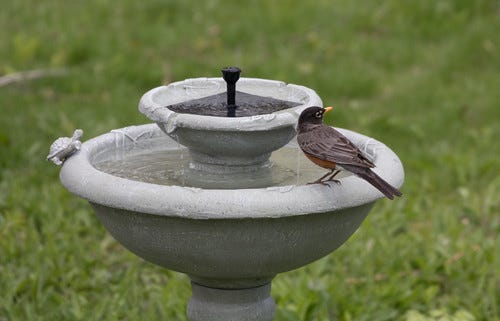
Birds love places to perch near water. Add small branches or sticks around the bath’s edge. Perches let birds watch for danger and rest between dips. Position perches at different heights for various bird sizes. Natural wood works best to blend with the environment.
Credit: lauraerickson.substack.com
Seasonal Adjustments
Seasonal adjustments are crucial for maintaining a good bird bath. Birds rely on these baths throughout the year, and each season brings unique challenges. Adjusting your bird bath according to the season ensures that it remains inviting and safe for birds.
Winter Care Tips
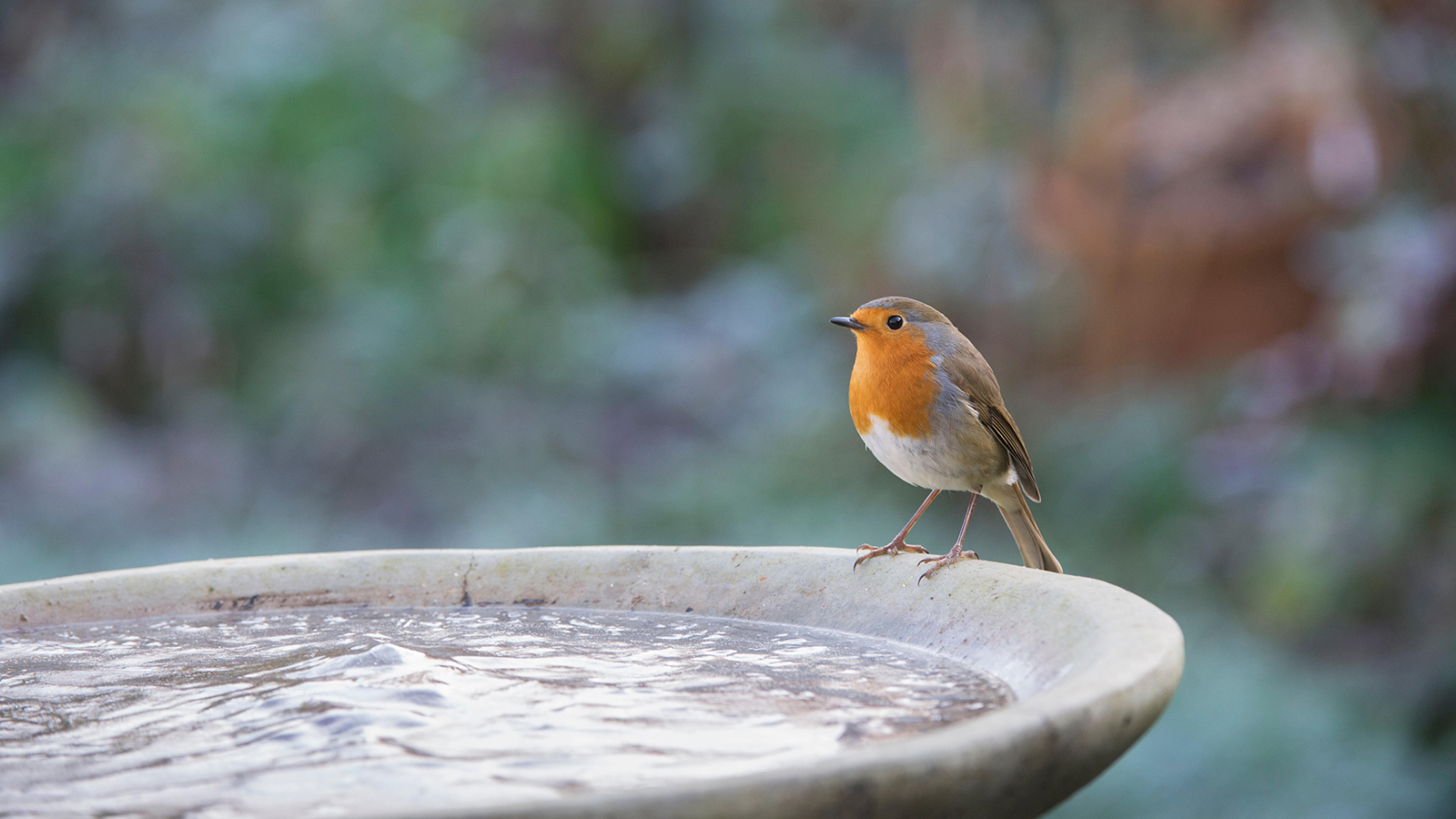
Winter can freeze bird baths, making them unusable. Keep water from freezing by using a bird bath heater. These heaters are safe and effective. Choose a heater that suits your bird bath’s size.
Place the bird bath in a sunny spot. Sunlight helps keep the water slightly warmer. Ensure the bath is clean to prevent algae and bacteria growth.
Summer Cooling Strategies
Summer heat can evaporate water quickly. Refill the bird bath regularly to keep it full. Use a mister or dripper. These tools attract birds with moving water and keep it cool.
Place the bird bath in a shaded area. This helps maintain cooler water temperatures. Clean the bird bath often. Warm water can breed harmful bacteria quickly.
Credit: www.homesandgardens.com
Frequently Asked Questions
What Size Is Ideal For A Bird Bath?
An ideal bird bath size is 12 to 20 inches in diameter. This size accommodates most birds comfortably. It provides enough space for bathing and drinking. A shallow basin with gradual depth is essential for bird safety.
What Materials Make The Best Bird Baths?
Durable, non-toxic materials like ceramic, stone, and metal work best. These materials withstand weather and are easy to clean. Avoid plastics that can degrade or leach chemicals. Proper material choice ensures longevity and bird safety.
How Deep Should A Bird Bath Be?
A bird bath should have water no deeper than 2 inches. Shallow water prevents drowning and attracts more bird species. Gradual depth variations help different birds access water safely. Regularly check water depth to maintain safety.
Where Should I Place My Bird Bath?
Place your bird bath in a quiet, shaded area near shrubs. This location provides shelter and quick escape routes for birds. Avoid direct sun to prevent water overheating. Positioning affects bird visits and their comfort.
Conclusion
A good bird bath attracts birds and keeps them safe. It holds clean, fresh water at the right depth. The design should be stable and easy to clean. Birds enjoy a quiet, sheltered spot to bathe. Choosing the right bird bath helps your garden come alive.
Small details make a big difference for happy birds. A simple, well-made bird bath welcomes nature to your yard.




