
Yes, hummingbird feeders can be in the same yard as other bird feeders, but they should not be crowded into one feeding area. Hummingbirds may continue using a nectar feeder near seed or suet feeders, yet larger, noisier birds can block access or make the area feel unsafe. As a practical starting point, place hummingbird feeders about 10 to 15 feet from seed or suet feeders when your space allows.
That distance is a guideline rather than a universal rule. The best arrangement depends on the size of your yard, the feeder types, nearby perches and cover, and how the birds behave. In a small yard, even a few feet of separation can help if each station has a clear approach. If you see repeated chasing, crowding, or hummingbirds hovering without landing, move the feeding stations farther apart.
For multiple hummingbird feeders, spreading them around the yard is often more effective than placing them side by side. Separate stations reduce direct competition, make food areas easier to maintain, and give less dominant hummingbirds another opportunity to feed.
Ideal Distance Between Feeders
Distance matters because hummingbirds can defend a productive nectar source as a territory. When a seed, suet, or second nectar feeder is close enough to be treated as part of the same area, one bird may attempt to control access to both. Larger birds may also occupy the approach or nearby perch, preventing a hummingbird from landing.
A separation of roughly 10 to 15 feet between a hummingbird feeder and a seed or suet feeder is a useful place to start. It is not a strict minimum supported for every backyard. Some birds remain territorial across greater distances, while limited space may require feeders to be closer. Use the measurement as a planning aid, then let bird behavior guide adjustments.
Do not put every feeder on the same pole or in one tight cluster. Use separate poles, branches, or parts of the yard. Shrubs and trees can provide visual separation, but they should not block a hummingbird’s flight path or make the feeder difficult to see. A nearby perch can give a hummingbird a place to rest and watch for competitors.
Factors Influencing Feeder Placement
- Species behavior: Hummingbirds, especially males, may defend nectar aggressively. Larger birds may also dominate a busy station.
- Feeder type: Seed, suet, and nectar feeders attract different species and create different levels of movement and noise.
- Space availability: A small garden may require closer placement, so observe the birds rather than relying on one fixed number.
- Visibility: Feeders should be easy to find, but not so close that every bird is forced into the same flight path.
- Approach and cover: Hummingbirds need an unobstructed route to the feeder, with suitable nearby cover or perches.
- Cleanliness: Separate stations make it easier to manage spilled seed, leaking nectar, and spoiled food.
How to Adjust the Spacing
Begin with the hummingbird feeder in a quiet, visible location and place seed or suet feeders in another part of the yard. Change one element at a time so you can tell whether a new position improves visits. If hummingbirds continue arriving, landing, and leaving normally, the arrangement is probably working.
Move stations farther apart if one bird repeatedly guards the hummingbird feeder, larger birds block the approach, or hummingbirds wait without landing. If a feeder receives fewer visits after relocation, make a small adjustment toward a more visible, sheltered position instead of moving everything at once.
Hummingbird Behavior Near Feeders
Hummingbirds may visit several food sources during the day, but that does not mean they will share them peacefully. Their response depends on the individual bird, the availability of natural flowers, the position of perches, and how easily one bird can monitor the feeding area.
Territorial Nature
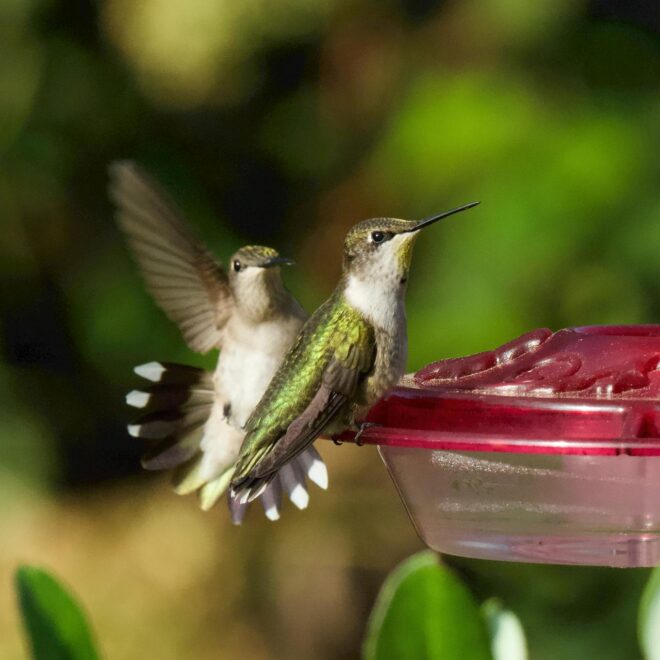
Hummingbirds are famously territorial, especially males. They may guard a productive feeding spot with rapid chases and aerial displays. If two nectar feeders are close together, a dominant bird may treat them as one resource and attempt to control both.
This behavior does not necessarily make a feeder unusable. Other hummingbirds may wait for an opening or visit while the territory holder is away. However, frequent chasing can prevent less dominant birds from feeding. Distributing feeders around the yard makes it harder for one bird to monitor every station.
Full feeders and abundant flowers may reduce competition at some times, but they do not eliminate territorial behavior. Look for practical warning signs: repeated chases, a bird guarding a feeder for long periods, hummingbirds hovering without landing, or a sudden drop in visits. These signs suggest that a different location or greater separation may help.
Feeding Patterns
Hummingbirds feed frequently and often make short visits to several feeders. They favor nectar sources that are easy to find and approach. A feeder hidden behind a busy seed station or positioned on a crowded flight path may be less appealing than one in a quiet, open location.
Try placing hummingbird feeders in separate visible areas rather than lining them up beside one another. This creates distinct feeding zones and can reduce overlap between aggressive birds. If you have more than one nectar feeder, spreading them out may give less dominant hummingbirds another option.
Fresh nectar also supports a consistent feeding routine. Refill with fresh nectar regularly and change the schedule in hot weather. Spacing cannot compensate for a feeder that is dirty, leaking, or filled with spoiled nectar.
Types Of Other Bird Feeders
The type of neighboring feeder affects the amount of activity around a hummingbird feeder. Consider both the food and the birds each station attracts before choosing a location.
Seed Feeders
Seed feeders attract birds such as finches, sparrows, and cardinals. Tube and hopper feeders can bring several birds into a small area, particularly when seed is plentiful. Their movement and noise may make a nearby hummingbird feeder less comfortable for a cautious bird.
Place seed feeders away from hummingbird feeders when possible. This gives larger birds their own feeding area and reduces the chance that a flock will block the nectar feeder. Clean up spilled seed beneath the station as well, since fallen food can increase activity and create additional mess.
Suet Feeders
Suet feeders attract birds such as woodpeckers, nuthatches, and chickadees. These birds may cling, peck, and move actively around the feeder. Their presence is not automatically harmful to hummingbirds, but a suet station can make a small shared space feel crowded.
Hang suet feeders in a separate area where larger birds can feed without crossing directly in front of the hummingbird feeder. Separation also helps keep suet residue and other food debris away from nectar.
Nectar Feeders
Other nectar feeders are designed for hummingbirds, so they do not create the same size difference as seed or suet feeders. Even so, several nectar feeders placed close together can become one defended feeding zone. A territorial hummingbird may chase competitors away from each feeder in the group.
If you want to offer more than one nectar feeder, distribute them around the yard rather than clustering them on one pole. Inspect each feeder regularly because warm conditions, leaks, and heavy use can require more frequent cleaning and refilling.

Credit: www.reconnectwithnature.org
Benefits Of Separate Feeding Stations
Separate feeding stations let you serve different birds without forcing them to share one crowded location. They also make it easier to observe each species and maintain each type of feeder. A hummingbird feeder can have a quiet, open approach while seed and suet feeders are placed where larger birds are less likely to interfere.
Reducing Competition
Hummingbirds have different feeding habits from birds that eat seed or suet. A finch or sparrow may remain at a feeder for longer, while a hummingbird usually makes a brief visit and leaves. If both food sources are in the same tight area, larger birds may discourage hummingbirds from landing.
Separate stations give hummingbirds a better chance to reach nectar without competing directly for space. They can also help you identify which feeder is causing a problem and provide room for an additional nectar feeder elsewhere if one station becomes heavily defended.
Preventing Aggression
Food scarcity can increase competition, but separation can help even when feeders are full. A larger bird does not need to attack a hummingbird for its presence to disrupt feeding; occupying the approach or a favored perch may be enough to make the smaller bird leave.
Move stations apart if you see repeated chases, birds waiting without landing, or one hummingbird controlling several nectar feeders. The most useful layout is the one that allows different birds to feed with fewer interruptions.
Tips For Attracting Hummingbirds
Attracting hummingbirds involves more than adding a feeder. Choose a location that is visible, convenient to approach, and simple to maintain. Then use the birds’ response to decide whether the arrangement needs improvement.
Feeder Placement Strategies
- Place hummingbird feeders in a quiet, sheltered spot away from heavy foot traffic.
- Keep them visible and near flowers or natural plants while leaving a clear flight path.
- Use partial shade where possible to help nectar stay fresh longer.
- Start with about 10 to 15 feet between hummingbird and seed or suet feeders when your space permits.
- Spread multiple hummingbird feeders through the yard instead of putting them all together.
- Provide nearby perches where hummingbirds can rest and watch the area.
- Use shrubs or trees as natural visual barriers, but do not block access to the feeder.
Feeder Maintenance
Clean hummingbird feeders every few days, and clean them sooner when nectar looks cloudy, the weather is hot, or the feeder has been heavily used. Warm water and mild soap are suitable for routine cleaning; rinse thoroughly before adding fresh nectar. Check ports for buildup and make sure cracks or leaks are repaired.
Change nectar every two to three days, or more often in hot weather. Do not leave old nectar in the feeder simply because some remains. Regular cleaning and fresh nectar help prevent mold and bacterial growth. Cleaning up spilled nectar can also reduce unwanted insect activity near the feeding station.

Credit: www.hummingbirdsociety.org
Common Mistakes To Avoid
Most placement problems come from treating all feeders as one feeding area or relying on a fixed distance without watching the birds. A thoughtful layout and consistent maintenance are more useful than a single measurement.
Overcrowding Feeders
Putting seed, suet, and nectar feeders on the same pole or within a very small area can create competition and blocked flight paths. It may also encourage a dominant hummingbird or larger bird to control access to several food sources. Spread stations out, starting with the 10- to 15-foot guideline where practical, and increase the distance if aggression continues.
Ignoring Feeder Hygiene
Dirty feeders can develop mold and bacterial buildup. Clean them regularly with warm water and mild soap, rinse away all residue, and replace nectar on a consistent schedule. Also clean up spilled seed and nectar around the feeding area. Good hygiene protects the usefulness of every station and makes it easier to notice when food has spoiled.
Credit: www.birdwatchingdaily.com
Frequently Asked Questions
Can Hummingbird Feeders Be Placed Near Other Bird Feeders?
Yes. They can share a yard, but separate feeding stations are usually preferable. Begin with about 10 to 15 feet between a hummingbird feeder and seed or suet feeders when possible. In a small yard, place them as far apart as you can and monitor bird behavior.
Will Other Birds Disturb Hummingbirds At Feeders?
They may. Larger or more numerous birds can crowd the approach, occupy nearby perches, or make a hummingbird leave. Separate the stations and move them farther apart if you see repeated disturbance.
How Close Is Too Close For Hummingbird Feeders?
There is no universal cutoff. Feeders only a few feet apart may work in some yards, while even greater spacing may not stop territorial chasing. If one hummingbird guards multiple feeders, distribute the feeders more widely.
Do Hummingbirds Prefer Feeders Away From Larger Birds?
They often benefit from a quieter area away from busy seed and suet stations. A clear approach, nearby perch, and fresh nectar are also important. Use the birds’ response to decide whether your current placement is comfortable.
Conclusion
Hummingbird feeders can be near other bird feeders, but they should not be crowded together. Start by separating hummingbird feeders from seed and suet feeders by about 10 to 15 feet when space allows. If your yard is smaller, create as much separation as possible, use natural visual barriers, and watch for chasing or blocked access.
For multiple hummingbird feeders, spreading them throughout the yard is often more helpful than placing them side by side. Keep nectar fresh, clean feeders regularly, and adjust locations when bird behavior shows that competition is too high. With a little observation, you can create separate, inviting feeding areas for hummingbirds and other backyard birds.




