
Have you ever wished you could see a whole scene from above, like a bird soaring high in the sky? That’s exactly what a Birds Eye View Drawing lets you do.
It gives you a unique perspective, showing everything from the top down. Whether you’re planning a space, designing a project, or just curious, understanding this type of drawing can change the way you see things. Keep reading, and you’ll discover how a simple shift in perspective can open up a whole new world of ideas and possibilities for you.
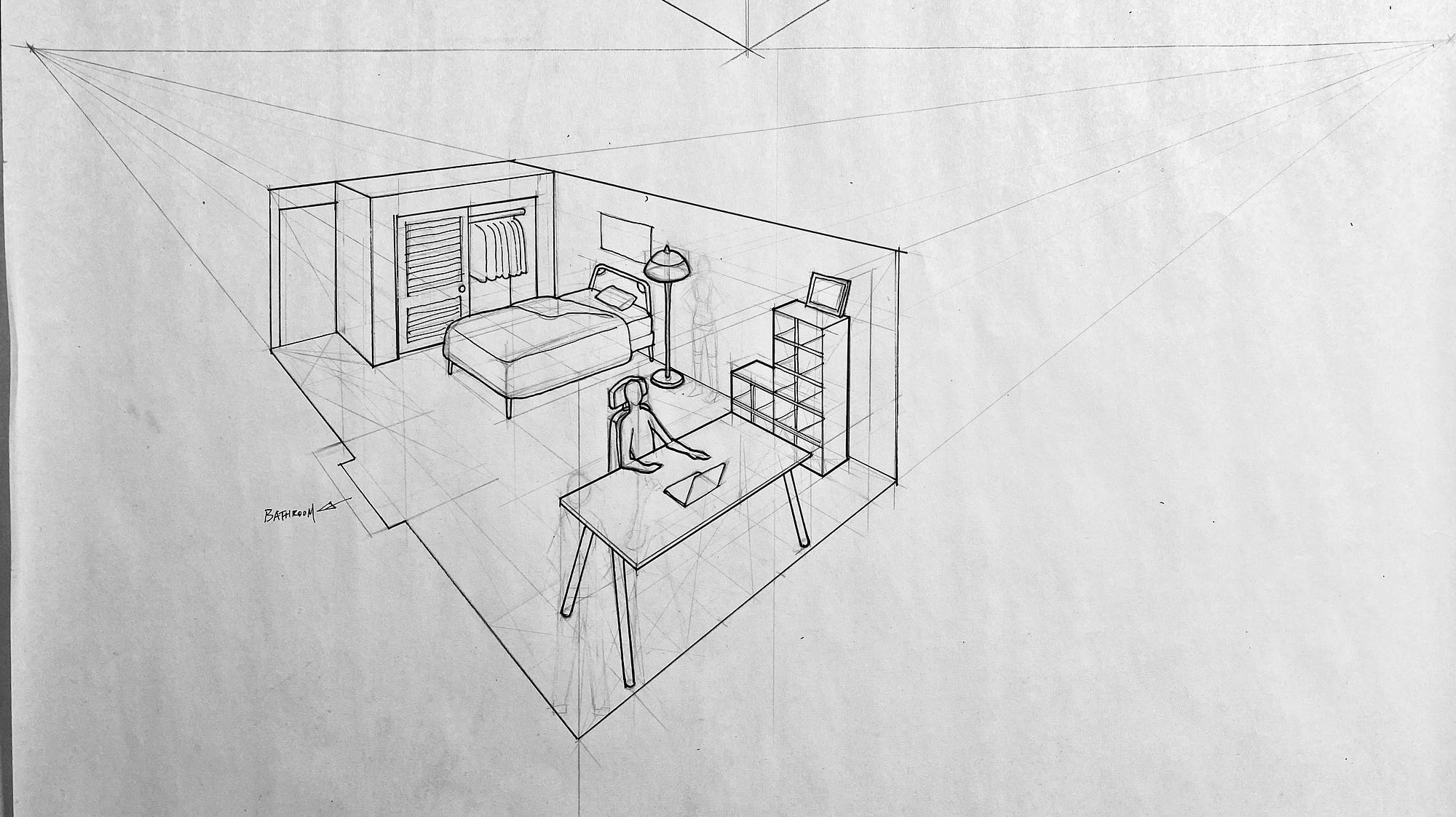
Credit: chelsealiu-40923.medium.com
Birds Eye View Drawing Basics
A birds eye view drawing shows objects from above. It looks down on a scene or place. This view helps to understand the layout clearly.
People use birds eye view drawings in many fields like art, design, and planning. It gives a clear overview that other views cannot.
Definition And Purpose
A birds eye view drawing is a picture seen from high above. It shows how things are arranged on the ground.
The main purpose is to give a clear and simple layout. It helps people understand space and placement easily.
Key Characteristics
This drawing style shows objects flat and from the top. It hides the front and side views. Only the tops and shapes are visible.
- Shows a top-down perspective
- Objects appear flat and simple
- Focuses on layout and position
- Does not show height or depth
- Often drawn with clear lines and shapes
Common Uses
Birds eye view drawings are useful in many areas. They help to plan, design, and explain spaces and objects.
- Architectural plans and floor layouts
- City and landscape maps
- Video game level designs
- Event planning and seating charts
- Educational diagrams and illustrations
Techniques For Creating Birds Eye View Drawings
Birds eye view drawings show scenes from above. They help viewers see the whole area clearly.
These drawings need special techniques to look correct and easy to understand. You must plan carefully.
Choosing The Right Perspective
Pick a high angle to show large areas in birds eye view drawings. The perspective should be from straight above or slightly tilted.
Choose how much detail you want to show. A higher viewpoint covers more space but shows less detail.
- Use top-down view for maps and layouts
- Use slight tilt for 3D effect
- Keep horizon line low or hidden
Sketching Layouts And Proportions
Start with light sketches to arrange objects on your drawing. This helps keep everything balanced and clear.
Use simple shapes to block out buildings, trees, and roads. Check sizes and distances carefully to keep proportions right.
- Draw basic shapes first
- Measure distances between objects
- Adjust sizes to keep scale consistent
- Erase and redraw as needed
Using Tools And Software
Use rulers and grids to keep lines straight and sizes accurate. These tools make your drawing neat and easy to read.
Digital tools like drawing tablets and software can speed up the process. They allow easy changes and add effects like shadows.
- Rulers and compasses for accuracy
- Graph paper for layout planning
- Software like Adobe Illustrator or SketchUp
- Use layers to separate parts of the drawing
Applications Across Industries
A birds eye view drawing shows a scene from above. It gives a clear layout of space and objects. Many industries use this view to plan and design.
This type of drawing helps people understand the full picture quickly. It is very useful for visualizing large areas or complex scenes.
Architecture And Urban Planning
Architects use birds eye view drawings to design buildings and neighborhoods. It helps them see how structures fit together. Urban planners use these drawings to map cities and plan roads.
- Design building layouts
- Plan parks and public spaces
- Map transportation routes
- Visualize land use and zoning
Video Game Design
Game developers use birds eye view drawings to create maps and levels. This view helps show player movement and environment layout. It is common in strategy and role-playing games.
- Real-time strategy
- Simulation games
- Dungeon crawlers
- City builders
Cartography And Mapping
Cartographers create maps that show land from above. Birds eye view drawings help them display roads, rivers, and terrain. These maps guide travelers and help in planning.
| Map Type | Purpose |
| Topographic | Show elevation and landforms |
| Road | Guide drivers and pedestrians |
| City | Display streets and landmarks |
| Weather | Track weather patterns |
Tips For Enhancing Visual Impact
A birds eye view drawing shows a scene from above. It helps people see layout and design clearly. Making these drawings look good is important.
Use some simple tips to improve your birds eye view. These will make your drawing easy to understand and interesting to look at.
Incorporating Depth And Scale
Depth and scale make your drawing feel real. Show how big or small objects are by comparing them. Use shadows and overlaps to add depth.
- Place larger objects closer to the front.
- Use smaller shapes for far objects.
- Add shadows beneath items to create depth.
- Overlap objects slightly to show distance.
Using Colors And Textures
Colors and textures help separate parts of the drawing. Use soft colors for background and bright colors for important areas. Textures add detail without clutter.
| Element | Color Tip | Texture Tip |
| Buildings | Light grays or beige | Brick or stone patterns |
| Green Spaces | Different greens | Grass or leaf details |
| Water | Blue shades | Ripple effects |
| Roads | Dark gray | Smooth or dashed lines |
Balancing Detail And Clarity
Too much detail can confuse viewers. Too little can make the drawing boring. Find a balance that shows key parts clearly.
Here are tips to keep your drawing clear:
- Focus on main objects only.
- Avoid tiny decorations.
- Use labels or simple icons for clarity.
- Keep lines clean and shapes simple.
Common Challenges And Solutions
Birds Eye View drawings show a scene from above. They help in planning and design.
Creating these drawings can be tricky. Some problems often appear during the process.
Avoiding Distortion
Distortion can make parts of the drawing look stretched or squished. It happens when the angle is not right.
- Use a consistent scale throughout the drawing.
- Keep the camera or viewpoint directly above the subject.
- Check the angles carefully before starting the drawing.
- Use software tools that correct distortion automatically.
Maintaining Accuracy
Accuracy is key for Birds Eye View drawings. Details must match the real object or space.
| Challenge | Solution |
| Measuring distances wrongly | Use reliable tools and double-check measurements |
| Missing small details | Zoom in on areas and add details step-by-step |
| Ignoring proportions | Compare sizes of objects carefully before drawing |
Optimizing Viewpoint
The viewpoint affects how clear the drawing looks. Picking the best viewpoint improves understanding.
Tips for the best viewpoint:
- Place the viewpoint high enough to see all key elements.
- Align the viewpoint to avoid hiding important parts.
- Adjust the angle slightly to reduce shadows and blind spots.
- Consider multiple viewpoints if one does not show everything.

Credit: www.freepik.com

Credit: www.freepik.com
Frequently Asked Questions
What Is A Birds Eye View Drawing?
A birds eye view drawing shows an object or area from directly above. It offers a clear layout and spatial relationships. This perspective is used in architecture, maps, and design for better visualization. It helps viewers understand complex structures easily.
How Is A Birds Eye View Drawing Used In Architecture?
In architecture, birds eye view drawings display floor plans and site layouts. They provide a comprehensive look at building designs and surroundings. This helps architects, clients, and builders visualize space and arrangement. It improves communication and planning during construction.
What Tools Create Birds Eye View Drawings?
Birds eye view drawings are created using software like AutoCAD, SketchUp, and Photoshop. Traditional methods include hand-drawing with rulers and grids. Digital tools offer precision and easy editing. These tools help produce detailed, accurate top-down perspectives.
Why Is Birds Eye View Drawing Important In Design?
This drawing style helps designers see the full layout at once. It reveals spatial relationships and potential issues early. It aids in planning, decision-making, and presenting ideas clearly to clients. It enhances creativity and problem-solving in design projects.
Conclusion
Bird’s eye view drawings offer a unique perspective. They help visualize large areas. From city planning to video game design, they’re crucial. These drawings simplify complex layouts. They provide clarity and understanding. Architects and designers rely on them daily. It’s a tool for enhancing creativity.
A great aid in various fields. Anyone can learn to appreciate this art form. Understanding these drawings opens up new ways of seeing. It’s more than just a picture. It’s a way to communicate ideas clearly. Dive in and explore its potential in your projects.




