
Have you ever wondered if your finch bird enjoys looking at itself in a mirror? If you’re curious about how mirrors affect these tiny, lively creatures, you’re in the right place.
Understanding your finch’s behavior can help you create a happier and more stimulating environment for your feathered friend. Keep reading to discover surprising facts about finches and mirrors that might change the way you interact with your pet!
Finch Behavior With Mirrors
Finches are small birds that show interesting reactions to mirrors. Studying their behavior helps us understand their social and cognitive skills.
Mirrors can trigger different responses in finches. These reactions reveal how they see themselves and others.
Initial Reactions To Mirrors
When finches first see a mirror, they often act surprised or curious. Some may chirp or try to interact with the reflection as if it were another bird.
Curiosity And Exploration
After the first moments, finches explore the mirror more closely. They may move around it, look behind it, or try to see if the reflection changes with their movements.
- Pecking at the mirror surface
- Tilting their heads to get different views
- Changing their posture to see their reflection better
- Watching the reflection for long periods
Signs Of Recognition
Some finches show signs they recognize the reflection is themselves. This behavior is less common but important to note.
| Behavior | Description |
| Preening in front of mirror | Cleaning feathers while watching reflection |
| Using mirror to inspect body | Checking parts of the body that are hard to see |
| Reduced aggression | Less attacking the reflection after time |
| Mirror as social partner | Interacting calmly, similar to a real bird |
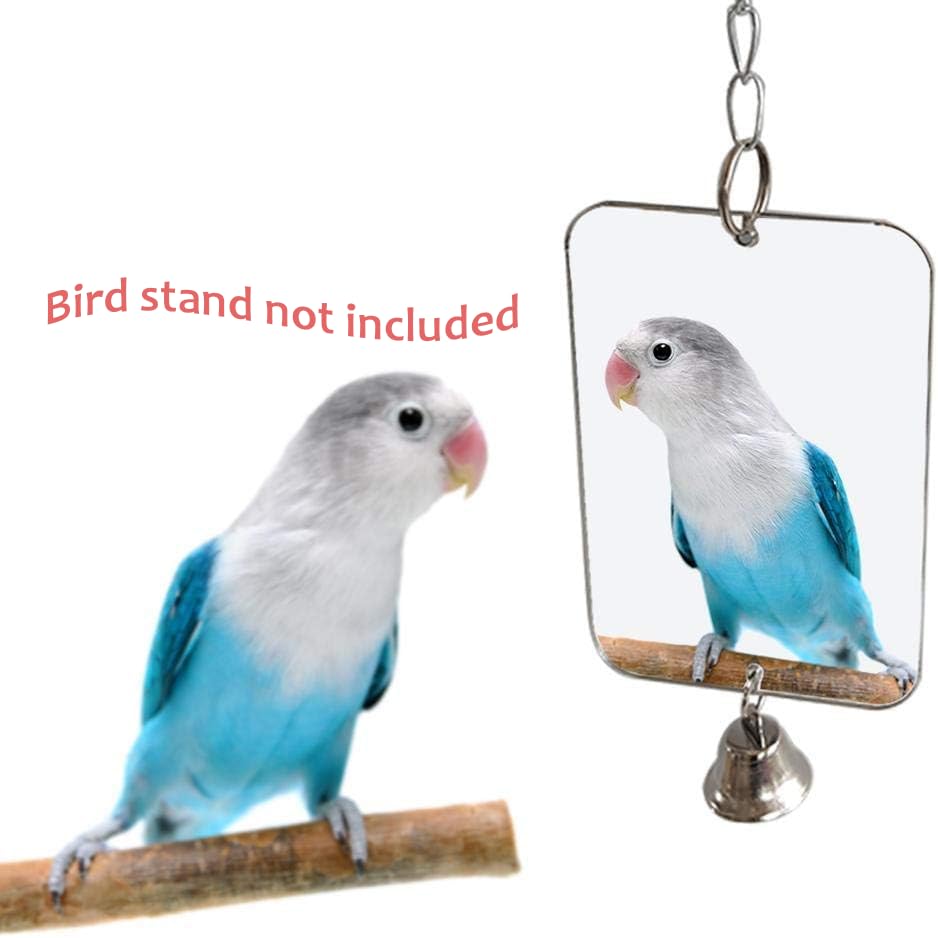
Credit: www.amazon.com
Mirror Interaction Patterns
Finch birds often react to mirrors in interesting ways. Mirrors create reflections that catch their attention. They may see their own image and respond as if it is another bird.
Watching how finches interact with mirrors helps understand their behavior. They show different actions like pecking, vocalizing, and social responses. Some stay interested for a long time.
Pecking And Vocalizing
Finches often peck at mirrors to explore the reflection. Pecking is a way to check if the image is real. They also vocalize, making calls or songs toward the mirror.
These sounds can be friendly or aggressive. Vocalizing helps finches communicate with the image they see. This behavior shows they think the reflection is another bird.
Social Responses
Some finches treat the mirror image as a companion. They may try to interact socially by singing or moving close. Others see it as a rival and act defensively.
Social responses depend on the bird’s mood and personality. The mirror can reduce loneliness for a single bird in a cage. It may also cause stress if the bird feels threatened.
Long-term Engagement
Finches may keep watching the mirror for days or weeks. Some lose interest after a while and ignore the reflection. Others stay curious and interact regularly.
Long-term engagement depends on the bird’s environment. A mirror can be a simple way to provide stimulation. It is important to watch the bird’s behavior for signs of stress.
Mirror Use In Finch Care
Many finch owners wonder if mirrors help their birds. Mirrors can be a source of comfort or stress for captive finches. Understanding how to use mirrors safely is key to good finch care.
This guide explains the benefits and risks of mirrors for finches. It also shares tips for safe mirror use in your bird’s environment.
Benefits For Captive Finches
Mirrors can provide visual stimulation and company for finches. Birds often react positively to their reflection, which may reduce loneliness.
- Offer companionship to single finches
- Encourage natural behaviors like singing and preening
- Help reduce boredom in small cages
- Provide an outlet for social interaction
Potential Stress Factors
Mirrors can also cause stress or confusion in finches. Some birds may attack their reflection or become overly fixated on it. This can lead to frustration or injury.
| Possible Stress Reactions | Signs to Watch For |
| Territorial aggression | Pecking at mirror, loud calls |
| Obsession with reflection | Constant staring, ignoring other stimuli |
| Fear or anxiety | Hiding, feather plucking |
Safe Mirror Practices
Use mirrors carefully to keep finches healthy and happy. Place mirrors in the cage where the bird can choose to approach or avoid it. Limit the mirror’s size to prevent overuse.
- Start with small mirrors and watch your finch’s reaction.
- Remove the mirror if the bird shows stress signs.
- Do not use mirrors as the only source of social interaction.
- Clean mirrors regularly to avoid dirt buildup.
- Use safe materials to avoid sharp edges.

Credit: www.amazon.com
Scientific Studies On Finches And Mirrors
Scientists have studied how finches react to mirrors. They want to know if finches see their reflection as another bird or as themselves.
These studies help us understand finches’ behavior and how they think. Mirrors are tools to test animal self-awareness and social actions.
Research Findings
Finches often look at mirrors with curiosity. Some may sing or try to interact with their reflection. They do not usually show signs of recognizing themselves.
Most finches treat the mirror image as another bird. They may display social or aggressive behavior toward the reflection. This shows they do not have full self-awareness.
- Finches sing more near mirrors
- They may peck or display aggression
- No clear self-recognition found
Comparisons With Other Birds
Other birds like magpies and crows show signs of self-recognition. They may touch marks on their bodies seen in mirrors. Finches usually do not do this.
Parrots and pigeons also react differently. Some learn to use mirrors to find food. Finches mainly respond socially, not with problem-solving.
- Magpies pass mirror self-test
- Crows show problem-solving with mirrors
- Parrots use mirrors to locate food
- Finches mainly show social responses
Implications For Bird Cognition
Finches’ reactions suggest they have social awareness but limited self-awareness. This means they see other birds in reflections, not themselves.
Their mirror behavior shows simple cognitive skills. It helps scientists learn how bird brains work and how animals understand their world.
- Finches recognize social cues
- They lack mirror self-recognition
- Shows difference in bird intelligence levels
- Helps study animal cognition evolution
Tips For Finch Owners
Finches are small, active birds that enjoy bright spaces. Adding mirrors can sometimes enrich their environment.
Knowing how to use mirrors safely helps keep your finch happy and healthy. These tips guide you through mirror use and bird care.
Choosing The Right Mirror
Select mirrors made for bird cages. Avoid glass mirrors that can break and hurt your finch. Use small, lightweight plastic mirrors instead.
- Pick mirrors with smooth edges
- Choose mirrors that attach securely to the cage
- Use mirrors no larger than your finch’s body size
- Avoid mirrors with sharp or loose parts
Monitoring Finch Behavior
Watch your finch closely after adding a mirror. Some finches like mirrors, but others may get stressed or aggressive.
| Behavior | What It Means | Action |
| Pecking at mirror | Curious or playful | Let them explore |
| Ignoring mirror | No interest | Try a different toy |
| Agitated or aggressive | Stress or confusion | Remove mirror and observe |
| Talking or singing to mirror | Social interaction | Allow but monitor time |
Enhancing Enrichment
Mirrors can add fun to your finch’s cage. Combine mirrors with other toys to keep your bird active and happy.
Try these tips for better enrichment:
- Place mirrors near swings or perches
- Rotate toys weekly to keep interest
- Use natural branches and chew toys
- Offer fresh water and food daily

Credit: www.amazon.com
Frequently Asked Questions
Do Finch Birds Recognize Themselves In Mirrors?
Finches generally do not recognize their reflection as themselves. They often perceive it as another bird, which can trigger curiosity or territorial behavior.
Why Do Finches Like Or Dislike Mirrors?
Finches may like mirrors because they see a “companion. ” However, some may dislike them if they feel threatened by their reflection.
Can Mirrors Reduce Loneliness For Pet Finches?
Mirrors can help reduce loneliness by providing visual stimulation. But they should be used carefully to avoid stress or aggression.
How Should I Introduce A Mirror To My Finch?
Introduce mirrors gradually and observe your finch’s reaction. Remove the mirror if the bird shows signs of stress or aggression.
Conclusion
Finch birds often show curiosity toward mirrors. They may see their reflection as another bird. Some finches enjoy interacting with mirrors, while others ignore them. Mirrors can provide mental stimulation but should not replace real company. Always watch your finch’s behavior to ensure comfort and safety.
A mirror can be a simple way to keep finches entertained. Remember, every bird has its own personality and preferences. Observing your finch helps you understand what it likes best.




