
“Birds of a feather flock together” is a 16th-century English proverb meaning that people who share traits, interests, values, or circumstances often associate with one another. The image comes from the observation that birds of the same kind tend to gather in groups. The wording became established in English during the 1500s and remains a familiar way to describe friendship, community, and social identity.
The saying does not mean that similar people always agree or that every friendship is based on likeness. Instead, it presents similarity as one reason people may feel comfortable together or form a group. Its history shows how an observation from nature became a flexible metaphor for human relationships.

Credit: godzilla-and-friends.fandom.com
Phrase Origins
The central wording emerged in English during the 16th century. Early versions connected birds with the tendency of people of a similar “feather”—meaning a similar kind or character—to gather together. The complete proverb is usually given as “birds of a feather flock together.” “Birds of a feather” is now also used as a shortened form.
Early Uses in Literature
One early recorded English use is associated with William Turner’s work from 1545. The proverb also belongs to the 16th-century tradition of collecting and publishing English sayings, including work associated with William Camden. These records place the expression within the period when many familiar English proverbs were entering print.
Shakespeare expressed related ideas about people resembling one another, although the exact wording “birds of a feather flock together” should not automatically be attributed to him. Writers can communicate the same idea without using the later standard form of the proverb.
Why Birds Became the Metaphor
The metaphor is easy to understand because groups of birds are visible in everyday life. Birds may gather for movement, protection, feeding, or breeding, and people historically interpreted this behavior as an example of creatures staying with their own kind. The proverb then transfers that familiar image to human society.
Its observation should not be treated as a scientific rule. Birds do not flock solely because their feathers look alike, and human relationships are not determined only by appearance or background. The phrase is a memorable generalization about affiliation, not a precise explanation of animal behavior or psychology.

Credit: animato.uk
How the Meaning Evolved
In its earliest form, the saying drew on the idea that similar creatures gather together. Over time, “similar” came to mean more than literal appearance. It can now refer to interests, habits, social position, beliefs, goals, or shared experiences.
From Literal Image to Social Metaphor
“Of a feather” does not mean that two people must look alike. It is an idiomatic way of saying that they belong to the same broad type or have something important in common. A group of musicians, coworkers, classmates, or neighbors might be described as birds of a feather if a shared activity or identity brings them together.
The similarity can be obvious, such as a shared hobby, or less visible, such as a common outlook or life experience. The expression can sound neutral, affectionate, or mildly critical depending on the context.
Modern Usage
Today, people use the proverb for friendships, families, professional networks, online communities, political groups, and teams. For example, two enthusiastic hikers might be called birds of a feather because they enjoy the same activity. The phrase can also suggest that a person’s companions reveal something about their habits or values.
Context determines whether the expression sounds complimentary. Saying that two creative people are birds of a feather may emphasize mutual understanding. Saying that dishonest people are birds of a feather suggests that they share an undesirable trait. In either case, the phrase points to a perceived commonality rather than proving that the people are identical.
Cultural Influence
The proverb remains familiar because it expresses a widely recognized social pattern: people often connect through shared interests, language, experiences, or goals. Different societies have developed their own ways to express the related idea that a person’s companions can reflect their character.
Birds and Community in Storytelling
Birds frequently appear in folklore and literature as symbols of movement, family, freedom, loyalty, and cooperation. Those associations help make the proverb intuitive, but they should not be confused with a single universal origin. The English saying developed through English-language proverb tradition; it was not necessarily borrowed from every bird-related story or belief found in another culture.
The image also works because flocking suggests both belonging and collective movement. A flock can represent companionship, while each individual bird remains distinct. That balance helps explain why the proverb can apply to close friends as well as larger communities.
Global Variations
Many languages have a proverb with a similar social message, although the imagery and emphasis may differ:
- Spanish: “Dime con quién andas y te diré quién eres,” meaning “Tell me who you walk with and I’ll tell you who you are.”
- Japanese: 類は友を呼ぶ (Rui wa tomo o yobu), commonly translated as “kind calls to kind” or “similar people attract friends.”
- Russian: “Скажи мне, кто твой друг, и я скажу тебе, кто ты,” meaning “Tell me who your friend is and I’ll tell you who you are.”
- French: “Qui se ressemble s’assemble,” meaning “Those who resemble one another come together.”
These are comparable expressions, not word-for-word translations of the English proverb. Some focus on attraction between similar people, while others emphasize what a person’s choice of friends may imply about their character.
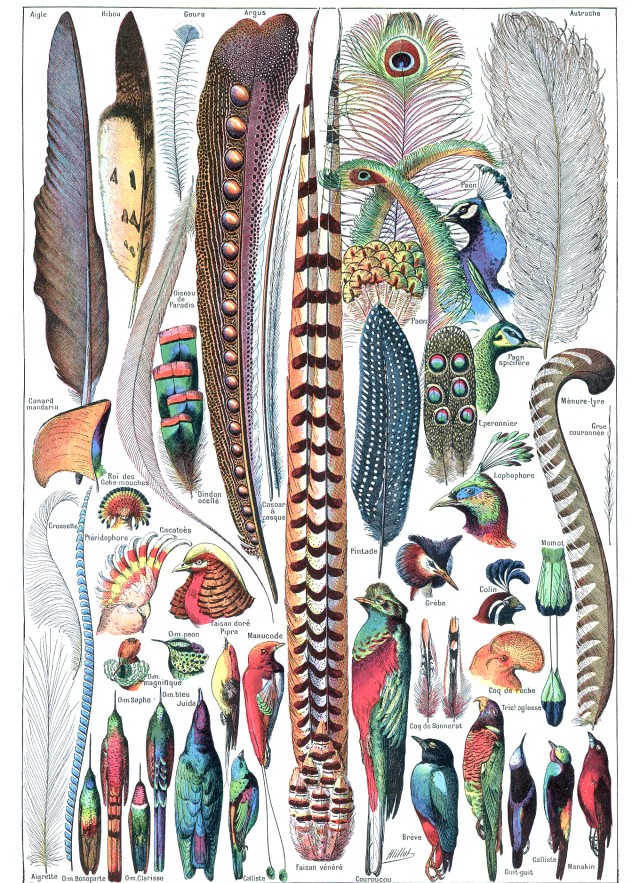
Credit: nhm.org
Similar Sayings and How They Differ
English has several expressions that overlap with “birds of a feather flock together,” but they are not interchangeable in every situation:
- “Like attracts like” presents similarity as a force that brings people or things together.
- “Cut from the same cloth” emphasizes that two people are very similar in character, background, or behavior.
- “Peas in a pod” usually describes people who look or act remarkably alike, often in a friendly or humorous way.
- “Two of a kind” identifies two people as sharing notable qualities, whether positive or negative.
- “Tell me who your friends are, and I’ll tell you who you are” focuses more directly on the idea that associations reflect character.
“Birds of a feather flock together” is especially useful when the emphasis is on a group forming around shared qualities. “Peas in a pod” is more likely to describe close resemblance, while “cut from the same cloth” can suggest a common upbringing, temperament, or style.
Cross-Language Comparisons
| Language | Idiom | Literal Meaning |
|---|---|---|
| Spanish | “Dios los cría y ellos se juntan” | God creates them and they come together |
| French | “Qui se ressemble s’assemble” | Those who look alike stick together |
| German | “Gleich und Gleich gesellt sich gern” | Like and like enjoy company |
| Chinese | 物以类聚,人以群分 (Wù yǐ lèi jù, rén yǐ qún fēn) | Things of the same kind gather; people divide into groups |
| Russian | “Рыбак рыбака видит издалека” (Rybak rybaka vidit izdaleka) | A fisherman sees another from afar |
The expressions above show that the underlying idea is widespread, but the cultural emphasis is not always identical. One proverb may highlight similarity, another may warn that associations reveal character, and another may simply describe strong resemblance. Translators therefore choose an equivalent according to context rather than replacing each word literally.
How to Use the Phrase Today
Use the saying when two or more people seem to bond because of a shared quality. For example:
- “The two volunteers immediately started discussing local history—they’re birds of a feather.”
- “The members of that club are birds of a feather; they all enjoy solving difficult puzzles.”
The phrase is generally informal and familiar. It can sound approving when it refers to companionship or common interests, but it can also carry a negative suggestion if the shared quality is selfishness, prejudice, or misconduct. If the intended meaning is simply that two people work well together, “they have a lot in common” is a more neutral alternative.
Frequently Asked Questions
What is the origin of “birds of a feather”?
The expression comes from 16th-century English proverb tradition. It developed from the observation that birds of the same kind gather together and became a metaphor for people who share qualities or interests.
Did Shakespeare coin the phrase?
There is no need to attribute the exact standard wording to Shakespeare. He and other writers expressed similar ideas, while early recorded versions of the proverb are associated with English works from the 1500s, including William Turner’s 1545 work and later proverb collections.
What does “birds of a feather flock together” mean today?
It means that people with similar interests, values, habits, backgrounds, or goals often associate with one another. Depending on context, it can be complimentary, neutral, or critical.
Is “birds of a feather” a complete phrase?
Yes. It is commonly used as a shortened form of “birds of a feather flock together.” The shorter version still refers to people who are alike or who belong to the same social group.
Are there equivalent phrases in other languages?
Yes. Examples include the French “Qui se ressemble s’assemble,” the Spanish “Dime con quién andas y te diré quién eres,” and the Japanese “類は友を呼ぶ.” Their wording differs, but each expresses a closely related idea.
Conclusion
“Birds of a feather flock together” is an English proverb rooted in 16th-century writing and a familiar observation about birds gathering in groups. Its meaning gradually expanded from a literal image of similar creatures to a versatile description of human relationships.
Today, the phrase can refer to shared hobbies, values, experiences, habits, or goals. It is not a rule that people must be alike, but a concise way to describe why certain friendships and communities form naturally. When you hear “birds of a feather,” the phrase points to the common ground that brings people together.




