
Have you ever wondered how scientists predict the behavior of atoms and molecules without actually seeing them? Density Functional Theory, or DFT, is a powerful tool that makes this possible.
It helps you understand the tiny world of electrons and how they shape the materials around you. Whether you’re a student, a researcher, or just curious, this overview will give you a clear and simple explanation of DFT. By the end, you’ll see why it’s a game-changer in chemistry and physics—and how it might even change the way you think about the world at the smallest scale.
Ready to dive in?
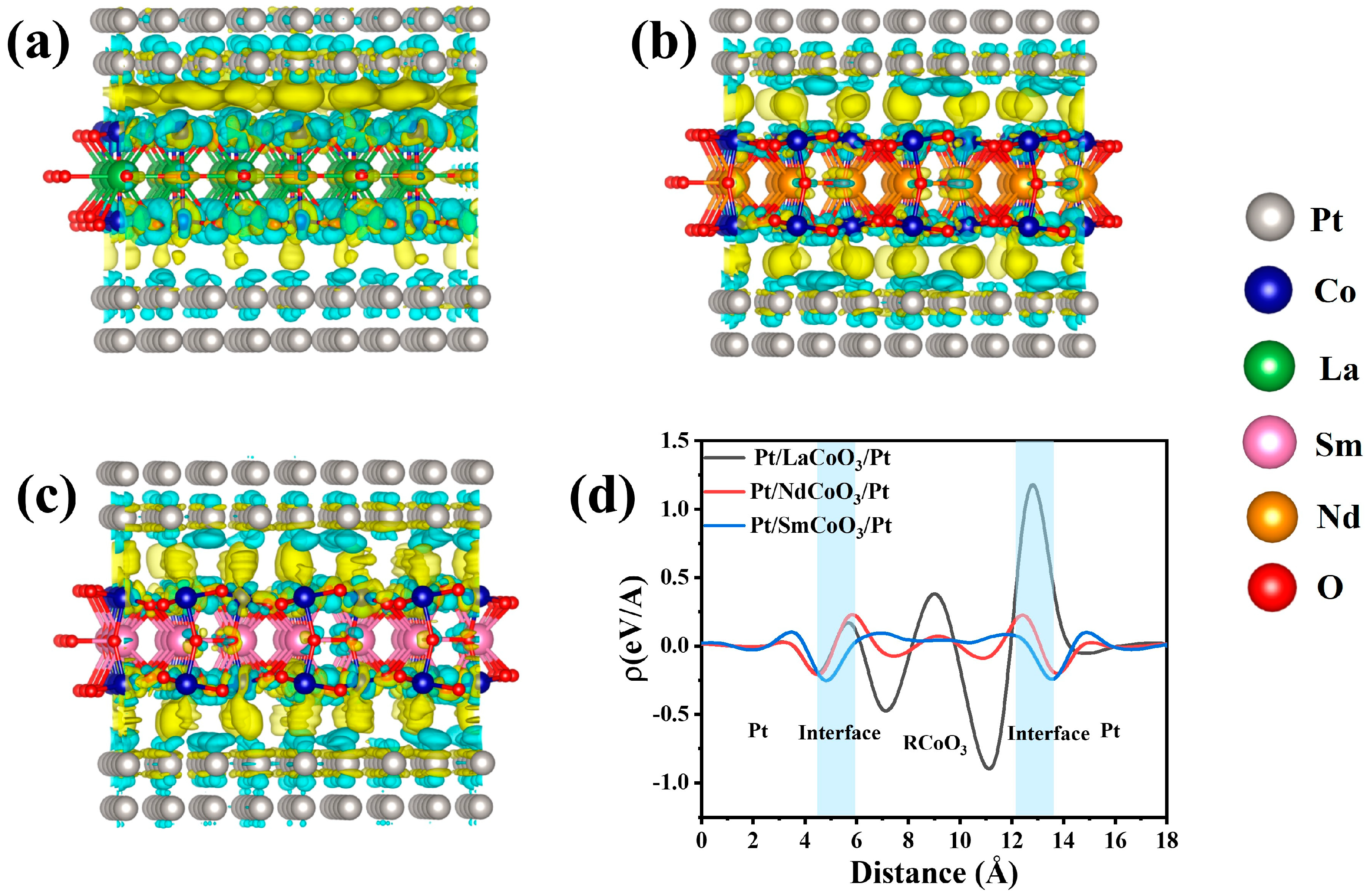
Credit: www.mdpi.com
Basics Of Density Functional Theory
Density Functional Theory (DFT) is a method used in physics and chemistry.
It helps us understand how electrons behave in atoms and molecules.
Key Principles
DFT focuses on the density of electrons, not the wave function.
- Electron density is the main variable.
- All properties come from this density.
- It simplifies complex quantum problems.
- Energy is expressed as a function of density.
Historical Background
DFT began in the 1960s with work by Hohenberg and Kohn.
They proved that electron density determines all ground state properties.
Kohn and Sham later created practical equations for computations.
Mathematical Framework
The core of DFT is the energy functional depending on electron density.
| Term | Description |
| Kinetic Energy | Energy due to electron motion |
| Electron Density | Number of electrons per volume |
| Exchange-Correlation | Energy from electron interactions |
| External Potential | Energy from nuclei and fields |
Quantum Mechanics And Dft
Quantum mechanics studies how tiny particles like electrons behave. It helps us understand atoms and molecules.
Density Functional Theory, or DFT, is a way to use quantum mechanics to study many electrons. It simplifies complex problems.
Wavefunctions Vs Electron Density
Wavefunctions describe the exact state of each electron. They contain a lot of information but are hard to use for many electrons.
Electron density shows where electrons are likely to be. It is simpler to work with and gives useful information about a system.
- Wavefunctions depend on many variables and are complex
- Electron density depends only on position in space
- DFT uses electron density, not wavefunctions
Schrödinger Equation Simplification
The Schrödinger equation describes particles in quantum mechanics. Solving it exactly is very hard for many electrons.
DFT turns this equation into a simpler form. It uses electron density to reduce the problem to easier math.
- Original equation involves complex wavefunctions
- DFT replaces wavefunctions with electron density
- This makes calculations faster and less complex
Exchange-correlation Functionals
Exchange-correlation functionals are a key part of Density Functional Theory (DFT). They describe how electrons interact beyond simple forces.
These functionals help calculate the energy from electron exchange and correlation effects in atoms and molecules.
Role In Dft
Exchange-correlation functionals simplify complex electron interactions. They provide a way to include quantum effects in DFT calculations.
Without these functionals, DFT could not accurately predict chemical and physical properties of materials.
Common Approximations
- Local Density Approximation (LDA): Uses electron density locally.
- Generalized Gradient Approximation (GGA): Includes density gradients for better accuracy.
- Meta-GGA: Adds dependence on kinetic energy density.
- Hybrid Functionals: Mix exact exchange from Hartree-Fock with DFT exchange.
Challenges And Improvements
| Challenge | Description | Improvement |
| Self-Interaction Error | Electrons wrongly interact with themselves. | Hybrid functionals reduce this error. |
| Weak Interactions | Van der Waals forces are hard to model. | Dispersion corrections help capture these forces. |
| Strong Correlation | Systems with many electron interactions are tough. | New functionals and methods target these cases. |
Applications In Chemistry And Physics
Density Functional Theory (DFT) helps scientists study atoms and molecules. It uses math to find out how electrons behave.
DFT is useful in chemistry and physics for predicting and understanding materials and reactions.
Molecular Structure Prediction
DFT helps predict how molecules look and how atoms connect. It finds the best shape for molecules with low energy.
This prediction guides chemists in making new compounds and understanding existing ones better.
Material Science Insights
Scientists use DFT to study materials like metals, semiconductors, and insulators. It shows how electrons affect material properties.
DFT helps explain why materials conduct electricity or how strong they are at the atomic level.
- Predict electrical conductivity
- Understand magnetic properties
- Analyze strength and flexibility
Catalysis And Reaction Mechanisms
DFT studies how catalysts speed up chemical reactions. It shows which bonds break and form during reactions.
This helps chemists design better catalysts and understand reaction steps clearly.
Computational Techniques
Density Functional Theory (DFT) helps scientists study materials at the atomic level. It uses computers to find the energy and structure of molecules and solids.
Different computational techniques make DFT faster and more accurate. These include the choice of basis sets, pseudopotentials, and software tools.
Basis Sets And Pseudopotentials
Basis sets are groups of functions that describe electron behavior in atoms. They help computers solve the equations in DFT.
Pseudopotentials simplify calculations by replacing core electrons with an effective potential. This reduces the number of electrons the computer must track.
- Smaller basis sets use less computing power but may lose accuracy
- Larger basis sets improve accuracy but need more time
- Pseudopotentials reduce complexity without losing important details
- Choosing the right combination is key for efficient calculations
Software Tools
Many software tools run DFT calculations. They have different features and focus areas.
Some software is easy to use for beginners. Others offer advanced options for experts.
- Quantum ESPRESSO: Open-source, good for materials science
- VASP: Popular for solid-state physics, needs a license
- Gaussian: Widely used for molecules, commercial software
- CP2K: Efficient for large systems and mixed methods
Performance And Accuracy
Performance means how fast a DFT calculation finishes. Accuracy means how close results are to real data.
Balancing performance and accuracy is important. Faster methods may lose some detail. More accurate methods need more time.
- Use smaller basis sets for quick results
- Choose larger basis sets for detailed studies
- Check results with experiments if possible
- Optimize software settings for your computer
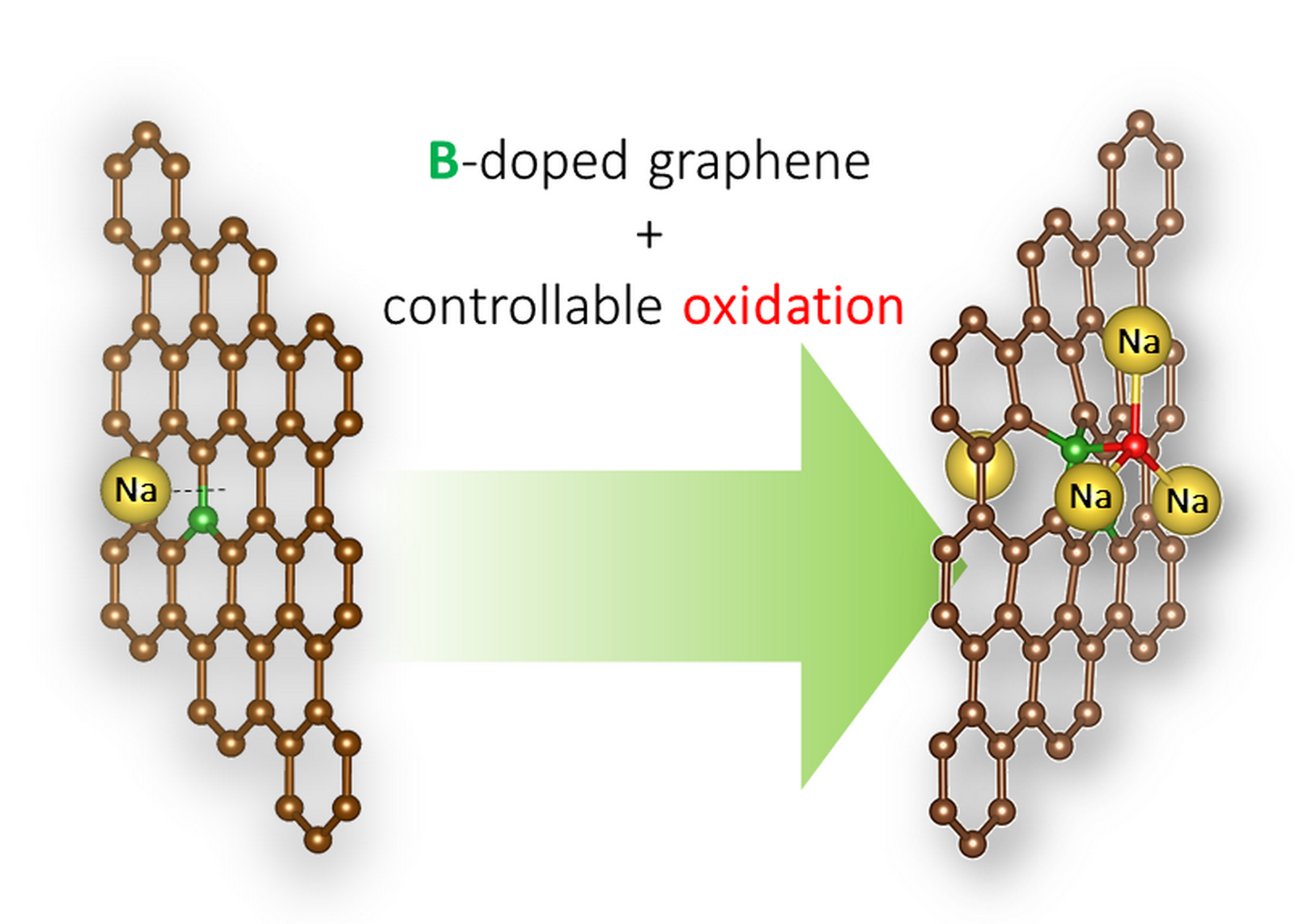
Credit: www.mdpi.com
Limitations And Future Directions
Density Functional Theory (DFT) is a key tool in physics and chemistry. It helps scientists study the electronic structure of materials. Despite its usefulness, DFT has some limits that slow progress. Understanding these limits is important to improve the method.
New techniques and ideas are helping to address DFT’s challenges. Machine learning also plays a growing role in this field. This article looks at current challenges, new methods, and how machine learning connects with DFT.
Current Challenges
DFT has issues that make it hard to use in some cases. One problem is accuracy for certain materials. It also struggles with predicting weak forces. Another challenge is the high cost of calculations for large systems.
- Limited accuracy for strongly correlated systems
- Difficulty in modeling van der Waals forces
- High computational cost for complex molecules
- Approximations in exchange-correlation functionals
- Problems with excited states and time-dependent effects
Emerging Methods
Researchers develop new ways to improve DFT. These methods aim to fix accuracy and speed problems. Some use better functionals. Others combine DFT with other theories. This helps study materials that were hard to handle before.
| Method | Benefit | Limitation |
| Meta-GGA functionals | Better accuracy | More complex calculations |
| Hybrid functionals | Improved electron interaction | Higher computational cost |
| Range-separated functionals | Handles long-range forces | Parameter tuning needed |
| DFT+U | Better for correlated electrons | Choice of U value affects results |
Integration With Machine Learning
Machine learning (ML) helps improve DFT predictions. It can find patterns in data fast. ML models can create new functionals or predict properties. This reduces calculation time and boosts accuracy. ML also helps in materials design and discovery.
Machine Learning Benefits in DFT:
- Speeds up simulations
- Improves functional forms
- Predicts material properties
- Reduces human error
- Enables large-scale data analysis
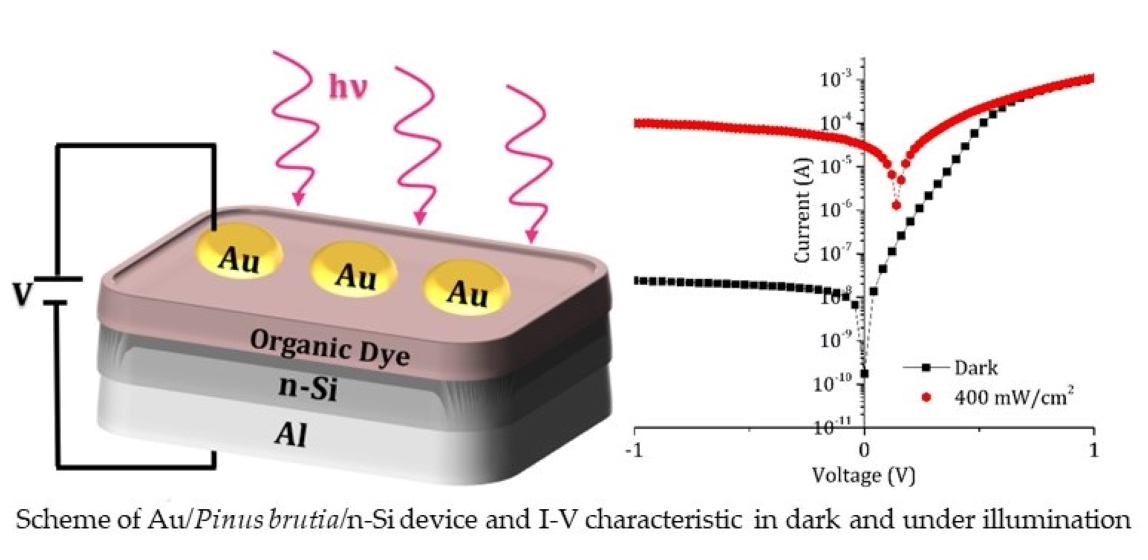
Credit: www.mdpi.com
Frequently Asked Questions
What Is Density Functional Theory (dft)?
Density Functional Theory is a quantum mechanical method used to study the electronic structure of atoms, molecules, and solids. It simplifies calculations by focusing on electron density rather than wavefunctions, making it efficient for predicting material properties.
How Does Dft Differ From Other Quantum Methods?
DFT uses electron density as the primary variable, unlike wavefunction-based methods. This approach reduces computational complexity while maintaining accuracy, especially for large systems and materials science applications.
What Are Common Applications Of Density Functional Theory?
DFT is widely used in chemistry, physics, and materials science. It helps predict molecular structures, reaction energies, electronic properties, and material behavior under different conditions.
Why Is Dft Important In Computational Chemistry?
DFT balances accuracy and efficiency, allowing researchers to study complex molecules and materials. It enables understanding of chemical reactions and design of new compounds with desired properties.
Conclusion
Density Functional Theory offers valuable insights into molecular and atomic interactions. It simplifies complex calculations in quantum mechanics. Scientists use it to predict chemical properties accurately. This theory aids in understanding material behavior. It’s essential for research in physics and chemistry.
By grasping its basics, you can appreciate its role in science. Remember, learning takes time and patience. Keep exploring this fascinating subject. With practice, it becomes clearer. Every bit of knowledge helps in grasping the bigger picture. So, stay curious and keep learning about Density Functional Theory.




