
Are you ready to take your bird watching experience to the next level? Choosing the right power binoculars can make all the difference between spotting a fleeting flash of feathers and clearly seeing every detail of your favorite bird.
But with so many options out there, how do you know which binoculars will truly meet your needs? You’ll discover exactly what to look for to find the best power binoculars that fit your style and budget. Keep reading, and soon you’ll be equipped to enjoy every birdwatching moment like never before.

Credit: www.amazon.ca
Choosing Power For Bird Watching
Choosing the right power for your bird watching binoculars can make a huge difference in your experience. The magnification you select affects how close you feel to the birds and how stable your view will be. It’s a balance between seeing details clearly and keeping your image steady while staying comfortable during long birding sessions.
Common Magnification Levels
Bird watchers typically choose binoculars with magnifications between 6x and 12x. A 6x or 7x magnification gives a wider field of view, which helps when scanning fast-moving birds or dense foliage. On the other hand, 10x or 12x magnifications bring distant birds closer but narrow your field of view.
Think about where you usually watch birds. If you often spot birds in open fields, a higher magnification might be useful. But if you’re in forests or tight spaces, lower magnification is easier to handle.
Impact On Image Stability
Higher magnification makes every small shake or movement more noticeable. Have you ever tried to hold a camera steady at high zoom? It’s the same with binoculars. Even a slight hand tremor can blur your image when magnification is strong.
Many bird watchers find that anything above 10x requires a tripod or a very steady hand. If you prefer handheld viewing, sticking to 8x or lower can save frustration. Stability is crucial for spotting fine feather details or small birds without losing focus.
Balancing Power And Portability
Heavier binoculars with higher power can tire your arms quickly. You want to carry your gear comfortably on long hikes or birding trips. Lightweight binoculars with moderate magnification often strike the best balance.
Consider how long you’ll be using your binoculars in one go. If you’re like me, carrying heavy optics for hours isn’t enjoyable. A compact pair with 8x or 10x power might keep your arms relaxed and your attention sharp.
What matters most: crystal-clear zoom or ease of use? Your answer will guide you to the perfect power for your bird watching needs.
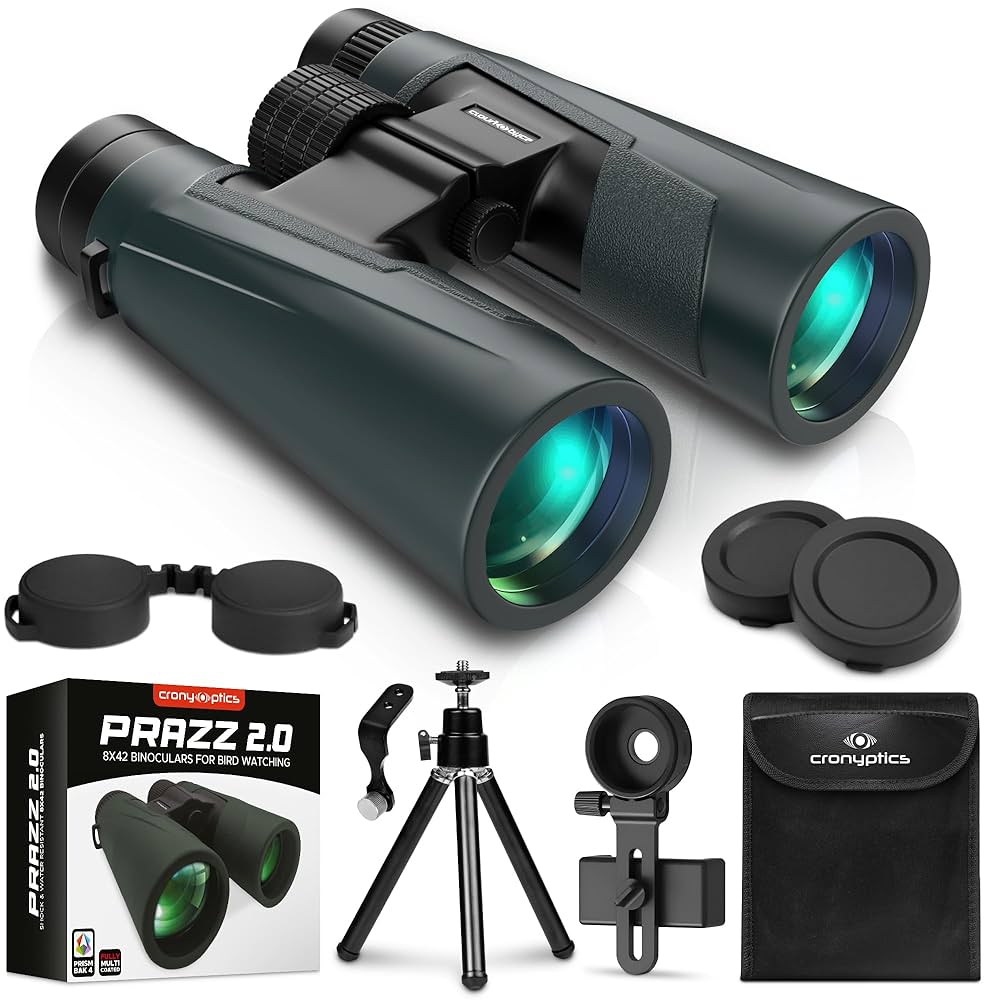
Credit: www.amazon.com
Key Features To Consider
Choosing the right power binoculars for bird watching means focusing on features that directly impact your viewing experience. Each feature plays a role in how clearly and comfortably you can observe birds in their natural habitat. Here are the key features you need to keep in mind before making your choice.
Lens Quality And Coatings
The clarity of your view depends heavily on the quality of the lenses. Look for binoculars with high-quality glass, like ED (Extra-low Dispersion) or HD lenses, which reduce color distortion and sharpen images.
Lens coatings matter just as much. Fully multi-coated lenses increase light transmission, giving you brighter and more vivid images even in low light conditions. Have you noticed how a small difference in lens quality can transform your bird watching from frustrating to thrilling?
Field Of View Importance
Birds rarely stay still. A wide field of view lets you spot and track birds quickly, especially small or fast-moving species. Binoculars with a narrow view can make it tough to keep up with your subject.
Check the field of view specs carefully—typically measured in feet at 1000 yards or degrees. The wider the view, the easier your bird spotting becomes. Would you prefer to scan a wide area or focus narrowly on a single point?
Eye Relief And Comfort
Comfort is key during long bird watching sessions. Eye relief—the distance from the eyepiece to your eye while still seeing the full image—matters a lot, especially if you wear glasses.
Look for binoculars with at least 15mm of eye relief to avoid eye strain. Adjustable eyecups can add extra comfort and help you position your eyes perfectly for the best view.
Waterproof And Fogproof Designs
Bird watching often happens outdoors in unpredictable weather. Waterproof binoculars protect your gear from rain, dew, and accidental splashes.
Fogproof models are sealed and filled with nitrogen or argon gas to prevent internal fogging when you move between temperature changes. Can you imagine missing a rare bird sighting because your lenses fogged up?
Top Binocular Models For 2025
Choosing the right power binoculars enhances every bird watching trip. The right model offers clear views, good focus, and comfort. In 2025, several models stand out for birders at all levels. Each model suits different needs, from beginners to experts.
Best Overall Performance
The top pick combines sharp images with bright optics. It offers a wide field of view and strong zoom. The build is durable and weather-resistant. Ideal for all-day use and varied light conditions. Focus is quick and precise, capturing details easily.
Best Budget-friendly Option
This model delivers good quality without a high price. It has clear lenses and decent magnification. Lightweight design helps avoid arm fatigue. Great for beginners or casual bird watchers. It balances cost and performance effectively.
Best For Advanced Birders
Advanced models offer superior optical clarity and enhanced zoom. They have extra features like image stabilization and adjustable eyecups. Designed for serious birders needing long-distance viewing. The materials ensure long-lasting use in tough environments.
Best Compact Design
Compact binoculars fit easily in pockets or small bags. They are lightweight but still provide sharp images. Perfect for travel or quick trips to the park. The smaller size does not sacrifice quality. Handy for birders who value portability.
Tips For Using High-power Binoculars
Using high-power binoculars for bird watching can be challenging without the right techniques. These tips help you get clear, steady views and keep your binoculars in top shape. Follow these simple steps to enjoy your birding experience more.
Stabilizing Your View
High-power binoculars magnify small movements. Hold them steady to avoid blurry images. Use both hands to grip firmly. Rest your elbows on a solid surface like a tree or fence. A tripod or monopod can provide extra stability. Stand with feet shoulder-width apart for balance. Take slow, deep breaths to reduce shaking.
Adjusting Focus Quickly
Birds move fast. Adjust focus quickly to keep them sharp. Start with the center focus wheel to find a clear image. Use the diopter adjustment to match your eyesight. Practice focusing on different distances before heading out. Keep the focus wheel close to your fingers for fast changes. Smooth, small turns work best for accuracy.
Maintenance And Care
Clean lenses regularly to keep views bright. Use a soft brush or air blower to remove dust. Wipe lenses gently with a microfiber cloth. Avoid touching lenses with fingers. Store binoculars in a protective case to prevent scratches. Keep them dry and avoid extreme temperatures. Check for loose parts and tighten if needed.
Comparing Binoculars With Spotting Scopes
Choosing between power binoculars and spotting scopes for bird watching can shape your entire experience. Both tools offer unique advantages depending on your style and the environment you explore. Understanding their key differences helps you pick the right gear that fits your specific birding needs.
Portability Differences
Binoculars are compact and easy to carry, making them perfect for active bird watchers who move through various terrains. You can tuck them into a backpack or hang them around your neck without feeling weighed down.
Spotting scopes, on the other hand, tend to be larger and often require a tripod for stability. This makes them less convenient for long hikes but ideal for stationary observation spots.
Ask yourself: Will you be chasing birds across a forest trail or sitting quietly in one location? Your answer guides which option suits your mobility needs better.
Magnification And Detail
Spotting scopes generally offer higher magnification, often ranging from 20x to 60x. This lets you see fine details like feather patterns or subtle movements from a long distance.
High-powered binoculars usually max out around 15x magnification but provide a wider field of view. This makes spotting fast-moving birds easier and reduces image shake.
Think about the kind of birds you want to observe. Are you focusing on small, distant species or larger birds that are easier to spot up close?
Use Cases For Bird Watching
Binoculars excel in environments where you need quick reactions and broad scanning—like dense woods or open fields. They let you follow birds in flight without losing track.
Spotting scopes shine in open landscapes such as wetlands or coastal areas where birds perch at great distances. They allow detailed study of plumage and behavior from a fixed position.
Consider your typical birding scenarios and how much detail versus mobility you value. What will help you connect more with the birds you want to see?
:max_bytes(150000):strip_icc()/tal-opticron-oregon-4-pc-oasis-8x42-binocular-kathryn-braet-5-92012e7d06b945acbff37493422bab6a.jpeg)
Credit: www.travelandleisure.com
Frequently Asked Questions
What Power Binoculars Are Ideal For Bird Watching?
Binoculars with 8x to 10x magnification are ideal for bird watching. They offer a clear, steady view without excessive weight or shakiness.
Why Is Magnification Important In Bird Watching Binoculars?
Magnification affects how close birds appear. Too high magnification can cause blurry images, while too low limits detail visibility.
How Does Lens Size Affect Bird Watching Binoculars?
Larger lenses gather more light, providing brighter images in low light. A 42mm lens is a popular choice for bird watchers.
Are Waterproof Binoculars Necessary For Bird Watching?
Waterproof binoculars protect against rain and moisture. They ensure durability and clear views in all weather conditions.
Conclusion
Choosing the right power binoculars makes bird watching more fun and clear. Good binoculars help you see birds up close without disturbing them. Focus on comfort, lens quality, and size for the best experience. Remember, a simple pair can show amazing details in nature.
Enjoy every moment spent watching birds with the perfect binoculars in hand. Happy bird watching!




