
Have you ever looked at a cityscape from above and wondered how artists capture that sense of depth and space so perfectly? If you’re curious about how different perspectives work in drawing and design, especially the Birds Eye View and 3 Point Perspective, you’re in the right place.
Understanding these techniques can change the way you see and create images, making your work more dynamic and realistic. Keep reading, and you’ll discover how these perspectives differ and why knowing this can boost your skills like never before.
Bird’s Eye View Basics
Bird’s eye view shows objects from above. It looks like you are flying high in the sky. This view helps artists and designers create unique images.
It gives a clear look at shapes and layouts. This makes it easier to plan and design spaces or scenes.
What Is Bird’s Eye View
Bird’s eye view is a perspective seen from above. It shows the top of objects and the ground below. This angle can be straight down or at a slight tilt.
- Shows layout and position of objects
- Helps understand scale and distance
- Used in maps and diagrams
- Gives a fresh look compared to eye-level views
Common Uses In Art And Design
Artists and designers use bird’s eye view for many reasons. It helps show the whole scene clearly. This view is common in urban planning, video games, and comics.
| Field | Purpose |
| Urban Planning | Show city layouts and roads |
| Video Games | Give players a wide view of the game area |
| Comics | Create dramatic and clear scenes |
| Architecture | Display building plans from above |

Credit: www.reddit.com
3 Point Perspective Fundamentals
Three point perspective is a drawing method that shows depth and height. It uses three vanishing points to create a realistic view.
This perspective is useful for drawing tall buildings or bird’s eye views. It adds a strong sense of space and dimension.
Key Features Of 3 Point Perspective
Three point perspective has three vanishing points: two on the horizon and one either above or below. This third point controls the vertical lines.
- Lines recede toward three different vanishing points.
- Vertical lines are not parallel but converge to the third point.
- Creates a dynamic and realistic view, especially for tall objects.
- Often used for bird’s eye or worm’s eye views.
Difference From 1 And 2 Point Perspectives
One point perspective uses a single vanishing point. It shows objects facing the viewer directly, with depth going back.
Two point perspective has two vanishing points on the horizon. It shows objects at an angle, with depth and width converging.
| Perspective Type | Vanishing Points | Line Directions | Common Uses |
|---|---|---|---|
| One Point | 1 (on horizon) | Depth lines converge; horizontal and vertical lines stay parallel | Simple interiors, roads, railways |
| Two Point | 2 (on horizon) | Depth and width lines converge; vertical lines stay parallel | Buildings, corners, angled views |
| Three Point | 3 (two on horizon, one vertical) | Depth, width, and height lines all converge | Tall buildings, bird’s eye or worm’s eye views |
Combining Bird’s Eye View With 3 Point Perspective
Bird’s eye view shows a scene from above. It looks down on objects and space.
3 point perspective adds three vanishing points. It makes drawings look more real and tall.
How They Interact Visually
Bird’s eye view and 3 point perspective work together to show a scene from high up.
The bird’s eye view sets the angle from above. The 3 point perspective shapes the height and depth.
- Bird’s eye view shows the layout from top.
- 3 point perspective adds lines that go to three points.
- These points create a sense of space and height.
- Together, they make the scene look wide and tall.
Creating Depth And Height
3 point perspective uses three vanishing points. Two are on the horizon. One is above or below.
This third point makes objects look taller or deeper. It shows height clearly in bird’s eye views.
- Lines going to the top or bottom point show height.
- Lines going to side points show width and depth.
- Bird’s eye view shows the ground and layout.
- 3 point perspective adds strong height and depth cues.
Practical Examples
Birds Eye View 3 Point Perspective shows scenes from above with depth. It helps create realistic and dynamic images.
This perspective is useful in many fields like architecture and art. Below are some examples of how it is used.
Architectural Drawings
Architects use Birds Eye View 3 Point Perspective to show buildings from above. It helps clients see the design clearly.
- Displays height, width, and depth of structures.
- Shows roof designs and building layout.
- Helps visualize how buildings fit in their environment.
Illustrations And Concept Art
Artists use this perspective to create dramatic and dynamic scenes. It adds a sense of scale and motion to their work.
| Use Case | Benefit |
| Cityscapes | Shows tall buildings and streets from above |
| Action Scenes | Highlights character movement and environment |
| Fantasy Worlds | Creates immersive and detailed settings |
Common Mistakes To Avoid
Drawing a birds eye view with three point perspective can be tricky. Many artists make errors that hurt the overall look. Avoiding these common mistakes helps create a realistic scene.
Two major problems often happen in this style. They are misaligning vanishing points and overlooking scale and proportion. Understanding these issues improves your drawings.
Misaligning Vanishing Points
Vanishing points guide how objects shrink and angle in space. Misplacing them causes strange or twisted images. Keep all points aligned on the horizon or vertical lines.
- Check that all horizontal points sit on the horizon line.
- Make sure the third point is above or below the horizon for height.
- Avoid placing vanishing points too close together.
- Use light lines to test alignments before inking.
- Adjust points if shapes look warped or stretched.
Overlooking Scale And Proportion
Objects must shrink correctly to look natural from above. Ignoring size changes makes drawings flat or odd. Keep proportions based on distance and angle.
| Common Error | Effect on Drawing |
| Too large objects far away | Makes perspective look wrong |
| Too small objects close up | Loses sense of depth |
| Ignoring object height changes | Breaks 3D illusion |
| Forgetting relative sizes | Confuses viewer’s eye |
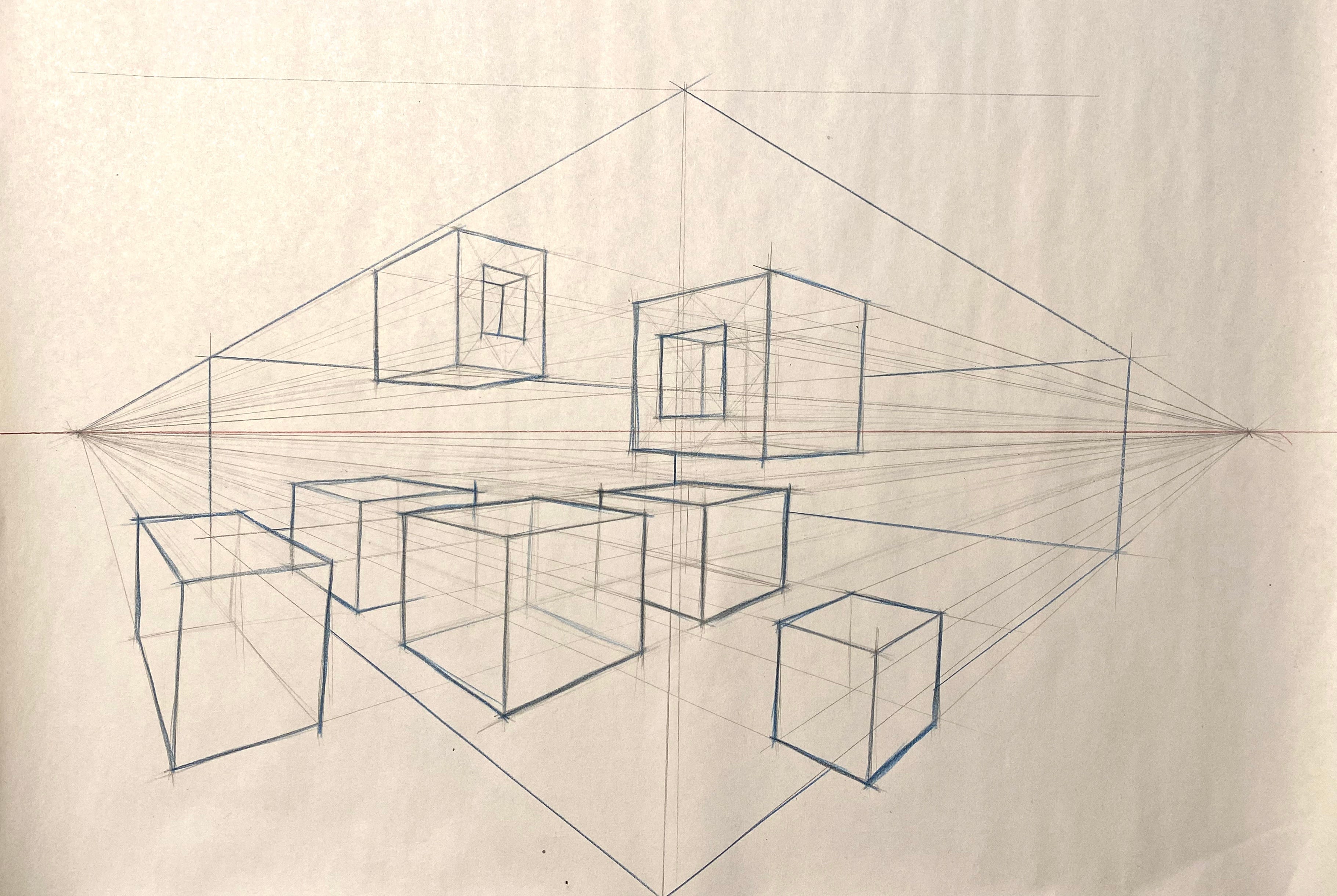
Credit: chelsealiu-40923.medium.com
Tips For Mastery
Drawing a birds eye view in 3 point perspective can be tricky at first. It needs practice and good techniques to get it right.
This guide shares useful tips to help you improve your skills and choose the right tools for the job.
Sketching Techniques
Start by lightly sketching the horizon line and placing the three vanishing points. Keep your lines faint to adjust easily.
- Use a ruler to draw straight lines toward the vanishing points.
- Sketch simple shapes first before adding details.
- Check angles regularly to keep perspective correct.
- Practice drawing cubes and boxes from above.
- Shade objects to show depth and height clearly.
Tools And Software Recommendations
Choosing the right tools can make drawing easier and more precise. Both traditional and digital options work well.
| Tool | Use | Tip |
| Mechanical Pencil | Fine lines | Use light pressure |
| Ruler | Straight lines | Align with vanishing points |
| Drawing Software | Digital sketches | Try grids and guides |
| Graphic Tablet | Precise control | Practice smooth strokes |
| Perspective Plugins | Auto perspective | Use for complex scenes |
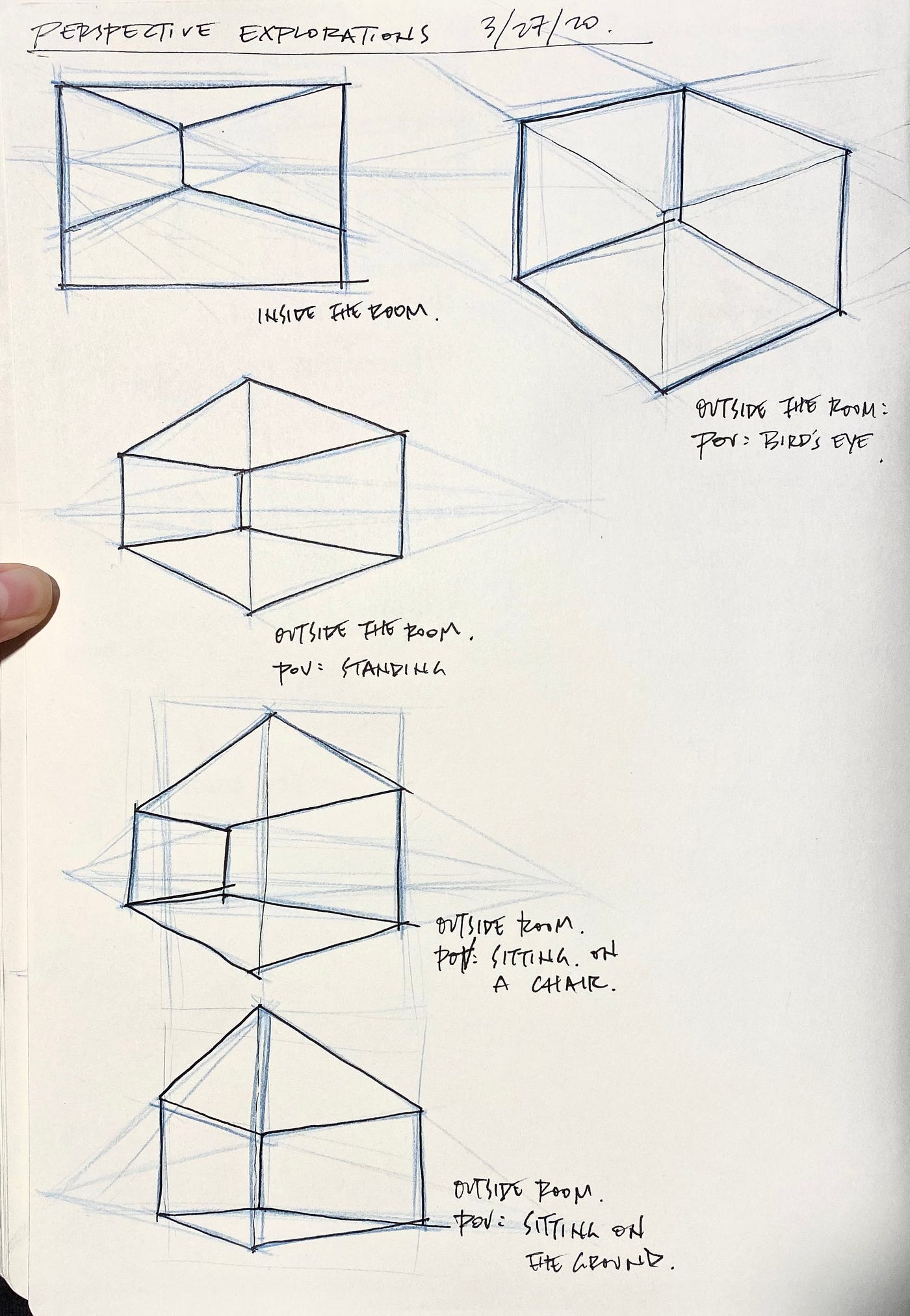
Credit: chelsealiu-40923.medium.com
Frequently Asked Questions
What Is A Bird’s Eye View?
A bird’s eye view refers to a perspective seen from above. It resembles how birds see the ground. This view provides a comprehensive overview of a landscape or scene. It’s commonly used in maps, architectural designs, and aerial photography. It’s different from a three-point perspective.
How Does 3-point Perspective Work?
3-point perspective involves three vanishing points. It creates depth and realism in illustrations. Two points are on the horizon, while the third is above or below. This perspective is ideal for depicting tall structures. It differs from a bird’s eye view, which lacks vanishing points.
Is Bird’s Eye View Same As Aerial View?
Yes, bird’s eye view and aerial view are similar. Both describe a view from above. They offer a broad, comprehensive perspective. This view is often used in maps, photography, and planning. It’s different from ground-level views.
Why Use Bird’s Eye View In Design?
Bird’s eye view offers a comprehensive layout visualization. It helps in planning and organizing spaces effectively. Designers use it to showcase large areas. It’s beneficial for urban planning and architecture. This view aids in understanding spatial relationships better.
Conclusion
Bird’s eye view usually uses one or two point perspective, not three. Three point perspective adds a third vanishing point, often for tall buildings or objects. This changes how depth and height appear in the image. Understanding these differences helps you see how artists create space and shape.
Now, you can spot when a bird’s eye view is true to its style or not. It’s simple once you know what to look for. Keep practicing, and these ideas will become clear.




