
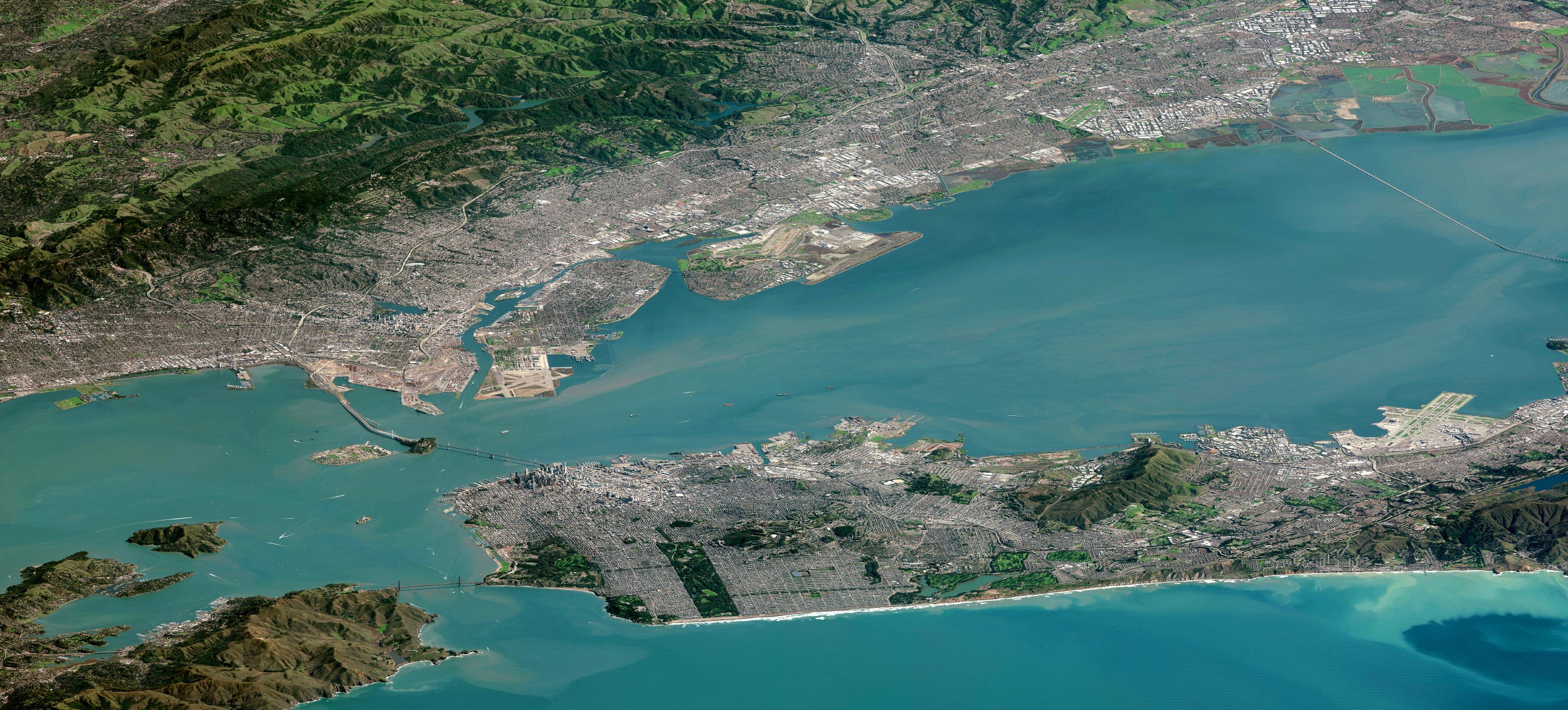
Have you ever wondered how some maps show your neighborhood from high above with such sharp detail? That’s the power of a good bird eye view satellite.
Whether you’re planning a trip, tracking changes in the environment, or just curious about the world, understanding what makes a satellite view truly great can change the way you see things. You’ll discover what sets the best bird eye view satellites apart and how they can give you the clear, accurate images you need.
Keep reading, and you’ll learn how to spot the quality that makes all the difference.
Credit: medium.com
Key Features Of Bird Eye View Satellites
Bird eye view satellites capture images from high above the Earth. They provide detailed views of land, water, and cities. These satellites help in mapping, monitoring, and planning.
Understanding their key features can help in choosing the right satellite for your needs. Each feature affects how useful the images will be.
Resolution And Clarity
Resolution means how clear and detailed the satellite images are. Higher resolution shows smaller objects and more details on the ground.
Good clarity helps users identify buildings, roads, and natural features easily. It is important for applications like urban planning and disaster management.
Image Coverage Area
Coverage area means how much land the satellite can capture in one image. Larger coverage covers more ground quickly.
Satellites with wide coverage are useful for tracking large regions. Smaller coverage gives more detail but covers less area.
- Wide coverage: good for maps and weather
- Small coverage: better for detailed studies
- Balance needed for specific uses
Real-time Imaging
Real-time imaging means the satellite sends images quickly after capturing. This helps in monitoring events as they happen.
It is useful for tracking natural disasters, traffic, or changes in the environment. Quick image delivery supports fast decision-making.
Data Refresh Rate
Data refresh rate shows how often the satellite updates its images of the same place. Higher refresh rates mean more current data.
Satellites with fast refresh rates are better for monitoring changes or events. Slow rates are fine for less time-sensitive uses.
- High refresh rate: updates every few hours or daily
- Low refresh rate: updates every week or month
- Choose based on how often you need new images
Types Of Bird Eye View Satellites
Bird eye view satellites take pictures and collect data from high above Earth. These satellites help us see large areas in detail. There are different types of satellites that use different methods to capture images and information.
Each type of bird eye view satellite has unique features. They serve different purposes based on the technology they use. Let’s explore the main types of these satellites.
Optical Imaging Satellites
Optical imaging satellites use cameras to take pictures of Earth. These satellites capture images in visible light, like a regular camera. They provide clear and detailed photos of landscapes, cities, and natural features.
These satellites need sunlight to work well. They cannot see through clouds or at night. Optical images help in mapping, farming, and disaster monitoring.
Radar Imaging Satellites
Radar imaging satellites send radio waves to the ground and measure the signals that bounce back. This method works day and night. It can see through clouds, rain, and smoke.
Radar images show surface shapes and textures. These satellites are useful for tracking changes in land, studying forests, and monitoring floods.
Hyperspectral Satellites
Hyperspectral satellites capture many colors beyond what the human eye can see. They divide light into hundreds of narrow bands. This helps identify materials and objects on the ground.
These satellites are used in agriculture to check crop health. They also help in mining, environmental studies, and detecting pollution.
Factors Affecting Image Quality
Bird eye view satellite images depend on many factors that affect their quality. Clear images help in better analysis and decision making. Understanding these factors gives insight into how satellites capture sharp pictures.
Some main factors that influence image quality are atmospheric conditions, satellite altitude, and sensor technology. Each one plays a key role in determining how clear and detailed the images will be.
Atmospheric Conditions
The atmosphere can blur or distort satellite images. Clouds, fog, dust, and pollution block or scatter light. This reduces the sharpness and contrast of the images.
- Cloud cover blocks the satellite’s view of the ground.
- Fog and haze scatter light, causing blur.
- Dust and pollution reduce visibility and color accuracy.
- Rain and snow can also degrade image clarity.
Satellite Altitude
The height of the satellite above the Earth affects image resolution. Lower altitude satellites capture finer details. Higher altitude satellites cover larger areas but with less detail.
| Altitude Range (km) | Image Detail | Coverage Area |
| 200 – 500 | High detail | Small area |
| 500 – 1000 | Medium detail | Medium area |
| Above 1000 | Low detail | Large area |
Sensor Technology
Sensors on satellites capture the images. Their type and quality determine how well the satellite sees the Earth. Better sensors produce clearer, sharper images.
- Optical sensors capture visible light and colors.
- Infrared sensors detect heat and temperature differences.
- Radar sensors use radio waves to see through clouds and darkness.
- Higher resolution sensors show finer details.

Credit: science.nasa.gov
Applications Of High-clarity Bird Eye View Images
High-clarity bird eye view satellite images show detailed views from above. These images help many fields by giving clear information about land and structures.
People use these images to plan cities, manage disasters, watch crops, and study the environment. The clear pictures make decisions easier and faster.
Urban Planning
City planners use bird eye view images to see how land is used. They study roads, buildings, and open spaces from above.
This helps them design better neighborhoods and improve traffic flow. They can also spot areas that need new parks or schools.
- Map city growth and changes
- Plan new roads and buildings
- Check land use and zoning
- Design green spaces
Disaster Management
Bird eye view images help in disaster response by showing damage after floods, fires, or storms. They provide a clear picture quickly.
Rescue teams use these images to find safe routes and plan relief work. They also use them to monitor disaster-prone areas.
- Assess damage fast
- Plan rescue and relief
- Monitor flood and fire zones
- Predict and prepare for disasters
Agriculture Monitoring
Farmers and scientists use bird eye view images to watch crops and soil health. The images show large areas in detail.
This helps detect problems like pests, drought, or poor growth early. It improves crop management and increases yield.
- Track crop health
- Detect pest infestations
- Monitor soil moisture
- Plan irrigation and harvesting
Environmental Studies
Scientists use bird eye view images to study forests, rivers, and wildlife habitats. The images help track changes over time.
This data supports conservation efforts and helps understand climate effects. It also aids in managing natural resources better.
- Monitor deforestation
- Track river and lake changes
- Study wildlife habitats
- Support climate change research
Leading Providers Of Bird Eye View Satellite Imagery
Bird eye view satellite imagery shows detailed images from above. These images help in mapping, planning, and research. Many companies and government programs provide this type of data.
Good satellite images have clear views and high resolution. They show objects and places with fine detail from space. Let’s look at some top providers of bird eye view satellite images.
Commercial Satellite Companies
Commercial companies offer bird eye view images for business and personal use. They use advanced satellites to capture sharp images. These companies sell images for mapping, agriculture, and disaster management.
Some well-known commercial satellite companies include:
- Maxar Technologies
- Planet Labs
- BlackSky
- Airbus Defence and Space
These companies provide frequent updates and wide coverage. They use satellites with high resolution to give clear bird eye views.
Government Satellite Programs
Government programs also provide bird eye view satellite images. They use satellites for security, weather, and scientific research. These images help in public safety and planning.
Leading government satellite programs are:
- NASA’s Earth Observing System
- European Space Agency (ESA)
- US Geological Survey (USGS) Landsat Program
- Indian Space Research Organisation (ISRO)
Government satellites often share images for free. They help researchers and the public access bird eye view data.
Choosing The Right Satellite Imagery For Your Needs
Bird eye view satellite images show the Earth from above. They help people see large areas clearly. Choosing good satellite images depends on what you need.
You must look at different factors like image quality, how often images update, and cost. This guide explains how to pick the best satellite images for your use.
Assessing Image Resolution
Image resolution tells how clear a satellite picture is. High resolution means you see small details. Low resolution shows bigger areas but less detail.
Think about what details you need. For example, city maps need high resolution. Large farm fields can use lower resolution images.
- High resolution: 30 cm to 1 meter per pixel
- Medium resolution: 1 to 5 meters per pixel
- Low resolution: above 5 meters per pixel
Evaluating Update Frequency
Update frequency means how often satellites take new pictures of the same place. Some satellites update daily. Others update weekly or monthly.
If your work needs recent data, choose satellites with frequent updates. For slow-changing areas, less frequent images may be fine.
- Daily updates for fast changes like weather or traffic
- Weekly or monthly updates for land use or agriculture
- Less frequent updates for stable regions
Considering Cost And Licensing
Satellite images can cost different amounts. Some are free, while others need payment. Licensing rules affect how you can use the images.
Check if you can use the images for business or just personal use. Also, look for limits on sharing or editing the pictures.
- Free images may have limited resolution or usage
- Paid images offer higher quality and more rights
- Read licensing terms before using images publicly
Future Trends In Bird Eye View Satellite Technology
Bird eye view satellites give us a wide, clear look at Earth from above. These satellites help in many areas like weather, maps, and security. Technology in this field keeps changing fast.
New trends focus on making satellites smarter and smaller. They aim to improve the quality and speed of images. This helps users get better data faster.
Advancements In Sensor Resolution
Higher sensor resolution means satellites can capture sharper images. This helps in seeing tiny details from space. Scientists work to build better sensors for clearer views.
Improved sensors allow satellites to detect smaller objects. This is useful for mapping cities, forests, and farmlands. The images help experts make good decisions.
Integration With Ai And Machine Learning
AI helps satellites process images quickly. It can find patterns and changes automatically. This saves time and gives useful information fast.
Machine learning improves over time by learning from data. It helps predict events like floods or fires early. This makes bird eye view satellites smarter and more helpful.
Miniaturization And Cubesats
Mini satellites called CubeSats are small and light. They cost less to build and launch. Many CubeSats can work together to cover large areas.
Smaller satellites make space missions easier and cheaper. They allow frequent updates and better data sharing. This trend changes how we watch Earth from space.
Credit: medium.com
Frequently Asked Questions
What Defines A Bird’s Eye View Satellite?
A bird’s eye view satellite captures high-resolution images from above. It offers a comprehensive view of landscapes and structures. These satellites help in mapping, urban planning, and environmental monitoring. They provide detailed aerial perspectives that are invaluable for many industries.
Their technology continually evolves for better clarity and precision.
How Do Satellites Capture Bird’s Eye Views?
Satellites use advanced imaging technology to capture detailed aerial views. They orbit the Earth, snapping high-resolution images from above. These images help in various applications like mapping, agriculture, and security. The data collected is crucial for analysis and decision-making in numerous fields.
Why Are Bird’s Eye View Satellites Important?
Bird’s eye view satellites are vital for comprehensive geographic analysis. They provide detailed imagery crucial for urban planning and disaster management. Their data supports environmental monitoring, agriculture, and security operations. These satellites enhance our understanding of Earth’s surface and facilitate informed decision-making.
How Do Satellites Improve Mapping Accuracy?
Satellites enhance mapping accuracy with high-resolution images and precise geolocation. They offer detailed, up-to-date views of the Earth’s surface. This data improves navigation, urban planning, and resource management. Their technology supports the creation of accurate, reliable maps used worldwide.
Conclusion
A good bird eye view satellite shows clear and sharp images from above. It helps people see large areas easily. These satellites are useful for maps, weather, and city planning. Choosing one depends on image quality and update speed. Affordable options are also important.
Good satellites make it simple to understand the world from the sky. They bring useful details right to your screen. This helps in many ways, from work to learning. A clear bird eye view satellite is a smart tool for many needs.




