
Have you ever wondered what the world looks like through a bird’s eyes? Imagine seeing things from high above, where every detail feels different and colors might even change.
Birds don’t just see farther—they experience the world in a unique way that could change how you understand nature. You’ll discover how birds view the far side of the world and why their vision is so special. Keep reading, and you might start seeing your surroundings in a whole new light.
Bird Vision Basics
Birds see the world differently than humans do. Their eyes have unique features that help them survive.
Understanding bird vision helps us learn how they find food and avoid danger.
Eye Structure Differences
Bird eyes are larger in size compared to their heads. This gives them sharper vision. They also have more light-sensitive cells called cones.
- Large eyes allow better focus and detail.
- More cones help detect colors and movement.
- Some birds have two foveae for sharp central and side vision.
- Bird retinas have a thin layer to improve light absorption.
Color Perception
Birds see colors far better than humans. They can detect ultraviolet light, which is invisible to us.
| Feature | Birds | Humans |
|---|---|---|
| Number of Cone Types | 4 to 5 | 3 |
| UV Light Detection | Yes | No |
| Color Range | Wider spectrum | Visible spectrum only |
Field Of View
Birds have a wide field of view. This helps them spot predators and prey from many directions.
- Owls: about 110 degrees forward and 50 degrees sideways
- Woodpeckers: nearly 360 degrees around
- Hawks: wide forward vision for hunting
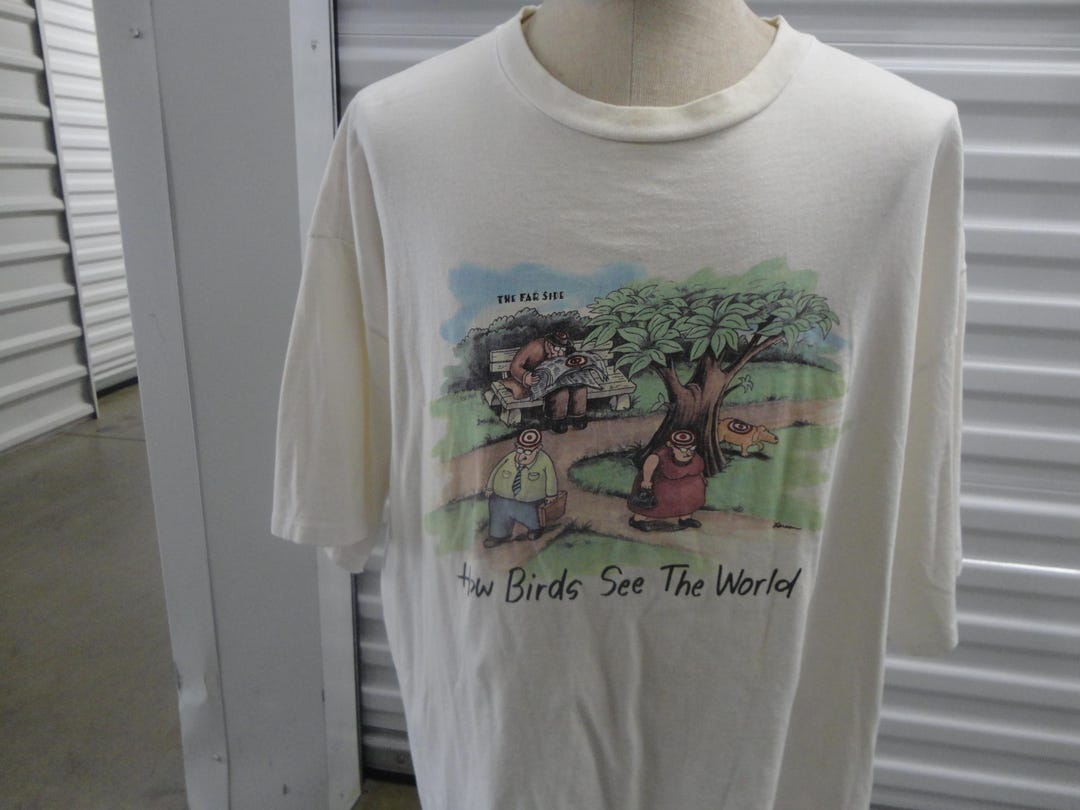
Credit: www.etsy.com
Seeing Beyond Human Limits
Birds see the world very differently from humans. Their eyes can detect things we cannot see. This helps them survive and find food.
Their vision allows them to notice small movements and colors beyond our range. Understanding this helps us learn more about nature.
Ultraviolet Vision
Birds can see ultraviolet (UV) light. Humans cannot see UV light because our eyes are not sensitive to it.
UV vision helps birds find food and mates. Some flowers and feathers show bright UV patterns that attract birds.
- UV patterns guide birds to nectar-rich flowers
- Bird feathers reflect UV light for mating signals
- UV vision helps spot small prey like insects
Motion Detection
Birds have excellent motion detection. Their eyes can spot fast movements better than humans can.
This skill helps birds catch flying insects and avoid predators. Their brains process visual information very quickly.
- Fast eye movement tracks flying prey
- Quick reaction helps escape predators
- Better motion sensing aids navigation in flight
Depth Perception
Birds have strong depth perception that helps them judge distances. This is important for flying and landing safely.
Many birds have eyes placed on the sides of their heads. This gives them a wide field of view and good distance sensing.
- Wide field of view helps spot threats early
- Accurate distance judgment aids hunting
- Depth perception guides smooth flight and landing
Navigating The Far Side
Birds use many ways to find their way on the far side of the world. They rely on natural signs and their senses. This helps them travel long distances safely.
Understanding how birds navigate can teach us about nature’s hidden tools. Their skills are both simple and complex.
Magnetic Field Detection
Birds can sense Earth’s magnetic field. This works like a natural compass inside their bodies. It helps them know direction even without the sun or stars.
Special cells in their eyes or brain detect magnetic signals. These signals guide birds during migration and long flights.
Sun And Star Navigation
Birds use the sun during the day to find their way. They watch the sun’s position and use their internal clock. At night, stars help them travel.
- Birds note the sun’s angle at different times.
- They use star patterns like the North Star.
- Birds adjust for changes in light and time.
- This helps keep their route accurate.
Landmark Recognition
Birds remember landmarks to guide their flight. Mountains, rivers, and coastlines act as natural maps. They learn these places during their journeys.
| Landmark Type | Purpose for Birds |
| Mountains | Direction markers and rest spots |
| Rivers | Guide routes and water sources |
| Coastlines | Help stay on course near water |
| Forests | Provide shelter and food |
Stunning Perspectives In Flight
Birds see the world very differently from us. Their views from the sky are wide and clear.
Flying high, they spot food, avoid danger, and find their way with sharp vision.
Panoramic Views
Birds have eyes on the sides of their heads. This gives them a wide field of view.
- They can see nearly 360 degrees around them.
- This helps them watch for predators while they fly.
- It also makes it easier to find food from above.
Heightened Awareness
Birds react quickly to changes in their environment. Their eyes send fast signals to their brains.
| Sense | Function |
| Vision | Detect movement and colors clearly |
| Hearing | Hear faint sounds from far away |
| Balance | Stay stable during flight |
Adaptive Focus
Birds change their focus quickly to see near or far objects. Their eyes adjust to light and distance.
This helps them:
- Spot tiny insects on leaves
- See other birds in the sky
- Land safely on branches or the ground
Impact On Bird Behavior
Birds see the world differently than humans. Their vision affects how they behave every day. This helps them find food, avoid danger, and attract mates.
Understanding how birds view their world gives us insight into their actions. It shows how their eyes help them survive and thrive in nature.
Foraging Strategies
Birds use their sharp vision to find food from far away. Their wide field of view lets them spot prey or plants quickly. Some birds see ultraviolet light, which helps find hidden food.
- Spotting insects on leaves or bark
- Finding ripe fruits by color differences
- Detecting small movements in grass or water
- Using color vision to choose the best seeds
Predator Avoidance
Birds rely on their vision to spot predators early. Their eyes are placed on the sides of their heads, giving a wide view. This helps them see danger coming from many angles.
| Type of Bird | Field of View | Predator Detection Ability |
| Songbirds | Up to 300 degrees | High |
| Raptors | About 270 degrees | Very High |
| Waterfowl | Nearly 360 degrees | Moderate |
Mating Displays
Birds use their vision to show off during courtship. Bright colors and patterns catch the eye of potential mates. Seeing these displays clearly helps birds choose partners.
- Colorful feathers glow under ultraviolet light
- Complex movements highlight physical fitness
- Visual signals help birds communicate readiness

Credit: www.ebay.com
Technological Insights From Bird Vision
Birds see the world in unique ways. Their eyes help them spot tiny details from far away.
Scientists study bird vision to improve technology. This helps in making better cameras and screens.
Drone Camera Design
Birds have wide fields of view and sharp focus. Drones borrow these features for better cameras.
- Wide-angle lenses mimic bird eyes
- High resolution sensors capture fine details
- Fast focusing systems track moving objects
- Lightweight materials improve flight time
Enhanced Imaging Systems
Birds see colors beyond human range. Imaging systems use this to improve picture quality.
| Feature | Bird Vision | Technology Use |
| Color Range | Ultraviolet to visible | Multispectral cameras |
| Field of View | Wide, almost 360° | Panoramic imaging |
| Motion Detection | Fast and precise | Real-time video tracking |
Virtual Reality Applications
Bird vision inspires VR screens to show clear, wide views. This creates a natural feeling.
- Wide field of view for immersive experience
- High frame rates reduce motion blur
- Improved color accuracy for realism
- Eye tracking based on bird focus methods

Credit: picclick.com
Frequently Asked Questions
How Do Birds See The World Differently?
Birds have a broader color spectrum than humans. They can see ultraviolet light, enhancing their perception of colors. Their eyes are positioned differently, offering a wider field of view. This allows them to detect movement and spot predators or prey easily.
This unique vision helps them navigate and survive.
Can Birds See In The Dark?
Most birds have limited night vision compared to nocturnal animals. However, some species, like owls, have adapted to low-light conditions. They possess larger eyes and more rod cells, which enhance their ability to see in darkness. This adaptation helps them hunt and navigate at night.
What Colors Can Birds See?
Birds can see a wide range of colors, including ultraviolet. This ability surpasses human vision, which is limited to visible light. Ultraviolet vision aids in finding food and selecting mates. It also helps in distinguishing between different species and identifying predators.
How Do Birds Use Their Vision To Navigate?
Birds rely on their keen vision for navigation. They use visual landmarks and the sun’s position to orient themselves. Some species can detect polarized light patterns, aiding in direction finding. This ability is crucial during long migrations, ensuring they reach their destinations successfully.
Conclusion
Birds see the world in ways we often miss. Their vision helps them find food and avoid danger. They notice colors and movements better than humans. This unique view shapes how they live and survive. Understanding bird vision gives us a glimpse into their world.
It shows nature’s amazing design at work. Next time you watch birds, think about how they see things. It’s a small but fascinating part of the natural world.




