
Have you ever noticed a female bird pecking at a mirror and wondered why she does it? It might seem strange, but there’s a fascinating reason behind this behavior that reveals a lot about how birds think and feel.
If you’re curious about what drives these tiny creatures to react this way, you’re about to discover surprising facts that will change how you see birds forever. Keep reading, and you’ll learn exactly why female birds can’t resist pecking at their own reflections—and what it means for their world.
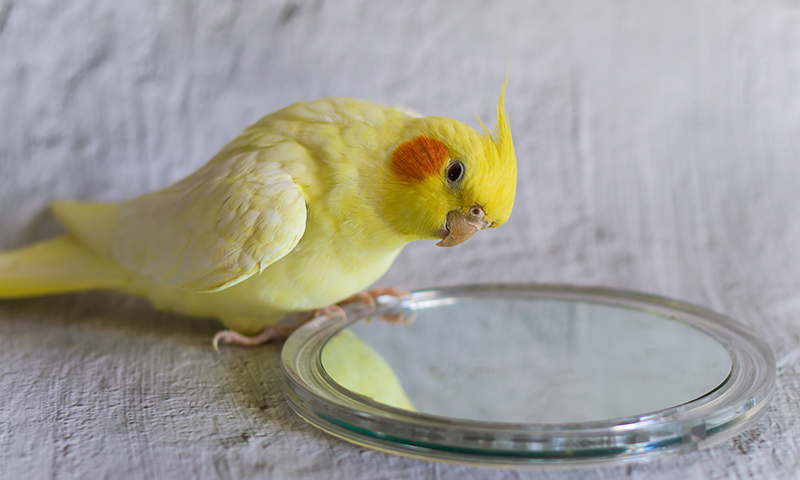
Credit: www.kaytee.com
Mirror Interaction In Birds
Birds often react to mirrors in curious ways. Female birds may peck at mirrors to explore what they see. This behavior shows how birds interact with their reflections.
Understanding why birds peck at mirrors helps us learn about their vision and behavior. It also shows how they recognize or react to reflections.
How Birds See Reflections
Birds see reflections differently than humans. They may not realize the image is themselves. Instead, they might think it is another bird.
Some birds have good eyesight and notice small details. Reflections can look very real to them, causing confusion or curiosity.
- Birds see mirror images as other birds.
- Reflections can trigger social or territorial responses.
- They may not understand the mirror is glass.
Common Reactions To Mirrors
Birds often peck, sing, or display to their reflections. Female birds may peck at mirrors to check or challenge the image.
Other reactions include trying to feed or court the reflection. Some birds become aggressive, seeing the reflection as a rival.
- Pecking at the mirror to interact or test the reflection.
- Singing or calling to the reflected image.
- Displaying feathers or postures to impress or warn.
- Ignoring the mirror after repeated exposure.

Credit: www.reddit.com
Female Birds’ Unique Responses
Female birds often peck at mirrors. This behavior shows how they react to their reflections.
Their actions tell us about their feelings and instincts. These responses are different from male birds.
Territorial Behavior
Female birds see their reflection as another bird. They think it is an intruder in their space.
Pecking at the mirror is a way to defend their territory. They want to scare away the “other bird.”
- Pecking shows they want to protect their area
- They may puff up feathers to look bigger
- Sometimes they sing loudly to warn the “intruder”
Mating And Courtship Signals
Some female birds peck mirrors during courtship times. They think the reflection could be a potential mate.
This action helps them show interest or test their own appearance. It is part of their mating behavior.
- Pecking can be a way to get attention
- They might use it to practice courtship moves
- Seeing themselves helps females prepare for mating
Pecking As Communication
Female birds often peck at mirrors to communicate feelings. This behavior shows how birds use pecking to send messages.
Pecking helps birds express different emotions or reactions to what they see.
Aggression And Defense
When female birds see their reflection, they may think it is a rival. Pecking acts as a way to defend their territory.
- Pecking warns the other bird to stay away.
- It shows the bird’s strength and readiness to fight.
- This behavior helps keep the bird’s space safe.
Curiosity And Exploration
Birds also peck at mirrors to learn about the strange image they see. This is a form of exploring their environment.
| Reason | What the Bird Does |
| Curiosity | Pecks gently to test the reflection |
| Exploration | Looks at the mirror from different angles |
| Recognition | Tries to understand if the image is another bird |
Species Differences In Mirror Pecking
Female birds often peck at mirrors, but their behavior varies by species. Some species react strongly, while others show little interest. Understanding these differences helps explain bird behavior and social needs.
Mirror pecking is linked to how birds see themselves and their social environment. Different birds have unique ways of interacting with reflections based on their nature and group behavior.
Songbirds Vs. Parrots
Songbirds and parrots show different reactions to mirrors. Songbirds often see their reflection as a rival. They may peck or sing aggressively to defend their space. Parrots, on the other hand, may treat the mirror like a companion or playmate.
- Songbirds peck to protect territory.
- Parrots may interact playfully with reflections.
- Parrots can recognize themselves in mirrors more often.
- Songbirds rarely show self-recognition.
Impact Of Social Structure
| Species Type | Social Behavior | Mirror Pecking Reason |
|---|---|---|
| Highly Social Species | Live in large groups or pairs | Use mirror for social interaction or comfort |
| Territorial Species | Defend a specific area | Peck mirror as if it is a rival bird |
| Solitary Species | Prefer to be alone | Show less interest in mirrors |
Effects Of Mirror Exposure
Female birds often peck at mirrors because they see their reflection. This reflection can affect their behavior and emotions.
Understanding the effects of mirrors helps us know how birds react and what they feel.
Stress And Anxiety
Seeing their own reflection may confuse female birds. They might think another bird is nearby. This can cause stress or anxiety.
- Birds may become aggressive toward the mirror.
- They might peck repeatedly at the reflection.
- Some birds show signs of nervousness or fear.
- Stress levels can rise if the mirror stays for a long time.
Behavioral Enrichment
Mirrors can also provide mental stimulation for female birds. They offer a way to interact with their environment.
| Behavior | Effect |
| Pecking at mirror | Exercise for beak and body |
| Watching reflection | Engages curiosity |
| Vocalizing toward mirror | Practice communication sounds |
| Reduced boredom | Improved mood |
Tips For Using Mirrors With Birds
Female birds often peck at mirrors. They see their reflection and think it is another bird. Mirrors can be fun but need careful use.
Placing mirrors correctly can help keep birds safe. It’s important to watch how birds react to mirrors to ensure they are happy.
Safe Mirror Placement
Mirrors should be placed where birds can reach them. Make sure they are secure and won’t fall. Birds need room to move around them.
Try to put mirrors at eye level for the birds. This helps them see their reflection easily without straining their necks.
- Avoid placing mirrors in direct sunlight
- Check that the mirror is bird-safe
- Keep mirrors clean and scratch-free
Monitoring Bird Reactions
Watch how your bird behaves around mirrors. Some birds enjoy them, while others may become upset or aggressive.
If your bird seems stressed, remove the mirror. Happy birds may sing or play in front of the mirror.
- Observe if the bird pecks too much
- Look for signs of stress or aggression
- Ensure the bird has other toys to play with

Credit: medium.com
Frequently Asked Questions
Why Do Female Birds Peck At Mirrors?
Female birds peck at mirrors because they see their reflection as a rival. This behavior is a territorial response to protect their space. They mistake the reflection for another bird, leading to pecking and aggressive behavior.
Do Female Birds Recognize Themselves In Mirrors?
Most female birds do not recognize themselves in mirrors. They perceive their reflection as another bird. This lack of self-recognition triggers territorial or mating behaviors toward the mirror image.
Can Mirror Pecking Harm Female Birds?
Yes, constant mirror pecking can injure female birds. Repeated pecking may cause stress or physical damage. It’s best to limit mirror exposure to prevent harm.
How Can I Stop Female Birds From Pecking Mirrors?
To stop mirror pecking, cover or remove the mirror. Providing more natural stimuli or social interaction helps reduce aggressive behavior. Using non-reflective surfaces can also be effective.
Conclusion
Female birds peck at mirrors because they see their reflection as a rival. This behavior shows their natural instinct to protect territory. They often try to scare away the “other bird” they think is there. Sometimes, pecking helps them understand their own image.
This action is common in many bird species. Observing this can teach us about bird behavior. It reminds us how animals react to reflections in nature. Understanding this helps bird watchers and pet owners care better for birds. Simple actions can reveal complex instincts.
Nature’s small mysteries, explained.




