
Do you love watching birds visit your yard but don’t have a tree to hang a feeder? You’re not alone, and the good news is—you don’t need a tree to enjoy the beauty of feathered friends up close.
Imagine filling your outdoor space with colorful birds, all gathered around a feeder you set up yourself. You’ll discover simple, creative ways to hang a bird feeder without relying on a tree. Ready to attract more birds and bring nature right to your doorstep?
Keep reading, and you’ll find easy, practical tips to make it happen.

Credit: www.yahoo.com
Choosing The Right Location
Choosing the right location for your bird feeder makes a big difference. Birds feel safer and visit more often if the spot fits their needs. Finding a good place without a tree takes some thought. Focus on sunlight, shelter, traffic, and access for birds. These factors help your feeder attract more visitors and keep them safe.
Consider Sunlight And Shelter
Pick a spot with morning sunlight. It warms the feeder and helps birds start their day. Avoid places with harsh afternoon sun to keep food fresh. Shelter is important too. Place the feeder near a wall or fence to block strong winds. A little cover protects birds from rain and cold.
Avoid High Traffic Areas
Birds dislike noisy or busy places. Stay away from doorways, playgrounds, or driveways. Choose quiet corners or gardens with less human movement. This helps birds feel calm and safe while feeding. Less disturbance means more visits from shy birds.
Ensure Easy Access For Birds
Birds need clear paths to reach the feeder. Avoid spots blocked by wires or tall fences. Leave space for them to land and take off easily. Ground feeders need low, open areas free from predators. A good spot invites more birds and keeps them coming back.
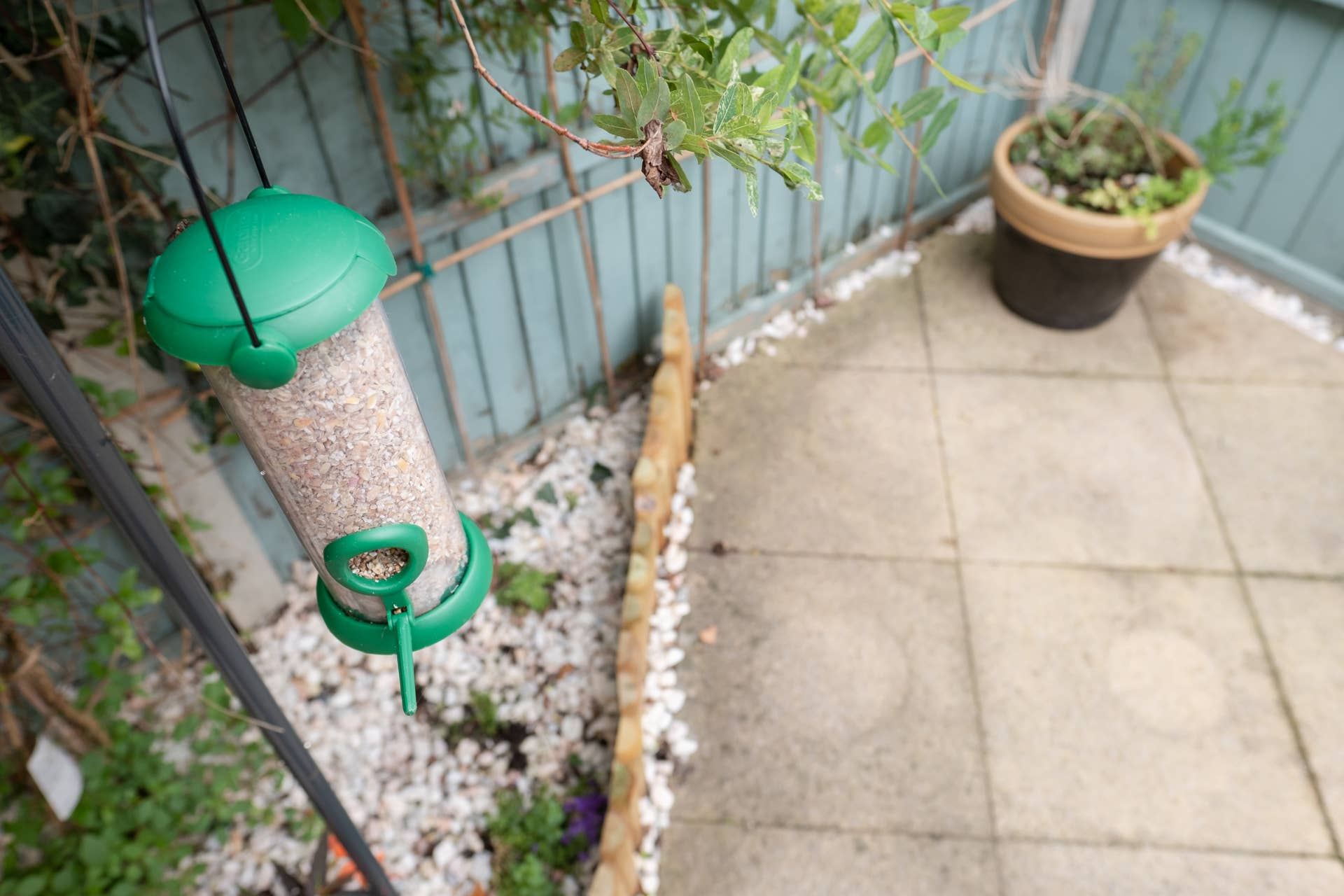
Credit: dengarden.com
Using Poles And Stakes
Using poles and stakes is a smart way to hang a bird feeder if you don’t have access to a tree. It gives you flexibility to place feeders exactly where you want, whether that’s near a window or in an open garden space. Let’s break down how to choose the right materials, install them securely, and attach your feeder safely.
Selecting Durable Materials
Choosing the right pole or stake is crucial for durability and stability. Metal poles, like steel or aluminum, resist weather damage better than wood. If you prefer wood, make sure it’s treated or naturally rot-resistant, such as cedar or redwood.
Consider the height and weight capacity of the pole based on the feeder you plan to hang. A tall, sturdy pole is better for larger feeders that attract bigger birds. Have you thought about the weather conditions in your area? That should influence your material choice too.
Installing Ground Stakes Securely
Firm installation keeps your feeder steady and safe from wind or curious animals. Drive the stake deep into the ground—at least 12 inches for most poles—to ensure stability. If your soil is loose, compact it around the base or add gravel for extra support.
Using a level can help you keep the pole straight. A slight tilt might cause feeders to swing excessively or even fall. Have you checked how crowded the area is? Make sure there’s enough space around the pole for birds to land and perch comfortably.
Attaching The Feeder Safely
Secure attachment prevents feeders from tipping or swinging too much. Use strong hooks or brackets designed for outdoor use. Avoid flimsy strings or thin wires that can break under weight or weather stress.
Place the feeder at a height that’s safe from predators but still easy for you to refill. A good rule is about 5 to 6 feet off the ground. Have you thought about adding a baffle to deter squirrels? That simple addition can save you a lot of frustration.
Mounting On Walls And Fences
Not having a tree nearby shouldn’t stop you from enjoying the cheerful visits of birds. Walls and fences offer excellent alternative spots to hang your bird feeder. These surfaces can provide the right height and visibility, making your feeder accessible and attractive to birds.
Choosing The Best Wall Or Fence
Pick a wall or fence that faces an open area where birds can easily spot the feeder. South or east-facing surfaces often get the morning sun, which keeps the feeder dry and inviting.
Also, consider placing the feeder away from high-traffic areas to avoid scaring the birds. A sturdy fence or brick wall usually holds weight well and resists weather better than flimsy wooden panels.
Using Hooks And Brackets
Use strong hooks or brackets designed for outdoor use. Screw-in hooks or L-shaped brackets provide solid support and prevent the feeder from swinging too much in the wind.
- Choose stainless steel or coated metal hooks to avoid rust.
- Make sure the hooks are screwed deep enough for stability.
- Adjust the bracket length so the feeder hangs at a comfortable height for refilling.
Ensuring Stability And Safety
Secure the feeder firmly to prevent accidents that could harm birds or damage your property. Check that the mounting can handle the feeder’s weight plus the added weight of seeds and visiting birds.
Think about the feeder’s accessibility for cleaning and refilling. A stable setup not only protects birds but also saves you time and effort in maintenance.
Diy Hanging Structures
Creating a spot for your bird feeder without a tree nearby can be surprisingly simple and fun. Building your own hanging structure lets you control the location, height, and style perfectly. It also adds a unique touch to your outdoor space that can attract more birds and spark your creativity.
Building A Freestanding Frame
Constructing a freestanding frame is a solid option if you want flexibility. Use sturdy materials like wood or metal poles to create a frame that can hold your bird feeder securely. Think about stability—widen the base or add weight to keep it from tipping in the wind.
Try making an A-frame or a simple T-shaped stand. These designs are easy to build and can be customized to fit your space. You can even paint or stain the wood to match your garden’s look.
Using Repurposed Items Creatively
Look around your home for items that can double as bird feeder hangers. Old ladders, garden tools, or even bike frames can be transformed into creative stands. This approach not only saves money but also gives new life to items you might otherwise discard.
Imagine hanging feeders from the rungs of a weathered ladder or a sturdy rake handle fixed upright in the ground. These unexpected supports often spark conversations and add character to your garden.
Adding Decorative Elements
Don’t stop at functionality—make your bird feeder stand a piece of art. Adding colorful beads, wind chimes, or painted accents draws attention and encourages more bird visits. Decorative elements can also help camouflage the stand, making birds feel safer.
Think about materials that catch light or move gently in the breeze. These little touches create a lively environment, turning your feeding area into a charming focal point that you and your feathered friends will enjoy.
Hanging From Poles Or Shepherd Hooks
Hanging a bird feeder from poles or shepherd hooks offers a simple way to enjoy birds without needing a tree. These supports are easy to move and place in any garden spot. They provide a safe, stable spot for feeders to attract colorful birds.
Hanging a bird feeder without a tree might seem challenging at first, but using poles or shepherd hooks offers a practical and aesthetically pleasing solution. These versatile tools allow you to place bird feeders in a variety of locations, providing flexibility and creativity in your garden or backyard. Whether you’re dealing with limited space or simply lack a suitable tree, poles and shepherd hooks can be your go-to option for attracting feathered friends.Selecting Sturdy Hooks
When choosing hooks, prioritize durability and strength. Metal hooks are a solid choice due to their ability to withstand various weather conditions. Look for hooks with a powder-coated finish to prevent rust and corrosion. Height matters. Consider adjustable hooks if you want to experiment with different heights. This flexibility can help you discover what works best for your yard.Placement Tips For Visibility
Visibility is key for attracting birds. Position your poles or shepherd hooks in open areas where birds can easily spot the feeder. Ensure the feeder is visible from your windows, allowing you to enjoy birdwatching from the comfort of your home. Think about the surrounding landscape. Avoid placing hooks near obstacles like fences or walls, which might deter birds from visiting. A clear, unobstructed view is always preferable.Maintaining Balance And Security
Stability is crucial for hanging bird feeders. Ensure the pole or shepherd hook is firmly anchored in the ground to prevent tipping. You might want to use a stabilizer or ground screw for extra security. Distribute weight evenly. If you’re hanging multiple feeders, balance them out to avoid leaning or swaying. This not only keeps the feeders stable but also enhances the overall appearance of your setup. By using poles or shepherd hooks, you’re not just finding an alternative to trees; you’re enhancing your garden’s appeal. Have you considered the joy of discovering new bird species visiting your feeder? Embrace this method and watch your backyard transform into a lively haven for birds.
Credit: www.calloways.com
Using Ceiling Or Porch Hooks
Ceiling or porch hooks offer a simple way to hang a bird feeder without a tree. Secure the hook into a sturdy ceiling or porch beam, then hang the feeder for easy bird watching. This method keeps feeders safe and visible.
Installing a bird feeder without the availability of a tree might seem challenging, but using ceiling or porch hooks can be a seamless solution. These hooks provide a sturdy point of attachment, allowing bird feeders to hang securely and attract feathered friends to your space. Whether you’re enhancing your porch or adding charm to an indoor spot, ceiling and porch hooks offer versatility and ease.Finding Suitable Indoor Or Outdoor Spots
The first step is to identify the best location for your feeder. If you’re hanging it outdoors, look for a spot on your porch or balcony where birds can easily spot and access the feeder. Ensure there’s enough clearance for birds to fly freely without obstruction. Indoors, consider placing the feeder near a window where birds can be observed closely. This can turn birdwatching into a delightful indoor hobby, especially during colder months. Ensure the spot is away from high traffic areas to keep the birds undisturbed.Installing Hooks Properly
Proper installation of hooks is crucial for safety and stability. Use a stud finder to locate a joist or beam on the porch or ceiling to ensure a secure hold. If attaching directly to drywall, consider using anchors to support the weight of the feeder. When drilling, make sure the hook is screwed in tightly to avoid any accidental falls. If you’re unsure about the installation, consulting with a professional can ensure that your feeder is both safe and secure.Combining With Other Garden Decor
Why stop at just a bird feeder? By cleverly combining your feeder with other garden decor, you can create a cohesive and inviting space. Consider adding hanging plants or wind chimes to the same hook for a layered effect. Think about the colors and materials of your decor pieces. A rustic metal feeder might pair beautifully with wooden planters. Or, if you prefer a modern aesthetic, sleek metallic hooks can complement minimalist sculptures or potted succulents. As you design, ask yourself: How can this arrangement bring joy not just to the birds, but to my space as well?Safety Tips For Bird Feeders
Keeping bird feeders safe ensures birds enjoy their food without harm. Proper safety measures protect birds from predators, diseases, and harsh weather. These tips help maintain a healthy feeding spot and attract more visitors.
Preventing Predator Access
Predators like cats and squirrels can threaten birds at feeders. Use baffles or guards on poles to stop climbing animals. Place feeders away from places predators can hide or jump from. Secure feeders with sturdy hooks or chains to prevent easy removal.
Keeping Feeders Clean
Dirty feeders spread diseases among birds. Clean feeders every two weeks using warm water and mild soap. Rinse well and let them dry completely before refilling. Remove old or moldy seeds to keep birds healthy and safe.
Protecting Feeders From Weather
Strong winds, rain, and snow can damage feeders and spoil food. Use feeders made of durable materials like metal or thick plastic. Place feeders in sheltered spots or add weather shields. Check feeders regularly for wear and tear to ensure they last long.
Attracting Birds Without Trees
Attracting birds without trees might sound challenging, but it’s entirely possible with the right approach. Birds look for food, water, and shelter wherever they can find it. By focusing on these essentials, you can create a welcoming space even in open areas or small yards without mature trees.
Choosing The Right Bird Food
Picking the right bird food is key to drawing different species to your feeder. Sunflower seeds attract a wide variety of birds, including finches and chickadees. If you want to see woodpeckers or nuthatches, try offering suet or peanuts.
Mixing seeds can bring more diversity to your feeder. You might notice some birds prefer shelled seeds while others go for whole seeds. Experiment with what you offer and watch which birds show up the most.
Adding Water Sources Nearby
Birds need fresh water for drinking and bathing. Even if you don’t have a pond or stream, a small birdbath or shallow dish can do the trick. Place it close to your feeder but in a safe spot where birds can watch for predators.
Keep the water clean and refill it regularly. You might be surprised how quickly birds discover a new water source. Watching them splash and drink can add a whole new layer of enjoyment to your bird-watching.
Providing Shelter Alternatives
Without trees, birds need places to hide and rest. You can add birdhouses, brush piles, or even tall shrubs to give them shelter. These alternatives offer protection from weather and predators.
Think about the types of birds you want to attract and provide shelter that suits their needs. For example, nesting boxes work well for cavity-nesting birds like bluebirds. Would you consider planting fast-growing shrubs to create natural cover?
Frequently Asked Questions
How Can I Hang A Bird Feeder Without A Tree?
You can hang a bird feeder using poles, shepherd hooks, or wall mounts. Choose stable supports near bird activity areas for best results.
What Materials Work Best For Hanging Feeders Without Trees?
Metal poles, wooden posts, or sturdy hooks are ideal. These materials withstand weather and provide strong support for feeders.
Where Should I Place A Bird Feeder Without Nearby Trees?
Place feeders in open areas with some shelter nearby. Avoid windy spots and ensure visibility for birds and easy refilling.
Can I Hang A Bird Feeder On My Porch Or Balcony?
Yes, use hooks or brackets designed for railings or ceilings. Ensure secure mounting to prevent feeder tipping or falling.
Conclusion
Hanging a bird feeder without a tree is simple and fun. Use poles, hooks, or stands to place your feeder. Choose a safe spot where birds can eat peacefully. Keep the feeder clean and filled with fresh seeds. Watching birds visit your feeder brings joy every day.
Try these easy steps to enjoy birdwatching anywhere. Your feathered friends will thank you for it!




