
Have you ever wanted to create stunning bird’s eye view drawings but didn’t know where to start? You’re not alone.
Drawing from above can seem tricky at first, but with the right steps, you can master it quickly. In this guide, you’ll discover simple techniques that make drawing birds eye view easy and fun. By the end, you’ll have the confidence to bring your ideas to life from a whole new perspective.
Ready to see the world from above and improve your skills? Let’s dive in!
Basics Of Bird’s Eye View
Bird’s eye view shows a scene from above. It looks like you are flying over the subject.
This view helps artists and designers show layouts clearly. It gives a new way to see objects and spaces.
What Is Bird’s Eye View
Bird’s eye view is a drawing or photo taken from high above. You see the tops of things, like roofs, trees, or people’s heads.
- Also called aerial view or plan view
- Shows the layout of places or objects from above
- Used to map streets, buildings, or rooms
- Helps understand how parts fit together
Common Uses In Art And Design
Artists and designers use bird’s eye view for many reasons. It makes complex scenes easier to understand.
| Use | Purpose | Example |
| Maps | Show streets and land layouts | City maps, park plans |
| Game Design | Display game worlds clearly | Strategy games, RPG maps |
| Architecture | Present building layouts | Floor plans, site plans |
| Illustration | Create interesting perspectives | Comics, storyboards |

Credit: www.youtube.com
Essential Tools And Materials
Drawing a bird’s eye view can be easier with the right tools. These tools help you create clear and accurate sketches. Beginners need simple supplies to start practicing.
Both traditional and digital tools can improve your drawing experience. Choose the ones that fit your style and budget.
Drawing Supplies Needed
Basic drawing supplies help you make detailed bird’s eye view sketches. Use these to control lines and shapes better.
- Pencils (HB and 2B for sketching and shading)
- Eraser (soft for gentle corrections)
- Ruler (for straight lines and measurements)
- Drawing paper (smooth texture and medium weight)
- Fine liners or ink pens (for outlining final drawing)
- Colored pencils or markers (optional for adding color)
Digital Tools For Beginners
Digital drawing tools help you create bird’s eye views on your computer or tablet. Many apps offer easy-to-use features for beginners.
| Tool | Purpose | Price |
| Drawing Tablet | Draw directly on screen or pad | Low to High |
| Graphic Software | Sketch and color digitally | Free to Paid |
| Stylus Pen | Precise drawing control | Included with tablet or separate |
| Computer or Tablet | Runs drawing apps | Varies |
Starting With Simple Shapes
Drawing a bird’s eye view can be fun and easy. Start with simple shapes to build your sketch.
Simple shapes help you see the big picture before adding details. Circles, squares, and rectangles work well.
Sketching Basic Forms
Begin by drawing basic shapes to represent objects from above. For example, use circles for trees and rectangles for buildings.
Keep shapes light and simple. This way, you can change them easily as your drawing grows.
- Draw circles for round objects like bushes or ponds
- Use rectangles for houses or cars
- Sketch lines to show roads or paths
- Start with light pencil strokes to adjust shapes
Creating Depth And Perspective
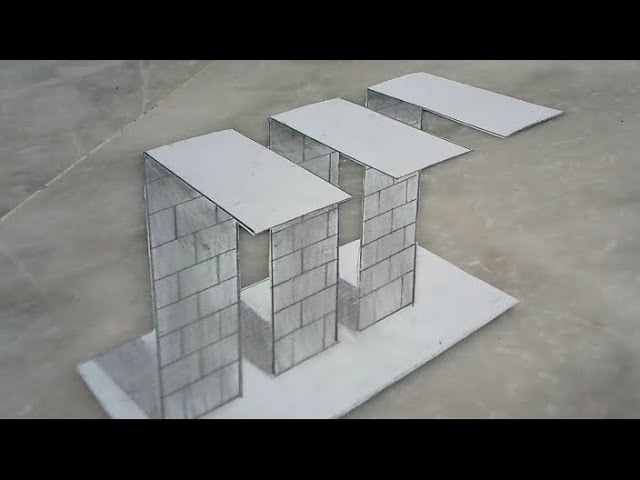
To make your bird’s eye view look real, add depth and perspective. This shows how far or close objects are.
Use size and position to create distance. Smaller shapes look farther away, bigger ones seem closer.
- Place larger shapes near the bottom for closeness
- Draw smaller shapes toward the top to show distance
- Overlap shapes to add a sense of space
- Use light shading to suggest height and depth
Credit: www.youtube.com
Adding Details Step-by-step
Drawing a bird’s eye view can seem hard at first. Adding details in steps makes it easier. This guide shows how to add details clearly and simply.
Focus on key shapes and shadows to bring your drawing to life. Small touches help create depth and realism.
Outlining Key Features
Start by marking the main shapes you see from above. Look for big parts like roofs, roads, and trees. Use light lines to keep changes easy.
- Draw the largest shapes first.
- Add smaller shapes inside the big ones.
- Use simple lines to show edges and boundaries.
- Keep proportions in mind for a natural look.
- Check your work from a distance to see if shapes look right.
Shading And Texturing Techniques
Shading adds depth and shows light direction. Textures make surfaces look real, like rough roofs or smooth roads. Use soft strokes for light areas and strong strokes for dark.
| Technique | Effect | How to Apply |
|---|---|---|
| Hatching | Creates light and shadow | Draw parallel lines close or far apart |
| Cross-Hatching | Adds darker shadows | Draw lines crossing each other |
| Stippling | Shows texture like gravel or leaves | Make many small dots |
| Blending | Smooths shaded areas | Use a blending tool or finger |
Common Mistakes To Avoid
Drawing a bird’s eye view can be tricky for beginners. Many make errors that distort the overall image.
This guide highlights common mistakes in perspective and proportion to help you improve your sketches.
Perspective Errors
Incorrect perspective makes your drawing look flat or confusing. It is key to keep the viewpoint consistent.
- Ignoring the horizon line causes objects to float or sink unnaturally.
- Using multiple vanishing points wrongly can break the scene’s unity.
- Forgetting to shrink distant objects makes the view unrealistic.
- Overlooking the angle of the ground plane leads to distorted shapes.
Proportion Issues
Proportion mistakes create imbalance and confuse the viewer about scale.
| Common Problem | What Happens | How to Fix |
| Too large or too small objects | Distorts the sense of space | Measure relative sizes carefully |
| Uneven spacing between elements | Creates awkward empty areas | Use grids or guidelines |
| Ignoring the viewpoint’s scale | Objects look out of place | Adjust size based on distance |

Credit: www.youtube.com
Practice Exercises
Practicing how to draw birds eye view helps improve your skills. Regular exercises build your confidence and accuracy.
This section gives simple exercises to try drawing from above. Use easy objects and references to start.
Drawing Everyday Objects
Pick common items like a cup, chair, or table. Draw them from a top-down view to see their shapes clearly.
- Place the object on a flat surface.
- Look straight down at the object.
- Sketch the outline you see.
- Add details like shadows or texture.
- Try drawing the same object from different heights.
Using Reference Images
Use photos taken from above to practice. These images help you understand angles and proportions.
| Type of Image | What to Practice |
| Birds eye view of a park | Shapes of paths and trees |
| City rooftops | Building layouts and shadows |
| Table settings | Object placement and scale |
| Kitchen counters | Arrangement of utensils |
Tips For Improving Skills
Drawing birds eye view can be tricky for beginners. It takes time and effort to get better.
These tips will help you improve your skills step by step. Keep practicing and stay motivated.
Consistent Practice Habits
Practice regularly to improve your birds eye view drawings. Short daily sessions work better than long rare ones.
Focus on simple shapes first. Draw squares, circles, and rectangles from above to build your skills.
- Set aside 15-30 minutes each day for drawing.
- Use reference images to understand angles.
- Try drawing different objects from above.
- Keep your sketches loose and light at first.
- Review your old drawings to see progress.
Seeking Feedback And Inspiration
Ask others to look at your drawings. Feedback helps you spot mistakes and improve faster.
Look at other artists’ birds eye view drawings for ideas. Inspiration will help you try new styles and techniques.
- Join art groups or forums online to share your work.
- Watch videos and tutorials on birds eye view drawing.
- Visit art galleries or books for new ideas.
- Accept constructive criticism with an open mind.
- Keep a sketchbook of inspiring images and notes.
Frequently Asked Questions
What Is A Birds Eye View In Drawing?
A birds eye view shows a scene from directly above. It helps capture layouts and spatial relationships clearly. Beginners use it to simplify complex subjects and improve perspective skills. This view is common in maps, architecture, and design sketches.
How Do Beginners Start Drawing Birds Eye Views?
Start with simple shapes and basic outlines. Use grid paper to maintain scale and proportions. Sketch lightly and build details gradually. Observing real-life aerial photos can improve understanding. Practice helps develop accuracy and confidence in this perspective.
What Tools Are Best For Birds Eye View Sketches?
Pencils, erasers, and rulers are essential for beginners. Graph paper aids in maintaining proportions. Digital tablets with drawing apps can also be useful. Choose tools that allow easy corrections and precise lines to enhance your drawing process.
How Can I Improve Perspective In Birds Eye Drawings?
Focus on consistent vanishing points and horizon lines. Practice using grids to maintain scale accuracy. Study real aerial images for reference. Regular sketching helps train your eye to capture depth and spatial relationships better.
Conclusion
Drawing a bird’s eye view is a rewarding skill to learn. With practice, you can capture amazing scenes from above. Start with simple shapes and build your confidence. Don’t rush the process; patience is key. Use reference images to guide your creativity.
Experiment with different perspectives and angles. Each drawing is a step toward improvement. Remember, mistakes are part of learning. Keep your tools ready and your mind open. Enjoy the journey of creating unique and captivating views. Share your art with others and get feedback.
Happy drawing!




