
Have you ever wanted to draw a car from a bird’s eye view but didn’t know where to start? You’re in the right place.
Drawing a realistic car from above can seem tricky, but with the right steps, you can master it faster than you think. In this guide, you’ll discover simple techniques to capture the perfect angles, details, and proportions that make your car look real and impressive.
Stick with me, and by the end, you’ll be confident in creating your own stunning bird’s eye view car drawings. Let’s get started!

Credit: www.dreamstime.com
Materials Needed
Drawing a car from a bird’s eye view looks amazing and needs the right tools. Using good materials helps you create a realistic image.
Here are the essential materials to prepare before you start your drawing.
Pencils
Pencils are the main tools for sketching your car outline. Use different pencil types for shading and details.
- Use HB or 2B pencils for basic outlines.
- Use 4B or 6B pencils for dark shadows.
- Mechanical pencils work well for fine lines.
Paper
Choose smooth paper that can handle pencil shading. Thick paper stops smudging and tearing.
- Use sketching paper or drawing pads.
- Paper size should be big enough for details.
- Look for acid-free paper to keep your drawing safe.
Erasers
Erasers help fix mistakes and add highlights. Use soft and precise erasers for different effects.
- A kneaded eraser works well for lightening areas.
- A precision eraser helps erase small details.
- A regular rubber eraser can remove big marks.
Rulers And Templates
Rulers help you draw straight lines for the car’s body. Templates can guide you with curves and circles.
- Use a ruler for windows and edges.
- Circle templates help with wheels and headlights.
- French curves assist in smooth car shapes.
Blending Tools
Blending tools help smooth pencil shading for a realistic look. They create soft shadows and gradients.
- Tortillons or blending stumps work best.
- Use tissue paper for gentle blending.
- Soft brushes can also smooth pencil marks.
Reference Images
Reference images show how a car looks from above. They help you draw correct shapes and details.
- Find bird’s eye view photos of cars online.
- Use car model drawings for accuracy.
- Study different angles to understand shapes.
Basic Shapes And Proportions
Drawing a car from a bird’s eye view needs focus on shapes and proportions. It helps make the car look real and balanced. Start with simple shapes to build the car’s form.
Knowing the right proportions keeps the car looking correct from above. This guide covers key shapes and sizes to draw a realistic car top view.
Using Basic Shapes
Begin with rectangles and ovals to outline the car’s body and wheels. These shapes form the base of your drawing. The car’s main body is usually a long rectangle with rounded edges.
Place two ovals for the wheels on each side of the rectangle. These shapes show where the tires sit under the car.
Understanding Proportions
Keep the car’s length about twice its width. This ratio fits most standard cars seen from above. The wheels should take about one-third of the car’s width.
- Draw a rectangle twice as long as it is wide.
- Add two wheels on each side, sized to one-third width.
- Round the corners of the rectangle for a smooth shape.
- Mark the front and rear windows with smaller rectangles.
- Sketch the roof as a smaller rectangle inside the main body.
Proportions Table For A Typical Car
| Part | Proportion to Length | Notes |
| Car Width | 1/2 Length | Width is half the length |
| Wheel Diameter | 1/3 Width | Wheels fit under body edges |
| Roof Length | 1/3 Length | Roof sits centered on body |
| Window Length | 1/4 Length | Front and rear windows |
Sketching The Car Outline
Drawing a car from a bird’s eye view shows the entire shape from above. Start by sketching a simple outline of the car to get the basic form right.
Keep your lines light and loose at first. This helps you adjust the shape as you go.
Drawing The Body Frame
Begin with the main body frame of the car. Use a rectangle or oval shape to represent the car’s footprint.
Mark the front and rear ends carefully. The sides should curve slightly to show the car’s shape.
- Draw a horizontal rectangle as the base shape
- Smooth the corners for a realistic look
- Leave space for wheels on the sides
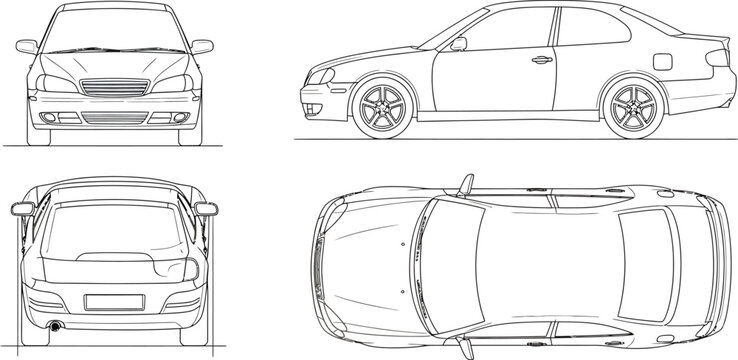
Adding The Roof And Windows
Next, add the roof of the car inside the body frame. It should be smaller and centered.
Sketch the windows around the roof. Use simple shapes like rectangles or trapezoids for each window.
- Draw a smaller rectangle for the roof inside the body
- Place side windows as trapezoids along the roof sides
- Add a windshield and rear window at the front and back
Credit: stock.adobe.com
Detailing The Wheels And Tires
Drawing a car from a bird’s eye view needs special focus on the wheels and tires. These parts give the car its shape and add realism.
Good details on wheels and tires make your drawing more believable and interesting to look at.
Sketching The Basic Shape Of Wheels
Start by drawing perfect circles for the wheels. Use a compass or trace round objects to get even shapes. Make sure the wheels line up with the car body.
Adding Tread And Tire Details
Draw the tire tread by adding small lines or patterns around the edge of the tire. This detail shows texture and depth.
- Use short curved lines for tire grooves.
- Add small dots or shapes for wear and tear.
- Draw shadows inside the tire edge for thickness.
Detailing The Wheel Rims
Wheel rims have many designs. Start with a circle inside the tire. Then add spokes or patterns to show the rim style.
| Rim Part | Details to Draw |
| Center cap | Small circle in the middle |
| Spokes | Lines or shapes radiating from the center |
| Rim edge | Outer ring, thicker than spokes |
Using Shadows And Highlights
Shadows make the wheels look round and real. Add dark areas under the tire and lighter lines on top for shine.
Tip:Use soft pencils or shading tools to blend shadows smoothly. This helps create a 3D look for the tires.
Adding Shadows And Highlights
Shadows and highlights make your bird’s eye view car drawing look real. They add depth and show how light hits the car.
Knowing where to place shadows and highlights helps you create a three-dimensional effect. This makes the car stand out on your paper.
Identify The Light Source
First, decide where the light is coming from in your drawing. This direction affects where shadows and highlights appear on the car.
For example, if the light is from the top left, shadows will be on the bottom right side of the car.
Add Shadows To Create Depth
Shadows show areas blocked from light. They make parts of the car look farther away or lower.
Use darker tones under the car, around the wheels, and under edges where light can’t reach.
- Under the chassis and wheel arches
- Along the sides opposite the light
- Near small details like mirrors and door handles
Use Highlights To Show Light Reflection
Highlights are bright spots where light hits directly. They make the car look shiny and smooth.
Apply highlights on top surfaces and curves facing the light source. Use lighter tones or white to create these spots.
- On the roof and hood of the car
- Along the edges facing the light
- On reflective surfaces like windows and mirrors
Blend Shadows And Highlights Smoothly
Use soft strokes or blending tools to join shadows and highlights. This makes the car look natural and realistic.
Harsh lines can make the drawing look flat or fake. Smooth blending shows how light changes on the car’s surface.
Refining The Sketch
After drawing the basic shapes of the car from a bird’s eye view, it is time to refine your sketch. This step makes your drawing clearer and more detailed.
Refining helps remove rough marks and adds depth to the car’s form. Focus on cleaning lines and adding realistic touches.
Cleaning Up Lines
Start by erasing unnecessary or overlapping sketch lines. Keep only the lines that define the car’s main shape and important features.
- Use a light hand to erase rough sketches gently.
- Redraw essential lines with smooth, confident strokes.
- Make sure the car’s edges are crisp and clear.
- Remove stray marks that distract from the drawing.
- Check symmetry and adjust uneven parts carefully.
Enhancing Realism
Add details that make the car look real from above. Think about shadows, reflections, and textures on surfaces.
| Detail | How to Add |
| Windows | Draw clear outlines with light shading for glass effect |
| Wheels | Show circular shapes and add shadows beneath them |
| Lights | Use small shapes with highlights for shine |
| Body Curves | Use soft lines to show smooth shapes and reflections |
Coloring Techniques
Coloring a car from a bird’s eye view brings life to your drawing. It shows the car’s shape and depth clearly.
Using the right colors and effects makes your drawing look more real and interesting.
Choosing The Color Palette
Pick colors that fit the car type and setting. Use colors that look natural for metal and glass.
- Use shades of gray, silver, or black for modern cars.
- Bright colors like red, blue, or yellow suit sport cars.
- Consider the environment color reflections, like green from trees.
- Include colors for lights, windows, and tires.
Applying Base Colors
Start by coloring the main body of the car with flat colors. This helps you build the image step by step.
| Part of Car | Base Color Example |
| Body | Dark Blue |
| Windows | Light Gray |
| Tires | Black |
| Lights | Red or White |
Adding Texture And Reflections
Add small details to make the car look shiny and real. Use light and shadow to show curves and glass surfaces.
Tips for textures and reflections:
- Use soft white highlights for shiny metal parts.
- Draw slight shadows near edges to show depth.
- Add faint reflections of surroundings on windows.
- Use small brush strokes to create tire textures.

Credit: www.freepik.com
Final Touches And Tips
Adding final details makes your bird’s eye view car drawing look real. Small touches improve the whole image.
Use simple tricks to make your drawing clear and believable. These tips help you finish your car drawing well.
Add Shadows And Highlights
Shadows show where light hits the car. Highlights make parts look shiny and smooth. Both add depth to your drawing.
- Shade under the car to show it is above the ground
- Add light spots on windows and metal parts
- Use soft pencils or light brush strokes for smooth shading
Define Details Clearly
Clear lines make the car’s shape easy to see. Details like tires, mirrors, and door handles add realism.
- Draw tire treads with small lines or shapes
- Show mirrors as small rectangles or ovals
- Outline door handles lightly but visibly
Keep Proportions Accurate
Correct proportions make the car look real from above. Use simple measuring tools or grids to check sizes.
- Compare length and width of the car body
- Make sure wheels are round and the right size
- Keep windows and roof in correct positions
Use Clean Lines And Erase Extra Marks
Neat lines make your drawing clear. Erase construction lines and smudges to finish nicely.
- Use a sharp eraser for small spots
- Trace final lines with a fine pen or dark pencil
- Work slowly to avoid mistakes
Practice Perspective And Angles
Bird’s eye view means looking down on the car. Practice drawing cars from above to improve your skill.
- Draw simple shapes like rectangles and circles first
- Try different angles to see how the car changes
- Use reference photos to understand perspective
Frequently Asked Questions
How Do I Start Drawing A Car From A Bird’s Eye View?
Begin by sketching the basic shape of the car’s roof and windows. Use simple geometric shapes like rectangles and ovals. This helps establish proportions before adding details for a realistic look.
What Tools Are Best For Drawing A Realistic Bird’s Eye Car?
Use pencils for sketching and fine-tip pens for outlines. Blending stumps and erasers help create smooth shading. Digital tools like tablets offer precise control for realistic effects.
How Can I Add Depth To A Bird’s Eye View Car Drawing?
Add shading and highlights based on a light source. Use gradients to show curved surfaces. Details like shadows under the car enhance the three-dimensional effect.
What Details Make A Bird’s Eye View Car Drawing Realistic?
Include windows, mirrors, tires, and roof features like sunroofs. Show reflections on glass and texture on tires. Small details bring authenticity to your drawing.
Conclusion
Creating a realistic car from a bird’s eye view is rewarding. With practice, your skills will improve. Start with basic shapes and refine them. Pay attention to details like shadows and reflections. These enhance realism. Use reference images for better accuracy.
Remember, patience is key. Each drawing gets you closer to perfection. Don’t rush the process. Enjoy the journey of learning and creating. Your unique perspective will shine through. Keep practicing and exploring different techniques. Soon, you’ll confidently draw cars with ease.
Happy drawing!




