
Have you ever wondered if mirrors are good or bad for your feathered friends? Mirrors can be fascinating objects for birds, capturing their attention and sparking a flurry of interaction.
But what is really happening when a bird encounters its own reflection? Could these shiny surfaces be beneficial, or are they doing more harm than good? As a bird lover, understanding the impact of mirrors on birds can help you make more informed decisions about their care.
We’ll explore the surprising effects mirrors have on birds’ behavior and well-being. Prepare to discover insights that might just change how you view these common household items.

Credit: www.youtube.com
Mirrors And Bird Behavior
Mirrors can affect birds in different ways. Some birds get confused by their reflections.
It is important to understand how birds react to mirrors. This helps us protect them.
How Birds React To Reflections
Many birds see their reflection and think it is another bird. They may try to interact with it.
Some birds may sing or call to the reflection. Others might try to touch or attack the mirror.
- Birds may try to mate with the reflection.
- Some birds become curious and investigate the mirror.
- Others get scared or stressed by the mirror image.
Territorial Responses To Mirrors
Many birds see their reflection as a rival. They may defend their space from the mirror image.
Birds may peck at or fly around the mirror to chase away the “intruder.”
- Repeated attacks can tire the bird.
- Stress from seeing a rival can affect bird health.
- Territorial birds often spend a lot of time near mirrors.
Benefits Of Mirrors For Birds
Mirrors can be helpful for pet birds. They can improve a bird’s life in many ways.
Birds often enjoy looking at their reflection. This simple object can bring comfort and fun.
Companionship And Reduced Loneliness
Birds are social animals. A mirror can act like a friend when they are alone.
The reflection helps birds feel less lonely. They may sing or talk to the mirror.
- Birds see a “partner” in the mirror
- They may feel safer with company
- Mirrors reduce stress from being alone
Mental Stimulation And Enrichment
Mirrors give birds something to explore. They can watch their movements and react.
Looking at their reflection keeps birds active and curious. This helps their brain.
- Birds learn to recognize themselves
- They stay alert and entertained
- Mirrors can reduce boredom
Drawbacks Of Mirrors For Birds
Mirrors often seem harmless for pet birds. They can catch a bird’s attention and provide visual stimulation. But mirrors can also cause problems that affect a bird’s health and happiness.
It is important to understand the negative effects mirrors might have on birds. These effects include stress, aggression, and obsessive behaviors. Knowing these can help bird owners make better choices for their pets.
Stress And Aggression Triggers
Birds may see their reflection in a mirror as another bird. This can cause stress and aggression. They might feel the need to protect their space or compete with the “intruder.”
- Repeatedly attacking the mirror can tire the bird and cause injury.
- Stress from seeing a reflection can lower the bird’s immune system.
- Some birds become anxious and stop eating or playing.
- Constant aggression can lead to long-term behavioral issues.
Potential For Obsessive Behavior
Some birds may become obsessed with their mirror reflection. They might spend too much time looking or talking to the mirror. This behavior can replace normal social interaction and exercise.
| Obsessive Behavior | Possible Consequences |
| Excessive mirror interaction | Less social contact with owners or other birds |
| Ignoring food or toys | Weight loss and poor health |
| Repeated vocalizing at reflection | Stress and fatigue |
| Feather plucking or self-harm | Physical injury |
Species Differences In Mirror Interaction
Birds react to mirrors in many ways. Their behavior depends on the species and the mirror’s presence.
Some birds see mirrors as friends or rivals. Others may ignore or get stressed by them.
Parrots And Reflective Surfaces
Parrots often enjoy mirrors. They may talk or play with their reflection. It can help reduce boredom.
At times, parrots may think the reflection is another bird. This can cause friendly or aggressive behavior.
- Mirrors provide mental stimulation for parrots
- They may mimic their reflection’s actions
- Some parrots get jealous or territorial
- Owners should watch for signs of stress
Smaller Birds And Mirror Effects
Smaller birds like finches and canaries react differently. Many see mirrors as rivals and may attack their reflection.
In some cases, mirrors cause stress. Birds may pace or feather pluck if they feel trapped by their reflection.
- Some smaller birds get aggressive toward mirrors
- Mirrors can cause anxiety or frustration
- Not all smaller birds respond the same way
- Monitor behavior closely if mirrors are used
Safe Use Of Mirrors Around Birds
Mirrors can be fun for birds, but they must be used carefully. Some birds see their reflection and get stressed.
This guide explains how to place mirrors safely and watch your bird’s reaction.
Placement Tips To Avoid Stress
Put mirrors where birds feel safe. Avoid placing them in busy spots or near windows with outside reflections.
- Place mirrors at bird eye level, but not too close.
- Avoid direct sunlight to stop glare that can scare birds.
- Use small mirrors to limit reflection size.
- Keep mirrors away from bird cages if the bird seems stressed.
- Check mirrors often for cracks or dirt to keep them safe.
Monitoring Bird Reactions
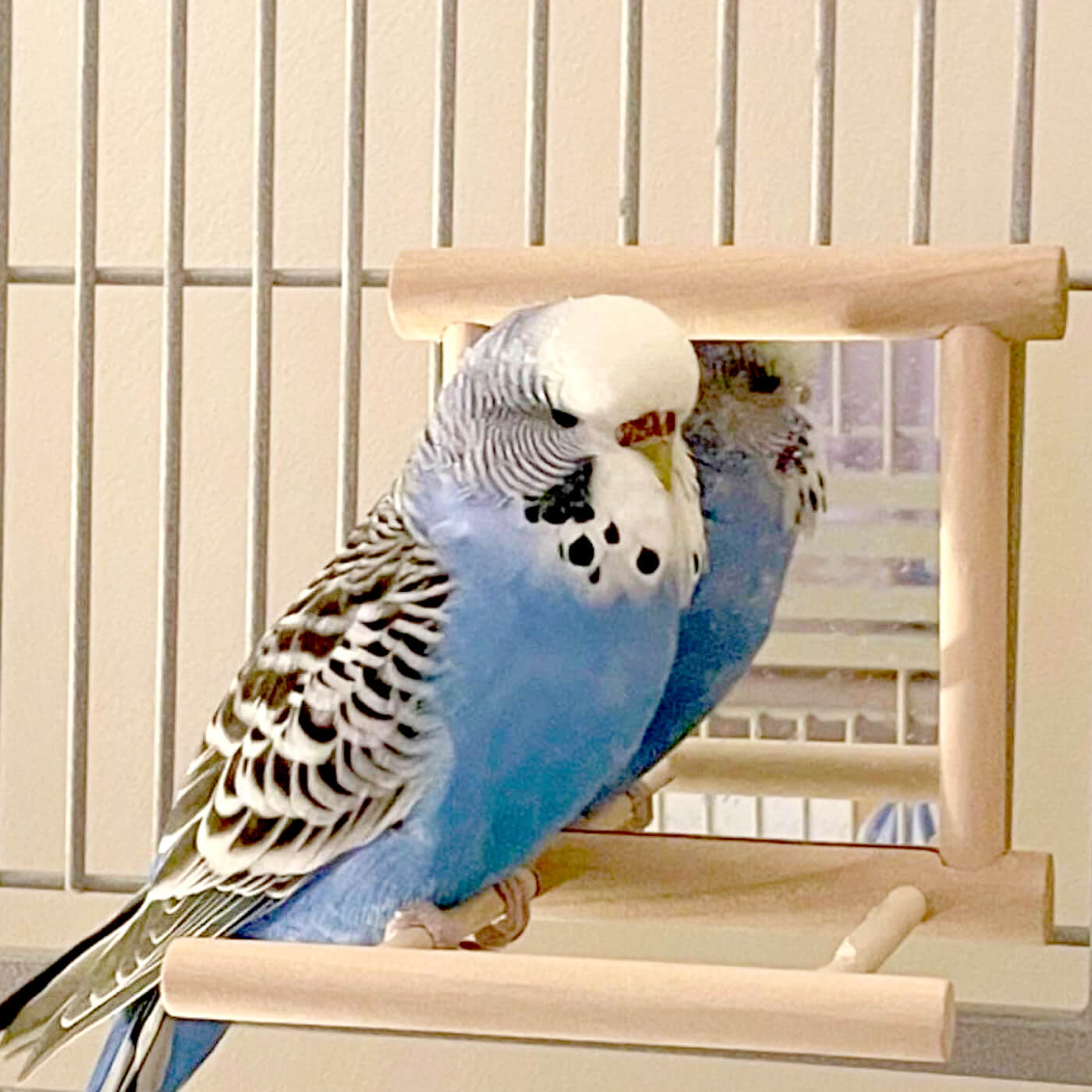
Watch your bird for signs of stress or comfort around the mirror. Signs include vocalizing, pecking, or ignoring the mirror.
| Behavior | Meaning | Action |
| Pecking at mirror | Possible aggression or confusion | Remove mirror or reduce size |
| Calm preening near mirror | Comfort and acceptance | Mirror placement is good |
| Repeated vocalizing | Stress or trying to communicate | Observe closely, consider removing mirror |
| Ignoring mirror | No interest | Mirror is safe but may be unnecessary |
Credit: parrotessentials.co.uk
Alternative Enrichment Options
Birds need activities that keep them busy and happy. Mirrors might not always be good for them.
There are safer and better ways to entertain and enrich your bird’s life.
Toys And Foraging Activities
Toys help birds stay active and use their minds. Foraging is a natural way to keep them busy.
Offer toys that are safe and made for birds. Use foraging toys that hide treats inside.
- Wooden chew toys
- Shreddable paper toys
- Puzzle feeders with hidden food
- Foraging boxes with seeds or nuts
Social Interaction Strategies
Birds enjoy social time with their owners or other birds. This helps reduce boredom and stress.
Spend time talking, playing, or training your bird every day. Introduce a compatible bird companion if possible.
- Daily gentle talking and petting
- Simple training sessions with treats
- Supervised playtime outside the cage
- Having another bird for company

Credit: parrotessentials.co.uk
Frequently Asked Questions
Are Mirrors Harmful To Pet Birds?
Mirrors can confuse pet birds by making them think another bird is present. This may cause stress or aggression. Some birds benefit from mirrors as companionship, but it depends on species and individual behavior.
Why Do Birds Attack Mirrors Outdoors?
Birds attack mirrors outdoors because they see their reflection as a rival. This triggers territorial behavior and causes repeated strikes. It may lead to injuries or exhaustion if not prevented.
Can Mirrors Help Prevent Bird Loneliness?
Mirrors sometimes reduce loneliness for single pet birds by providing visual interaction. However, they are not a substitute for real social contact and can cause frustration if birds obsess over reflections.
How To Safely Use Mirrors For Birds?
Use small mirrors designed for birds and observe their reactions. Avoid placing mirrors where birds can become aggressive or overly fixated. Monitor behavior regularly and remove mirrors if negative effects appear.
Conclusion
Mirrors can confuse birds by reflecting their own image. This may cause stress or aggressive behavior. Some birds might see the reflection as a rival. Others may become curious or scared. Placing mirrors carefully can help avoid problems. Observing your bird’s reaction is important.
Not all birds react the same way. Understanding your pet’s needs helps keep them happy. Choose mirror types and positions with care. Safe environments support healthy bird behavior and well-being.




