
Have you ever wondered what Marxism really means and why it still sparks so much debate? Whether you’ve heard the term in conversations, seen it in books, or come across it online, understanding Marxism can feel tricky.
But what if you could grasp its core ideas quickly, without getting lost in complicated theories? This bird’s eye view will give you a clear and simple explanation of Marxism, helping you see how it shapes politics, economics, and society.
Keep reading, and you’ll discover insights that might change how you look at the world around you.
Origins Of Marxism
Marxism is a political and economic theory. It focuses on class struggle and social change.
This theory began in the 19th century. It aimed to explain how societies develop and change.
Karl Marx And Friedrich Engels
Karl Marx and Friedrich Engels created the ideas of Marxism. They studied history, economics, and politics.
They wrote many books together. Their most famous work is The Communist Manifesto.
- Karl Marx was a philosopher and economist.
- Friedrich Engels was a writer and supporter.
- They believed society was divided into classes.
- They focused on the conflict between workers and owners.
Historical Context
Marxism grew during the Industrial Revolution. This time had big changes in work and society.
| Year | Event |
| 1848 | The Communist Manifesto was published. |
| 19th Century | Factories grew and cities expanded. |
| Early 1800s | Many workers faced poor conditions. |
These changes made people think about fairness and power in society. Marxism was part of this new thinking.

Credit: medium.com
Core Principles
Marxism is a way to understand society and its problems. It looks at how people live and work together.
This view focuses on ideas about power, work, and history. It explains why some people have more than others.
Class Struggle
Class struggle means fight between groups in society. These groups have different interests and power.
In Marxism, the main classes are workers and owners. Owners control things and workers sell their work.
- Owners want to keep control and profits
- Workers want fair pay and conditions
- Conflict happens because of these differences
Historical Materialism
Historical materialism looks at how history changes. It studies how people’s work shapes society.
Marx said history moves through changes in how we make things. These changes affect laws and ideas.
- New tools and ways of work bring change
- Changes in work cause changes in society
- History is a story of these changes
Labor Theory Of Value
This theory says work creates value in goods and services. The value comes from the amount of work done.
Workers produce value, but owners keep most of the profit. This causes unfairness in the system.
- Work adds value to products
- Workers get paid less than the value they create
- Owners gain profit from this difference
Key Concepts
Marxism explains society and economics through ideas about work and power. It looks at how people relate to their jobs and money.
The key concepts help us understand the problems Marx saw in capitalist systems and how they affect workers.
Alienation
Alienation means workers feel separated from their work. They do not see the final product or control the process.
This separation makes workers unhappy and disconnected from their labor and from others.
Surplus Value
Surplus value is the extra value workers create beyond their wages. Capitalists keep this extra value as profit.
- Workers sell their labor for a wage.
- The work produces value greater than the wage.
- The difference is surplus value taken by owners.
- This drives the growth of capital and wealth for owners.
Capitalism Critique
| Aspect | Marx’s Critique |
|---|---|
| Class Conflict | Capitalism creates a divide between rich owners and poor workers. |
| Exploitation | Workers produce more value than they receive in wages. |
| Instability | Economic crises happen due to competition and overproduction. |
| Alienation | Workers lose connection to their work and creativity. |
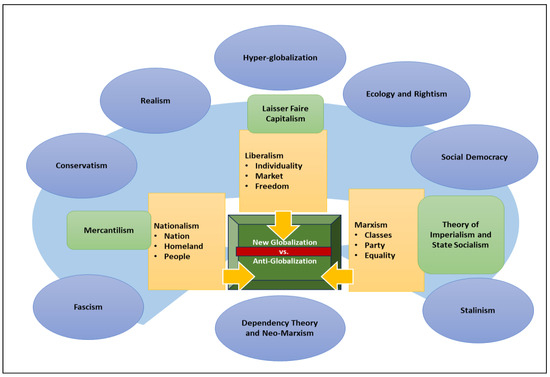
Credit: www.mdpi.com
Branches Of Marxism
Marxism has many branches that shaped different ideas. Each branch builds on Karl Marx’s original work.
These branches show how Marxism changed in different places and times. They guide many political movements.
Leninism
Leninism is based on Vladimir Lenin’s ideas. It focuses on a strong party leading the workers. Lenin said the party should guide the revolution and control the state afterward.
Leninism supports:
- Centralized leadership
- Democratic centralism
- Proletarian dictatorship
- Revolution in less developed countries
Trotskyism
Trotskyism comes from Leon Trotsky’s ideas. It opposes the idea of socialism in one country. Trotsky believed in permanent revolution worldwide.
| Trotskyism Ideas | Description |
|---|---|
| Permanent Revolution | Continuous worldwide revolution until socialism spreads everywhere |
| Opposition to Stalinism | Rejects Stalin’s policies and bureaucracy |
| Workers’ Democracy | Supports real power for workers, not just leaders |
Maoism
Maoism is based on Mao Zedong’s thoughts. It focuses on peasants as the main force for revolution. Maoism adapts Marxism to rural and poor countries.
Maoism key points:
- Peasant-led revolution
- Prolonged people’s war
- Cultural revolution to change ideas
- Self-reliance and mass mobilization
Marxism In Practice
Marxism is a way to understand how society works. It looks at how money and power shape people’s lives.
People have tried to use Marxism to change governments and economies around the world.
Revolutions And States
Marxism inspired many revolutions. These aimed to end old systems and start new governments.
Some countries created socialist states. These states tried to follow Marxist ideas about fairness and control.
- Workers took control of factories and land
- Old rulers were removed or overthrown
- Governments planned how to use resources
Economic Systems
Marxism calls for ending private ownership of big businesses. It supports public or shared ownership.
Planned economies replace markets. The government decides what to make and who gets what.
- Goods and services are shared equally
- Profit is not the main goal
- Focus on meeting people’s needs
Social Impact
Marxism aims to reduce class differences. It wants a society where everyone is equal.
This idea changed education, health care, and workers’ rights in many places.
- Free education and health services for all
- Strong support for workers and unions
- Efforts to end discrimination and poverty
Credit: medium.com
Critiques And Controversies
Marxism has been a major influence on politics and economics. Many scholars and activists debate its ideas. This section looks at some critiques and controversies around Marxism.
We will explore economic criticisms, political challenges, and the modern relevance of Marxism. Each part shows different views and questions about this theory.
Economic Criticisms
Critics argue Marxism has flaws in its economic analysis. Some say it underestimates the role of markets and innovation. Others believe it ignores incentives for growth and efficiency.
- Marxism predicts capitalism will collapse, but it still exists today.
- It focuses on class struggle and may overlook other social factors.
- Some say planned economies lead to shortages and waste.
- Private property and competition can drive progress, critics note.
Political Challenges
Marxism faces political challenges in practice and theory. Many countries tried Marxist governments with mixed results. Some faced authoritarian rule and loss of freedoms.
| Political Issue | Description |
| Authoritarianism | Some Marxist states became dictatorships, limiting rights. |
| Repression | Opposition groups were often suppressed under Marxist regimes. |
| Implementation | Some say Marxism is hard to apply fairly in real life. |
| Democracy | Debate exists over Marxism’s compatibility with democratic systems. |
Modern Relevance
Today, Marxism still influences many thinkers and movements. Some see it as a tool to understand inequality and capitalism’s problems. Others question its fit in the modern world.
Key points about Marxism’s modern role:
- It helps analyze global wealth gaps.
- Critiques of capitalism’s impact on environment gain strength.
- New forms of work and tech challenge old Marxist ideas.
- Debate continues on how to adapt Marxism today.
Frequently Asked Questions
What Is Marxism In Simple Terms?
Marxism is a social and economic theory by Karl Marx. It focuses on class struggles and advocates for a classless society. Marxism critiques capitalism and promotes socialism as a path to equality and fairness.
Who Founded Marxism And When?
Karl Marx and Friedrich Engels founded Marxism in the mid-19th century. Their ideas were first published in “The Communist Manifesto” in 1848. They aimed to analyze capitalism and inspire social change.
How Does Marxism Explain Class Struggle?
Marxism sees society divided into classes: the bourgeoisie (owners) and the proletariat (workers). It argues that class conflict drives historical change and leads to revolution and social transformation.
What Is The Goal Of Marxism?
The goal of Marxism is to establish a classless, stateless society. It aims to eliminate exploitation by redistributing wealth and power fairly among all people.
Conclusion
Marxism offers a fresh perspective on society and economics. It emphasizes class struggle and the power of the working class. Understanding Marxism helps us see how history shapes current systems. Its ideas inspire debates and discussions worldwide. Though complex, its core principles remain relevant.
They challenge us to rethink wealth distribution and power. This overview of Marxism provides a foundation. Now, readers can explore further and form their own opinions. Engage with the ideas. Question them. Let them spark your curiosity about the world around you.




