
Have you ever wondered what kind of birds fill the vibrant, lush world of the tropical rainforest? These forests are home to some of the most colorful and fascinating birds on Earth, each with its own unique story.
Imagine hearing their songs, spotting their bright feathers, and discovering how they live in this amazing environment. If you want to uncover the secrets of these incredible birds and learn what makes them so special, keep reading. Your adventure into the heart of the rainforest’s birdlife starts here.
Credit: www.earth.com
Bird Diversity In Tropical Rainforests
The tropical rainforest is one of the most vibrant ecosystems on Earth, home to an astonishing variety of bird species. The sheer diversity of birds here is mind-blowing, with thousands of species occupying different layers of the forest. This variety not only adds beauty but plays a crucial role in maintaining the rainforest’s delicate balance.
Unique Bird Species Found Only In Tropical Rainforests
Many birds in tropical rainforests exist nowhere else on the planet. Take the resplendent quetzal, for example, with its dazzling green and red feathers that almost seem unreal. Or the harpy eagle, one of the largest and most powerful raptors, known for hunting monkeys and sloths high in the canopy.
Why do you think these species evolved such specialized traits? The answer lies in the complex environment of the rainforest, where every niche is filled, and survival depends on adaptation.
Role Of Birds In The Rainforest Ecosystem
Birds act as seed dispersers, pollinators, and pest controllers. Many fruit-eating birds swallow seeds and carry them far from the parent tree, helping new plants grow. Hummingbirds, with their rapid wing beats, pollinate flowers that other creatures can’t reach.
Have you noticed how bird activity can indicate the health of a forest? When bird diversity drops, it often signals trouble in the ecosystem.
How Bird Diversity Reflects Rainforest Health
A rich variety of birds usually means a thriving forest. Scientists use bird counts as a quick way to assess environmental changes or damage. When invasive species or deforestation occur, bird populations decline first, acting as natural early warning systems.
Next time you hear a chorus of bird calls in the forest, think about the story they’re telling you about their home.
Colorful Parrots And Macaws
Colorful parrots and macaws are some of the most stunning birds in the tropical rainforest. Their bright feathers shine in shades of red, blue, green, and yellow. These birds add life and color to the dense green forest. They are not only beautiful but also intelligent and social creatures. Parrots and macaws live in groups and communicate through loud calls. They play an important role in the rainforest’s ecosystem by spreading seeds and helping plants grow.
Types Of Colorful Parrots In The Rainforest
Many parrot species thrive in tropical rainforests. Some popular ones include the Amazon parrot, the parakeet, and the cockatoo. Each species shows unique colors and patterns. For example, Amazon parrots often have green bodies with splashes of yellow or blue. Parakeets are smaller and usually bright green with long tail feathers. These birds are excellent climbers and use their strong beaks to eat fruits and nuts.
Macaws: The Giants Of The Parrot Family
Macaws are large parrots known for their powerful beaks and long tails. They are among the biggest parrots in the rainforest. Macaws often have brilliant red, yellow, and blue feathers. Their loud calls can be heard from far away, helping them stay in touch with their group. These birds nest in tall trees and feed on fruits, nuts, and seeds. Macaws help spread many rainforest plants by dropping seeds during flight.
Behavior And Social Life Of Parrots And Macaws
Parrots and macaws are very social. They live in flocks that protect them from predators. These birds spend much time grooming each other’s feathers. Their loud calls serve as warnings or ways to find mates. During the day, they fly from tree to tree searching for food. At night, they sleep together in tree hollows or branches. Their strong bonds help them survive in the wild rainforest.
Role In The Rainforest Ecosystem
Parrots and macaws play key roles in keeping the rainforest healthy. They eat fruits and nuts and spread seeds through their droppings. This seed dispersal helps new plants grow in different areas. Their feeding habits also control insect populations. By moving through the forest, they help pollinate flowers. These birds support the balance of nature in the tropical rainforest.
Elusive Toucans And Their Habitat
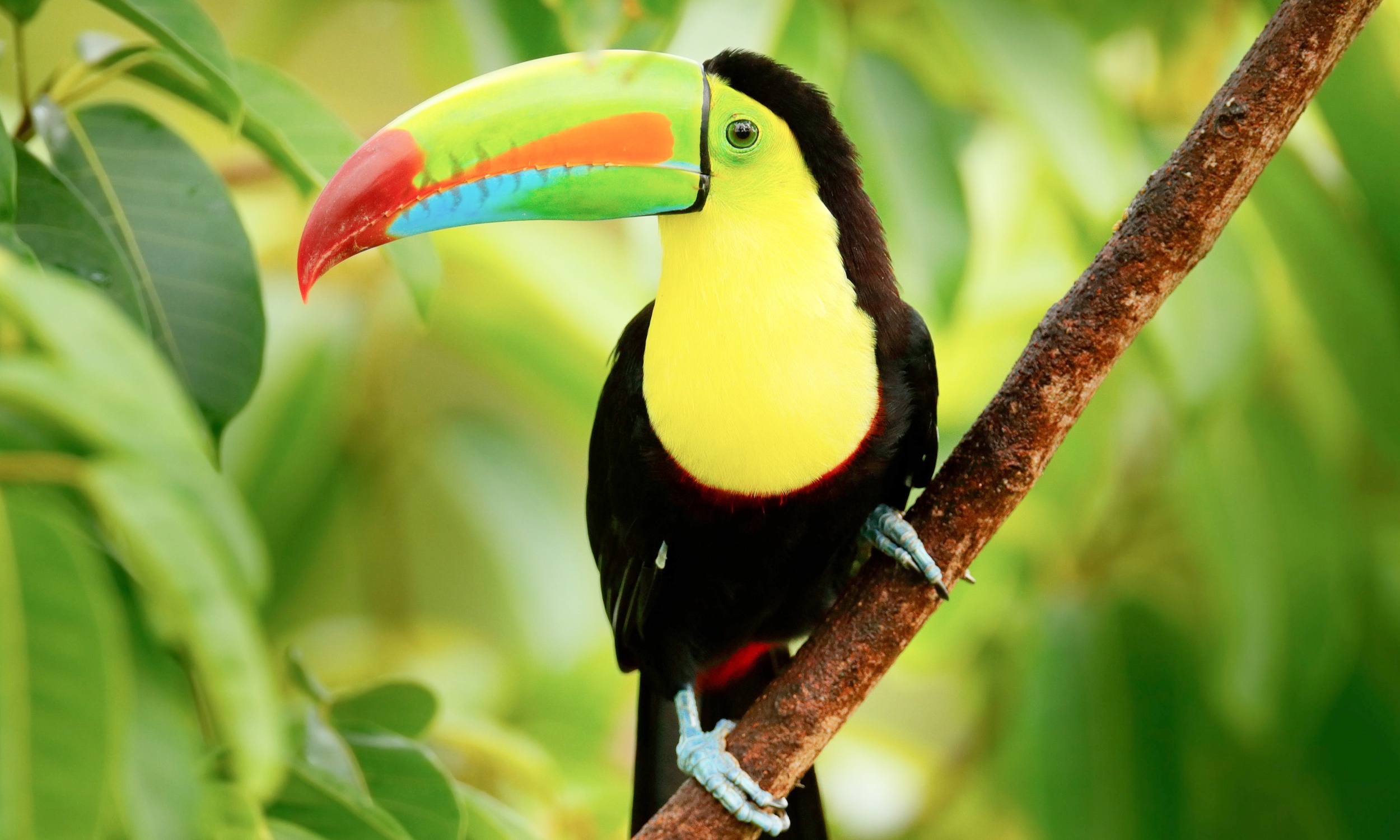
Toucans are some of the most colorful birds found in tropical rainforests. They have large, bright bills that look unusual but help them eat fruit. These birds are shy and often hidden among thick leaves. Their presence adds life and color to the dense green forest.
Toucans prefer living high in the canopy where trees grow tall and close. This habitat provides food, shelter, and protection from predators. They move quickly from tree to tree, rarely coming down to the ground. Their homes are usually holes made by other animals or natural tree cavities.
Physical Features Of Toucans
- Bright, large bills used for reaching fruit
- Colorful feathers for camouflage among flowers and leaves
- Strong feet to grip branches tightly
- Compact bodies for quick movement in the trees
Diet And Feeding Habits
- Mainly eat fruit, but also insects and small animals
- Use their bills to peel and pick fruit
- Help spread seeds, aiding forest growth
- Feed in groups or pairs
Living Environment And Nesting
- Build nests in tree holes or abandoned woodpecker nests
- Nests are high to avoid predators
- Stay mostly in the forest canopy
- Prefer areas with many fruit trees

Credit: medium.com
Songbirds And Their Unique Calls
Songbirds in the tropical rainforest fill the air with an incredible variety of sounds. Their unique calls are not just beautiful—they serve important roles in communication, mating, and territory defense. Listening closely to these birds can reveal fascinating details about their behavior and the rainforest’s complex ecosystem.
How Songbirds Use Their Calls To Communicate
Songbirds use their calls to send messages to other birds nearby. These sounds can warn of danger, signal food availability, or attract mates. Have you ever noticed how some bird songs change depending on the time of day or season? This shows how flexible and intelligent their communication can be.
Famous Tropical Songbirds And Their Unique Sounds
The rainforest is home to many well-known songbirds, each with distinct calls. The Amazonian thrush, for instance, produces a flute-like melody that echoes through the forest. Meanwhile, the white-plumed antbird emits sharp, repetitive notes that help it stay in touch with its group. Listening to these sounds can make you feel as if the forest itself is alive with conversation.
Why Understanding Bird Calls Matters For Conservation
Recognizing the calls of tropical songbirds can help you identify species without seeing them. This skill is valuable for researchers and birdwatchers who want to monitor bird populations. Protecting these birds means protecting their habitats, so paying attention to their calls can play a direct role in conservation efforts.
Birds Of Prey In Rainforest Canopies
Birds of prey soar above the rainforest canopy, ruling the skies with sharp eyes and swift flight. These hunters play a vital role in the ecosystem. They keep populations of smaller animals in check. Their presence signals a healthy rainforest environment.
Many of these raptors nest high in the treetops. They use strong talons to catch prey like rodents, reptiles, and other birds. Their keen eyesight helps spot movement from far away. Silent flight lets them approach without warning.
Harpy Eagle: The Canopy’s Apex Predator
The harpy eagle stands out as one of the largest and strongest birds. It has massive talons that can crush prey quickly. Its powerful wings allow it to maneuver through dense trees easily. It hunts monkeys, sloths, and large birds. This eagle is a symbol of strength in the rainforest.
Roadside Hawk: The Agile Hunter
Smaller than the harpy eagle, the roadside hawk is quick and alert. It often perches on branches near roads or clearings. It feeds on insects, small mammals, and reptiles. This hawk adapts well to different forest layers. Its sharp eyes spot prey from a distance.
Bat Falcon: The Speedy Flyer
The bat falcon is one of the fastest birds in the rainforest. It chases bats, small birds, and large insects. Its streamlined body helps it dive through open spaces swiftly. It nests in tree cavities or cliff ledges. This falcon’s speed makes it a fearsome hunter.
Black-and-white Hawk-eagle: The Stealthy Predator
Known for its striking black and white feathers, this hawk-eagle blends well in dappled light. It hunts birds, monkeys, and reptiles by surprise. Its silent flight gives it an advantage in dense canopy areas. It uses sharp talons to snatch prey quickly.
Ground-dwelling Birds And Their Behavior
Many birds in tropical rainforests live on the ground, searching for food and shelter. These birds often hide in leaf litter and use quick movements to avoid predators. They play a key role in the forest’s ecosystem by spreading seeds and insects.
Ground-dwelling birds of the tropical rainforest are fascinating creatures that have adapted uniquely to their environment. These birds spend most of their lives on the forest floor, navigating through dense foliage and undergrowth. Their behavior is as diverse as the rainforest itself, offering a glimpse into the complex ecosystem they call home.Adaptations For Survival
Ground-dwelling birds are masters of camouflage. Their plumage often blends seamlessly with the forest floor, protecting them from predators. This adaptation allows them to forage for food without drawing attention. Some species, like the tinamous, have evolved to run swiftly, using their agility to escape threats. Their behavior reflects the constant battle for survival in the vibrant but perilous rainforest.Nesting Habits
These birds often nest on the ground, a risky choice given the number of predators. However, they counteract this risk with strategic placement and camouflage of their nests. Many species build their nests under thick foliage or among tree roots, providing natural protection. Have you ever considered how such a precarious nesting environment impacts their breeding success?Feeding Patterns
Ground-dwelling birds have diverse diets, reflecting the abundance of the rainforest. They feed on insects, seeds, and small fruits, taking advantage of the rich resources at ground level. Their foraging techniques are quite resourceful. Some use their feet to scratch the soil, while others probe the leaf litter with their beaks. This variety in feeding behavior highlights their adaptability and resourcefulness.Interaction With Other Species
These birds play vital roles in the ecosystem by dispersing seeds and controlling insect populations. Their interactions extend beyond their species, affecting the entire rainforest community. However, they also face competition from other animals for food and space. Observing how these birds navigate such challenges can offer insights into the delicate balance of the rainforest ecosystem. Ground-dwelling birds are a testament to the incredible adaptability of wildlife in the tropical rainforest. Their behaviors and interactions are not just survival strategies; they are vital threads in the intricate web of life. As you explore the rainforest, take a moment to appreciate these remarkable birds and the complex roles they play in maintaining the health and vitality of their environment.Adaptations For Rainforest Living
Birds in the tropical rainforest have special traits to survive in this complex habitat. The dense trees, heavy rain, and constant humidity create unique challenges. Rainforest birds have adapted their bodies and behaviors to thrive here.
These adaptations help them find food, avoid predators, and live comfortably among thick leaves and high canopies.
Camouflage And Coloration
Many rainforest birds have colors that blend with leaves and flowers. Green, brown, and bright hues help them hide or attract mates. Some species mimic the colors of fruits or flowers to avoid predators or sneak up on prey.
Strong Beaks And Feeding Techniques
Birds use their beaks in special ways. Some have long, curved beaks to reach nectar in deep flowers. Others have strong, sharp beaks to crack nuts or catch insects. These beak shapes match the food available in the rainforest.
Agile Flight And Maneuverability
Flying in tight spaces among trees requires skill. Birds have short, rounded wings for quick turns and fast stops. This agility helps them escape predators and move easily through dense branches.
Nesting And Shelter Strategies
Rainforest birds build nests that protect eggs from rain and predators. Some nest high in the canopy, while others use hidden spots under leaves or inside tree hollows. These choices keep their young safe and dry.
Credit: medium.com
Conservation Challenges For Tropical Birds
Tropical rainforests host many colorful birds like toucans, parrots, and hummingbirds. These birds face threats from habitat loss and climate change. Protecting their homes is vital for their survival.
Conservation Challenges for Tropical Birds Tropical rainforests are home to many bird species. These vibrant ecosystems face numerous threats. Conservation efforts for these birds are more crucial than ever. Let’s explore the main challenges they encounter.Habitat Destruction
Deforestation is a major threat to tropical birds. As trees fall, birds lose their homes. Logging and agriculture drive this destruction. Birds struggle to find food and shelter. This leads to declining bird populations.Climate Change Effects
Climate change impacts bird habitats. Rising temperatures alter the rainforest environment. Birds must adapt quickly to survive. Some species may not handle these changes. This affects their survival rates.Illegal Wildlife Trade
Many tropical birds face poaching threats. The illegal pet trade targets colorful species. This reduces their numbers in the wild. Conservation efforts work to combat this issue. Awareness and law enforcement play key roles.Pesticide Use
Pesticides harm birds in rainforests. These chemicals reduce insect populations. Birds rely on insects for food. Pesticides can poison birds directly. This threatens their health and survival.Lack Of Awareness
People often overlook tropical birds. Awareness of their plight is low. Education and outreach can help. Understanding these challenges is essential for conservation.Birdwatching Tips In Rainforest Regions
Birdwatching in tropical rainforests offers a unique experience. These lush areas host many colorful and rare bird species. To enjoy birdwatching fully, some tips help you spot birds better and stay safe. Understanding the rainforest environment and bird behavior improves your chances to see amazing wildlife.
Choose The Best Time For Birdwatching
Early morning is the best time to watch birds. Birds are more active at dawn and shortly after. The cooler temperature makes them move around more. Late afternoon can also be good as birds prepare to rest. Avoid the midday heat, as many birds hide during this time.
Wear Appropriate Clothing
Light-colored clothes help you blend with the environment. Long sleeves and pants protect against insects and plants. Use breathable fabrics to stay cool and comfortable. Avoid bright colors or flashy patterns that scare birds away. A hat and rain gear are useful in unpredictable weather.
Use Binoculars And Field Guides
Binoculars let you see birds from a distance without disturbing them. Choose lightweight, easy-to-carry models. A good field guide helps identify birds by color, size, and song. Many guides include pictures and maps of bird habitats. Keep your guide handy for quick reference during your walk.
Move Slowly And Stay Quiet
Sudden movements scare birds. Walk slowly and avoid loud noises. Stop often to listen for bird calls. Patience allows birds to appear nearby. Watch the treetops, understory, and forest floor for different species. Use soft whispers if talking is necessary.
Respect Wildlife And The Environment
Stay on marked trails to protect plants and animals. Do not feed or touch birds. Keep a safe distance to avoid stressing them. Avoid leaving trash or disturbing the habitat. Responsible behavior helps preserve the rainforest for future visitors and wildlife.
Frequently Asked Questions
What Are Common Birds Found In Tropical Rainforests?
Common tropical rainforest birds include toucans, parrots, hornbills, and harpy eagles. These birds thrive in dense canopies and diverse habitats.
How Do Tropical Rainforest Birds Adapt To Their Environment?
They have strong beaks for fruit and insects, vibrant colors for camouflage, and loud calls to communicate through dense foliage.
Why Is Bird Diversity High In Tropical Rainforests?
Rainforests offer abundant food, shelter, and stable climate. This variety supports many bird species and complex ecosystems.
What Role Do Birds Play In Tropical Rainforest Ecosystems?
Birds aid in seed dispersal, pollination, and pest control, maintaining forest health and promoting plant diversity.
Conclusion
Tropical rainforests host many unique and colorful birds. They live in trees, making nests high above the ground. Birds like toucans, parrots, and hummingbirds bring life to the forest. Each bird has a special role in the ecosystem. Protecting these habitats helps keep bird populations safe.
Watching these birds can teach us about nature’s beauty. The rainforest remains a treasure for bird lovers everywhere. Exploring it shows how important every creature truly is.




