
Have you ever struggled to draw a face from a bird’s eye view? It’s a tricky angle that can make even the best artists pause.
But what if you could learn simple steps to master this perspective quickly? Imagine creating drawings that stand out and capture attention from above. You’ll discover easy techniques to help you draw a face from this unique viewpoint with confidence.
Keep reading, and you’ll unlock skills that will take your art to the next level.
Materials Needed
Drawing a face from a bird’s eye view needs special tools. These materials help you see and create the angles correctly.
Gathering the right supplies makes your drawing easier and more accurate. Use simple tools that you can find at home or in a store.
Pencils
Use different pencils to create light and dark lines. A softer pencil makes darker marks. A harder pencil draws lighter lines.
- HB pencil for sketching
- 2B or 4B pencil for shading
- Mechanical pencil for fine details
Eraser
An eraser helps fix mistakes and clean lines. Use a soft eraser that does not damage the paper.
- Kneaded eraser for gentle lifting of graphite
- Rubber eraser for strong corrections
Paper
Choose smooth paper that can handle erasing. Thick paper prevents tearing and works well with pencils.
- Sketching paper or drawing pad
- Size depends on your comfort, usually A4 or larger
Ruler And Compass
A ruler helps keep proportions accurate. A compass can draw circles to map the head’s shape from above.
- Ruler for straight lines and measurements
- Compass for drawing curved shapes
Reference Image Or Model
Use a photo or a live model to study the face from the bird’s eye view. This helps understand the angles and shadows.
- Print a photo of a face from above
- Use a mirror to observe your own face
- Set up good lighting for clear details
Basics Of Bird’s Eye View
Drawing a face from a bird’s eye view means looking down from above. This angle shows the top of the head and face in a different way. It changes how features appear and where they sit.
Understanding the basics helps you draw faces that look natural from this high angle. You learn to place eyes, nose, and mouth correctly.
Key Perspective Changes
From above, the forehead and top of the head take more space. The chin looks smaller and may be hidden. The eyes look closer together because of the angle.
- The forehead appears larger and more rounded.
- The nose points away from the viewer and looks shorter.
- The eyes seem to move toward the center of the face.
- The mouth appears smaller and closer to the chin.
- The ears may not be visible or look smaller.
Common Challenges
Drawing faces from this view can be tricky. Some parts look different or disappear. It is easy to make mistakes with the size and shape of features.
| Challenge | Tip to Fix |
| Forehead too small | Draw it wider and rounder |
| Eyes placed too wide | Bring eyes closer to center line |
| Nose looks too long | Shorten the nose length and angle down |
| Chin disappears | Draw a slight curve to show chin edge |
| Features lose depth | Use shading to create form |
Sketching The Head Shape
Drawing a face from a bird’s eye view starts with the head shape. This view shows the top of the head and some facial features.
Getting the head shape right helps place the eyes, nose, and mouth correctly later on.
Establishing The Oval
Start by drawing a simple oval shape for the head. The oval is wider at the top and narrower at the bottom.
This shape shows the skull from above. Keep your lines light so you can adjust them later.
- Draw a vertical line down the center of the oval
- Sketch a horizontal line near the top to mark the hairline
- Lightly mark where the chin will be at the bottom
Adjusting For Angle
When looking from above, the head tilts away from you. This changes the oval’s shape.
Squash the oval slightly to show this tilt. The side closer to you looks bigger.
- Draw the oval slightly flattened on the side facing away
- Shift the center line toward the near side
- Adjust the horizontal hairline to curve with the angle

Credit: www.youtube.com
Mapping Facial Features
Drawing a face from a bird’s eye view can be tricky. It needs careful planning of where each feature goes.
Mapping the facial features helps keep the face balanced and realistic. This guide shows how to place eyes, nose, and mouth.
Placing The Eyes
From above, eyes look closer together. They appear smaller because of the angle.
Draw the eye line curved to match the head’s shape. Place eyes near the top edge of the face.
- Start with a light curved line across the face
- Mark two points closer than usual for the eyes
- Make eyes smaller and angled slightly inward
Positioning The Nose
The nose looks shorter and wider from a bird’s eye view. The nostrils show more prominently.
Place the nose below the eyes, near the center of the face but closer to the bottom edge.
- Draw a small rounded shape for the tip
- Show both nostrils clearly
- Connect the nose to the eyes with light guide lines
Drawing The Mouth
The mouth looks foreshortened and curves upward at the edges. It sits below the nose.
Draw the mouth line slightly curved. The lips appear thinner from this angle.
- Place the mouth about halfway between the nose and chin
- Use a gentle curve for the lip line
- Keep the lips narrow and angled
Adding Depth And Dimension
Drawing a face from a bird’s eye view can be tricky. Adding depth makes your drawing look real.
Use shading and highlights to show the shape and curves of the face. This helps create a 3D effect.
Shading Techniques
Shading helps show how light hits the face from above. Darker areas show where the light is blocked.
- Use soft pencil strokes for smooth shadows.
- Shade under the eyebrows and nose bridge for depth.
- Darken the areas near the eye sockets and cheekbones.
- Blend your shading gently to avoid harsh lines.
- Keep the top of the forehead lighter to show light source.
Highlighting Contours
Highlights create the illusion of raised areas on the face. They show where light hits directly.
| Face Area | Highlight Placement |
| Forehead | Center and top edges |
| Nose Bridge | Along the ridge |
| Cheekbones | Upper edges above shadow |
| Chin | Center tip |
| Eyebrows | Above and between brows |
Refining Details
Adding fine details makes your bird’s eye view face drawing more realistic.
Focus on small features to improve the overall look and depth.
Hair And Eyebrows
Draw hair strands following the head’s curve from above. Show the hair flow naturally.
- Use light strokes for hair texture.
- Shape eyebrows with soft angles to match the head tilt.
- Keep eyebrows thin near the nose and thicker towards the edge.
- Show hair volume by drawing layers and shadows.
Ears And Neck
Place ears correctly by aligning them with the eyes and nose from the top view.
| Feature | Position from Bird’s Eye View | Drawing Tip |
| Ears | Behind and slightly below the eyes | Use curved lines to show ear shape |
| Neck | Center below the jawline | Draw two vertical lines narrowing towards the shoulders |
Common Mistakes To Avoid
Drawing a face from a bird’s eye view can be tricky. Many artists make simple errors that change the look.
This guide helps you spot and avoid common mistakes. It improves your drawing skills step by step.
Ignoring Head Proportions
Many forget that the head looks different from above. The forehead appears larger, and the chin smaller.
Not adjusting the face shape makes the drawing look flat and wrong.
Misplacing Facial Features
Facial features shift in perspective from above. Eyes, nose, and mouth do not sit in usual spots.
Placing features too low or too close together breaks the realistic look.
Forgetting Foreshortening
Foreshortening changes how parts of the face appear. Features closer to the viewer look bigger.
Ignoring this makes your face look flat and less believable.
Overlooking Head Tilt And Angle
The head rarely sits perfectly flat when seen from above. It often tilts or turns slightly.
Not showing this tilt can make your drawing look stiff and unnatural.
Using Incorrect Eye Shapes
Eyes look narrower and change shape in a bird’s eye view. Drawing normal eye shapes causes errors.
Adjust eye shapes to match the angle for a natural appearance.
Neglecting Shadows And Highlights
Light falls differently from above. Shadows and highlights help show depth and shape.
Missing these details makes the face look flat and less three-dimensional.

Credit: m.youtube.com
Practice Tips For Improvement
Drawing a face from a bird’s eye view can be tricky. It takes time and practice to get it right.
These tips will help you improve your skills and build confidence in your drawings.
Study Face Anatomy From Above
Learn how the face looks from above by studying photos and 3D models. This helps you understand shapes and proportions.
Focus on how features like the nose and eyes change shape and size from this angle.
Use Light Sketches To Plan
Start with light lines to sketch the basic head shape and face guidelines. This lets you adjust proportions early.
Draw simple shapes for the eyes, nose, and mouth before adding details.
Practice Different Angles Regularly
Draw faces from many bird’s eye angles. This helps you see how the face changes as the viewpoint moves.
- Try looking higher or lower from the top
- Rotate the head slightly left or right
- Draw quick sketches to build speed
Focus On Proportion And Perspective
Use simple rules to keep facial features in correct size and position. Perspective changes how features look from above.
Check distances between eyes, nose, and mouth carefully to keep your drawing realistic.
Practice Shading To Show Depth
Use shading to give your drawing a 3D feel. Light and shadow help show the face’s curves from above.
- Shade under the nose and eyebrows
- Add shadows on the sides of the face
- Use soft gradients for smooth skin
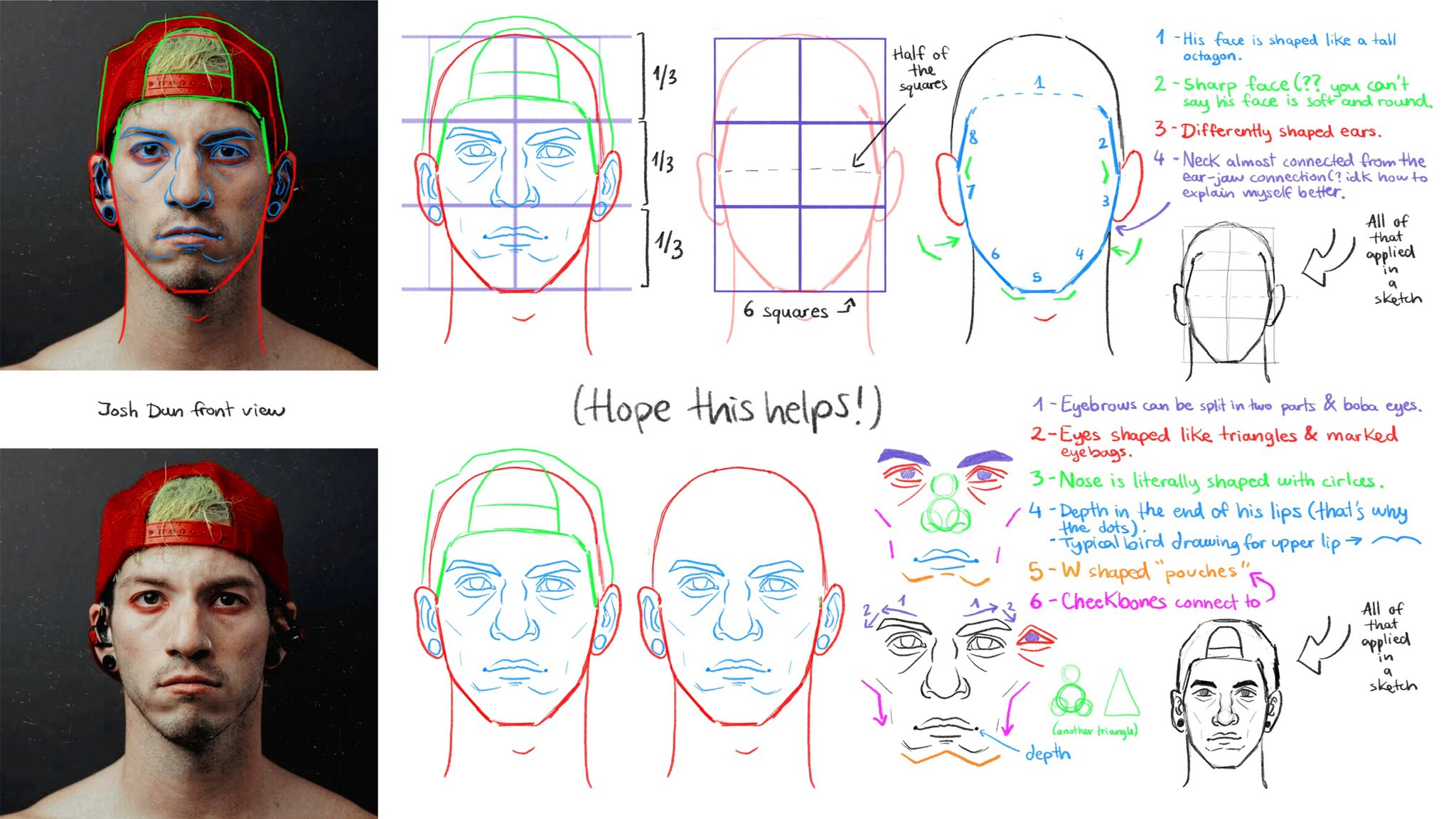
Review And Compare Your Work
Look at your drawings and compare them to real photos or models. This helps you find mistakes and improve.
Keep a sketchbook to track your progress over time.
Credit: x.com
Frequently Asked Questions
How Do I Start Drawing A Face From Bird’s Eye View?
Begin by sketching an oval tilted downward to mimic the perspective. Mark key facial landmarks lightly for correct placement.
What Are Common Challenges In Bird’s Eye Face Drawing?
Capturing foreshortening and altered proportions can be tough. Practice perspective and shading to enhance realism.
How To Maintain Facial Symmetry From A Top-down Angle?
Use vertical and horizontal guidelines aligned with the tilt. This helps balance features despite perspective distortion.
Which Tools Help In Drawing Faces From Above?
Use pencils for light sketching and erasers for adjustments. A ruler aids in accurate guideline placement.
Conclusion
Drawing a face from a bird’s eye view offers a fresh perspective. Practice makes progress in capturing unique angles. Start with basic shapes, then refine details. Focus on proportions for accurate representation. Keep experimenting with different views. Use light and shadow to add depth.
Patience is key to improvement. Enjoy the creative journey, and don’t stress over mistakes. They are part of learning. Keep your drawing tools ready, and keep exploring. With time, you’ll see your skills grow. Enjoy the process, and have fun creating art.




