
Are you tired of raccoons raiding your bird feeders night after night? You’re not alone.
These clever critters can turn your peaceful birdwatching spot into a mess in no time. But what if you could enjoy your feeders without the constant worry of raccoon damage? You’ll discover simple, effective ways to keep raccoons away while still attracting the beautiful birds you love.
Keep reading, because the solution is easier than you think—and your backyard will thank you.
Why Raccoons Visit Bird Feeders
Understanding why raccoons visit bird feeders is key to keeping them away. These clever creatures are attracted not just by food but also by the easy access that feeders provide. Knowing their motivations helps you make smarter choices about protecting your bird feeders and the birds you want to attract.
Raccoon Feeding Habits
Raccoons are opportunistic eaters, meaning they go for whatever food is easiest to find. Their diet includes fruits, insects, small animals, and yes, birdseed.
They are mainly nocturnal, so most visits to bird feeders happen at night. This means you might not see them, but the mess they leave behind tells the story.
Because raccoons have dexterous front paws, they can open many types of feeders that you might think are secure. They are patient and persistent, so even feeders with simple barriers often don’t stop them.
Attractants In Bird Feeders
Bird feeders offer a reliable source of high-calorie food, especially in colder months when natural food is scarce. Seeds like sunflower, corn, and peanuts are favorites not only for birds but for raccoons too.
Spilled seeds on the ground around feeders act like an all-you-can-eat buffet for raccoons. If you notice a lot of seed on the ground, it’s a signal raccoons might be nearby or already visiting.
Sweet treats like suet cakes or nectar also draw raccoons. If you use these types of feeders, you might want to check regularly for signs of raccoon visits and consider placing feeders in harder-to-reach spots.
Have you noticed how raccoons can open containers and feeders that seem raccoon-proof at first? Their cleverness and love for easy food sources explain why they keep coming back to bird feeders despite efforts to keep them out.
:max_bytes(150000):strip_icc()/GettyImages-518723174-e347515818d249a8b0ddcbc616c23e73.jpg)
Credit: www.marthastewart.com
Choosing Raccoon-proof Feeders
Choosing raccoon-proof feeders is key to protecting bird food. Raccoons are smart and strong. They can easily damage or empty regular feeders. Using feeders designed to resist raccoons saves time and money. It also keeps birds safe from disturbances. These feeders come in different types and materials. Each has features that make raccoon visits difficult.
Types Of Resistant Feeders
Tube feeders with weight-activated perches close access when heavy animals land. Hopper feeders have a design that limits how animals reach the seed. Caged feeders surround the seed with a metal cage that blocks raccoons but allows small birds. Platform feeders with baffles prevent raccoons from climbing or jumping onto them. Some feeders hang on thin wires, too thin for raccoons to cross.
Materials And Design Features
- Metal construction:Tough metal resists raccoon teeth and claws.
- Weight-sensitive mechanisms:Close seed ports under heavy pressure.
- Baffles:Dome or cone shapes stop climbing and jumping.
- Secure lids:Lock tightly to prevent opening by raccoons.
- Slender poles:Hard for raccoons to climb without grip.
Good design balances ease for birds and difficulty for raccoons. Choose feeders with smooth surfaces and no footholds. This discourages raccoons from trying to hang or climb. A smart feeder design reduces the chance of raccoons stealing bird food.
Placement Strategies
Placement strategies play a crucial role in keeping raccoons away from your bird feeders. Where you put your feeder can make all the difference between peaceful bird watching and a nightly raccoon raid. Thoughtful placement not only protects your feeder but also helps maintain a safe environment for local wildlife.
Optimal Location Tips
Choose a spot that is open and visible, away from dense trees or thick bushes. Raccoons prefer places that offer cover for sneaky approaches, so keep feeders in clear sight.
Mount your feeder on a tall pole at least 5 feet high. Raccoons are excellent climbers, but a smooth, tall pole with no nearby jumping points can deter them.
Try placing feeders at least 10 feet away from fences, roofs, or other structures raccoons can use as launching pads. The farther, the better.
Avoiding Easy Access Points
Don’t put feeders near low-hanging branches, decks, or porches where raccoons can easily jump onto them. Even a small ledge can serve as a raccoon highway.
Consider using baffles or guards on poles to prevent climbing. These physical barriers are effective when combined with strategic placement.
Think about the surroundings—remove nearby objects like firewood stacks or trash bins that raccoons could use to climb up or hide.
Have you checked your feeder’s location from a raccoon’s perspective? Standing outside at night and looking around might reveal surprising access points you hadn’t noticed before.
Physical Deterrents
Physical deterrents are some of the most effective ways to keep raccoons away from your bird feeders. These devices create barriers or obstacles that raccoons find difficult or uncomfortable to bypass. By making access challenging, you protect your birdseed and keep those clever critters at bay.
Baffles And Guards
Baffles and guards act as physical shields that block raccoons from climbing or reaching your feeders. You can attach dome-shaped baffles above or below feeders to prevent raccoons from climbing down poles or up hanging wires.
I once installed a metal baffle below my feeder, and it stopped raccoons from climbing up the pole altogether. They tried for a few nights but eventually gave up. These are easy to install and come in various sizes to fit different feeder types.
Guards can also be placed around trees or mounting poles to stop raccoons from using them as ladders. Think about using slippery materials like metal or plastic, which raccoons struggle to grip. Have you checked if your feeder pole or tree trunk is easy for a raccoon to climb?
Using Spinners And Barriers
Spinners and barriers add movement and unpredictability, which raccoons dislike. Spinners mounted on feeder poles spin when raccoons try to climb, making it hard for them to get a hold.
I found that adding a spinner made my feeder a no-go zone for raccoons. They couldn’t stand the unstable surface and soon moved on. Barriers like cage enclosures around the feeder protect birds while keeping raccoons out.
These barriers can be simple wire cages with openings just big enough for birds. Have you tried combining spinners with cages to create a double layer of defense? It might surprise you how well raccoons respond to these physical challenges.
Feeding Routine Adjustments
Adjusting your feeding routine can make a big difference in keeping raccoons away from your bird feeders. Small changes in when and how you feed birds can reduce the chances of raccoons finding a free meal. Paying attention to details like feeding times and cleaning up spilled seeds will help protect your feeders.
Timing Feedings
Raccoons are mostly active at night, while many birds feed during the day. Try putting out bird food early in the morning and remove any leftover seeds by dusk. This limits the time raccoons have to raid your feeders.
Have you noticed raccoons visiting after dark? Changing your feeding schedule to daylight hours alone can discourage these nighttime visitors. You might also consider feeding smaller amounts more frequently to avoid leftover food that attracts raccoons.
Cleaning Up Spilled Seeds
Spilled seeds on the ground are like an open invitation for raccoons. Regularly sweep or rake the area under your feeders to remove any fallen seeds. This simple task can make your yard less appealing to these persistent critters.
I once ignored the mess under my feeders, and raccoons quickly discovered the easy buffet. After starting a daily cleanup routine, the raccoon visits dropped noticeably. Keeping the feeding area tidy is one of the easiest ways to protect your bird food from unwanted guests.
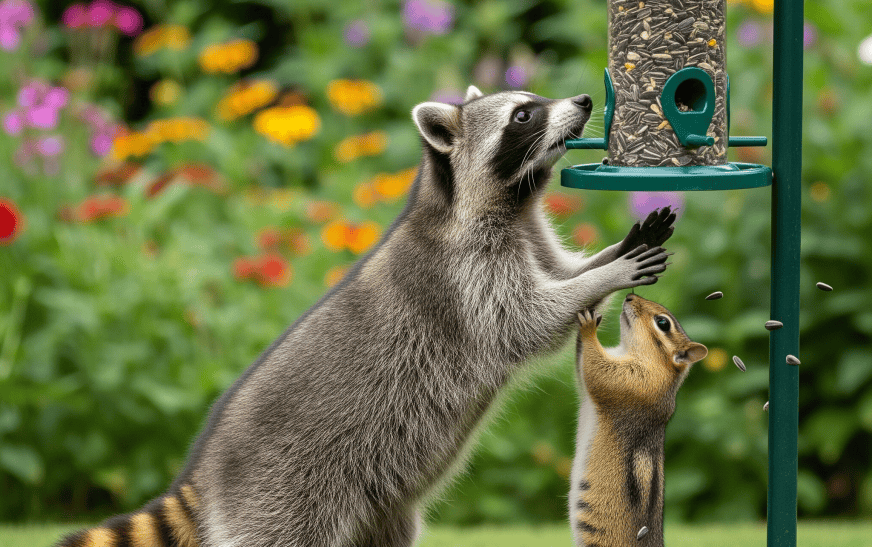
Credit: squirrelsinfo.com
Natural Repellents And Scents
Strong smells like peppermint oil or vinegar can keep raccoons away from bird feeders. Planting herbs such as lavender nearby also helps deter them naturally. These scents make raccoons uncomfortable and less likely to visit your feeder.
Natural repellents and scents can be a game-changer in your quest to keep raccoons away from bird feeders. These clever creatures are often deterred by certain smells that they find unpleasant. By using natural options, you can protect your feathered friends while maintaining a harmonious garden environment.Safe Repellent Options
Consider using substances that are safe for both the environment and the birds. Peppermint oil is a popular choice; its strong scent is delightful to humans but off-putting to raccoons. Simply mix a few drops with water and spray around the feeder area. Cayenne pepper is another effective option. Sprinkle it on birdseed or around the feeder. This spice irritates raccoons without affecting the birds. Ammonia-soaked rags can also be strategically placed around the feeder to keep raccoons at bay.Effectiveness And Limitations
While natural repellents are effective, they do have some limitations. Weather conditions can diminish their strength. After rain, you may need to reapply these solutions to maintain their potency. Raccoons are intelligent creatures and might eventually adapt to certain scents. It’s wise to switch between different repellents to keep them guessing. Have you ever noticed how adaptable raccoons can be? It’s crucial to ensure the safety of all wildlife in your garden. Always use natural repellents in moderation to avoid any unintended harm to your beloved birds.Managing Raccoon Activity
Keep raccoons away by placing bird feeders on tall poles with baffles. Use squirrel-proof feeders and clean up spilled seeds regularly. Secure trash cans to reduce raccoon attraction near feeders.
Managing raccoon activity around bird feeders requires smart strategies. Raccoons are clever and resourceful, often finding ways to access food meant for birds. By understanding their habits, you can better protect your feeders. This section explores effective methods to manage raccoon activity.Reducing Shelter Nearby
Raccoons love hiding spots. Remove potential shelters near bird feeders. Clear away piles of wood, brush, or leaves. Trim overgrown bushes and trees. This makes your yard less inviting for raccoons. They prefer dark, safe places to rest. Without these, they might move on.Using Motion-activated Devices
Install motion-activated devices near bird feeders. These gadgets can scare raccoons away. Motion-activated lights or sprinklers work well. When a raccoon comes close, the device activates. The sudden light or water spray startles them. They learn to avoid your feeders. This non-harmful method is effective and easy to set up.When To Seek Professional Help
Sometimes raccoons keep coming back despite all your efforts. This can cause damage to feeders and create a mess in your yard. Knowing when to get expert help can save time and stress.
Professional wildlife control experts have the tools and knowledge to handle tough raccoon problems. They work safely and follow local laws. Seeking help early can protect your bird feeders and keep your garden peaceful.
Signs Of Persistent Problems
- Raccoons return nightly despite barriers and repellents.
- Feeders are broken or overturned repeatedly.
- Trash or food scraps attract more animals near feeders.
- Damage to property or plants around the feeding area.
- Multiple raccoons seen in the same spot often.
Choosing Wildlife Control Services
- Look for licensed and insured wildlife control experts.
- Check reviews and ask for references from past clients.
- Confirm they use humane and safe removal methods.
- Ask about their experience with raccoon problems.
- Request a clear estimate and explanation of services.
:max_bytes(150000):strip_icc()/GettyImages-2127194441-cb7cb448aa164688aee85075217155d4.jpg)
Credit: www.thespruce.com
Frequently Asked Questions
How Can I Stop Raccoons From Eating Bird Seed?
Use raccoon-proof feeders and place them on poles with baffles. Remove spilled seed regularly to avoid attracting raccoons. Feed birds during the day and bring feeders inside at night. These steps help minimize raccoon access to bird seed effectively.
What Materials Repel Raccoons From Bird Feeders?
Raccoons dislike strong smells like ammonia, vinegar, and predator urine. Use these scents around feeders to deter them. Installing motion-activated lights or sprinklers also scares raccoons away. Combining repellents with physical barriers yields the best protection.
Are There Bird Feeder Designs Raccoons Cannot Access?
Yes, feeders with weight-sensitive perches close when heavy animals land. Caged feeders also prevent raccoons from reaching seed. Elevated feeders with smooth, slippery poles and baffles are effective. Choose designs specifically labeled as raccoon-resistant for best results.
When Is The Best Time To Feed Birds To Avoid Raccoons?
Feed birds early in the morning and remove feeders by dusk. Raccoons are nocturnal and mostly active at night. This timing reduces raccoon visits and prevents seed from being available overnight. Consistent feeding schedules help train wildlife habits.
Conclusion
Keeping raccoons away from bird feeders takes patience and care. Choose feeders designed to block raccoons. Place feeders where raccoons cannot reach easily. Clean up spilled seeds to avoid attracting them. Use baffles or barriers as extra protection. Change feeding times to confuse raccoons.
Watch and learn their habits. Protecting your bird feeder helps birds stay safe and fed. Small changes can make a big difference. Stay consistent and enjoy watching birds peacefully.




