
Are you tired of watching squirrels raid your bird feeder, stealing all the seeds meant for your feathered friends? You’re not alone.
Squirrels are clever and persistent, making it a real challenge to keep your bird feeder squirrel-free. But don’t worry—there are simple and effective ways you can protect your feeder and enjoy watching birds without interruption. Keep reading, and you’ll discover easy tips and tricks to squirrel proof your bird feeder, so the birds get the food, and the squirrels stay out.

Credit: feedsnneeds.ca
Why Squirrels Invade Bird Feeders
Squirrels are clever and persistent creatures. They invade bird feeders mainly for easy food. Bird feeders offer seeds and nuts, which squirrels love. This makes feeders attractive spots for them. Understanding why squirrels come to feeders helps in protecting your bird food.
Squirrel Behavior And Feeding Habits
Squirrels are active during the day. They search for high-energy food to store for winter. Seeds and nuts in bird feeders provide this energy. Squirrels are good climbers and jumpers. They use these skills to reach feeders easily. They are also quick learners and remember where food is found.
Common Squirrel Species At Feeders
- Eastern Gray Squirrel:The most common feeder visitor in many areas. Known for its agility and boldness.
- Fox Squirrel:Larger and often more aggressive. Prefers nuts but will eat seeds too.
- Red Squirrel:Smaller, but very active and fast. Often steals food quickly and disappears.

Credit: happygardens.com
Choosing Squirrel-resistant Feeders
Choosing the right squirrel-resistant bird feeder helps protect your bird food and keeps squirrels away. These feeders use smart designs to block squirrels from getting the seeds. They offer a better way to enjoy watching birds without constant interruptions.
Different types of feeders work well for different situations. Selecting one that fits your yard and the type of birds you want to attract is key. Here are some popular squirrel-resistant feeder styles to consider.
Weight-activated Feeders
Weight-activated feeders close off access when heavy animals like squirrels climb on. Light birds can easily feed, but squirrels trigger a mechanism that shuts the seed ports. This design stops squirrels from eating or stealing seeds.
These feeders often use springs or clamps that react quickly to weight changes. They protect seeds efficiently and reduce waste. Plus, they provide a fun way to watch squirrels try and fail to get food.
Cage-style Feeders
Cage-style feeders have a metal or plastic cage surrounding the seed container. The cage holes are large enough for small birds but too small for squirrels. This physical barrier keeps squirrels out without harming them.
These feeders are simple and reliable. They work best with smaller birds like finches and chickadees. The cage also protects seeds from larger birds that might cause damage.
Tube Feeders With Small Ports
Tube feeders with small feeding ports limit access to seeds. The tiny openings allow small birds to reach food but block squirrels’ larger paws and mouths. This design discourages squirrels from feeding.
They are easy to clean and refill. These feeders attract a variety of small birds while keeping squirrels away. Their slim shape also reduces seed spillage and mess around the feeder.
Placement Strategies To Deter Squirrels
Squirrels are clever and persistent when trying to reach bird feeders. Placement plays a key role in stopping them. Proper location makes it harder for squirrels to jump or climb onto feeders. This section covers smart placement tips to keep squirrels away.
Optimal Feeder Location
Choose a spot that is open and away from easy squirrel paths. Place feeders where birds feel safe but squirrels do not. Sunlit areas help birds spot predators early. Avoid locations near squirrel nests or frequent routes.
Using Poles And Baffles
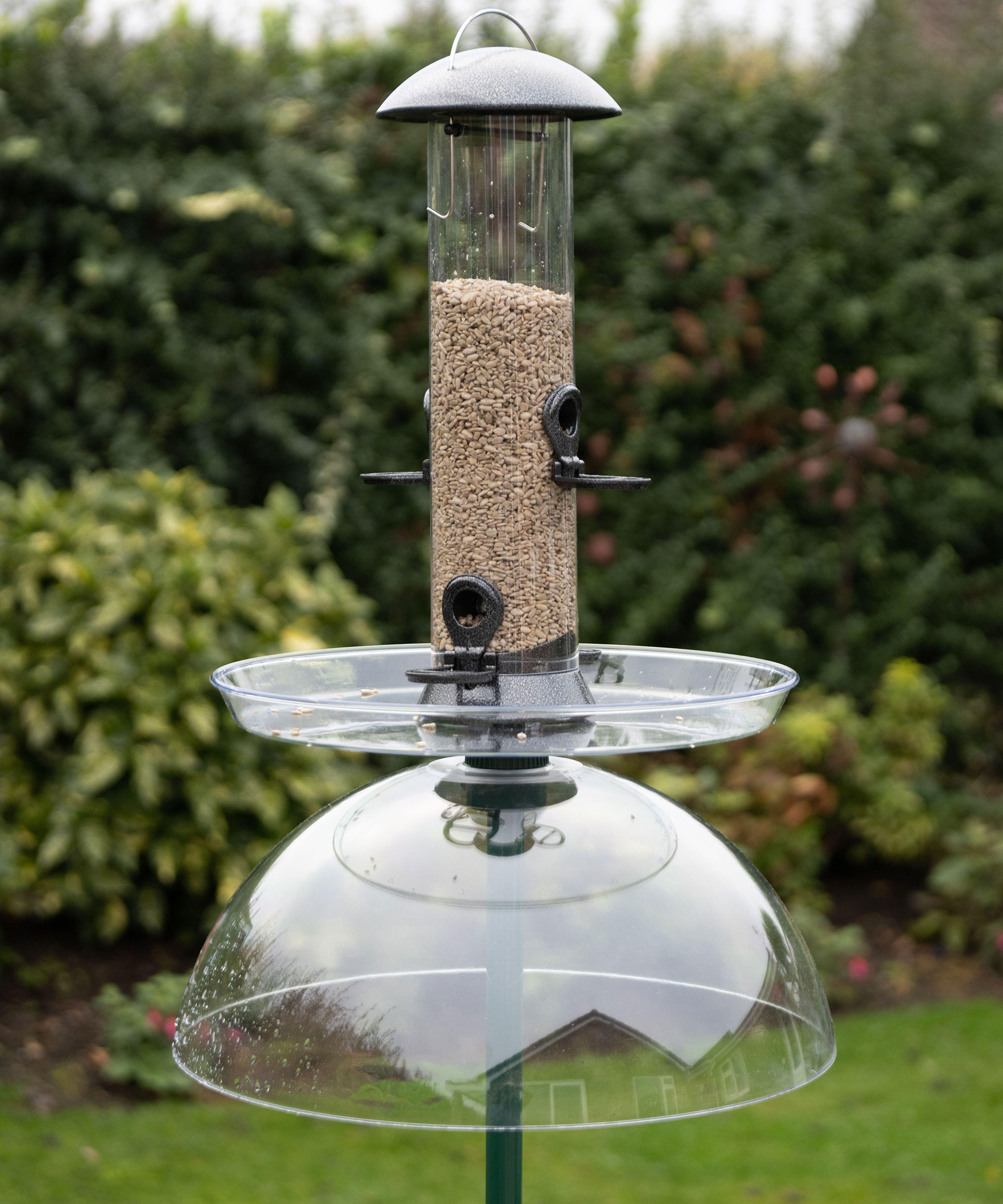
Mount feeders on smooth, metal poles to block squirrels from climbing. Add baffles above or below feeders. These round or cone-shaped guards stop squirrels from reaching the feeder. Make sure baffles are wide enough and placed at least 4 feet off the ground.
Distance From Trees And Structures
Keep feeders at least 10 feet away from trees, fences, or roofs. Squirrels use these as launching points to jump onto feeders. Greater distance forces squirrels to jump too far. This reduces their chance of reaching the feeder.
Physical Barriers And Accessories
Install physical barriers like baffles to keep squirrels away from bird feeders. Choose accessories that deter climbing and jumping.
Physical barriers and accessories play a crucial role in keeping squirrels away from bird feeders. These tools are effective and easy to implement. They create a physical separation between the feeder and the determined little critters. By using these methods, you can ensure that your feathered friends enjoy their meals in peace.Installing Squirrel Baffles
Squirrel baffles are dome-shaped barriers. They are placed above or below feeders. This prevents squirrels from reaching them. To install, position the baffle on the pole holding the feeder. Ensure it’s at least five feet off the ground. This height deters squirrels from jumping over it. Baffles made of smooth metal are best. Squirrels find it hard to grip and climb these.Using Grease Or Repellents
Grease can be applied to poles or baffles. It makes surfaces slippery for squirrels. Use non-toxic grease to ensure safety for all animals. Repellents can also be sprayed on feeders. They have a taste or smell squirrels dislike. Choose natural repellents for bird safety. Apply regularly for effective results.Spinning And Moving Feeders
Spinning feeders work by moving when squirrels jump on them. This movement causes squirrels to lose balance. These feeders are often battery-operated. Moving feeders are another option. They swing or move when touched. This action discourages squirrels. Both types of feeders are entertaining and effective.Alternative Feeding Techniques
Dealing with squirrels at your bird feeder can be frustrating. Instead of fighting them off completely, you can try alternative feeding techniques that keep both birds and squirrels happy. These methods help manage squirrel behavior and protect your bird food without constant frustration.
Providing Separate Squirrel Feeders
Offering squirrels their own feeder can divert their attention from your bird feeder. Place a squirrel feeder away from your bird feeder, stocked with nuts or corn. This gives squirrels a dedicated spot to feed, reducing their visits to the bird feeder.
I once tried this approach in my backyard. I filled a separate feeder with peanuts and noticed squirrels stopped raiding my bird feeder after a few days. It’s a simple way to satisfy squirrels without risking your birdseed.
Position the squirrel feeder far enough that squirrels don’t leap from it to your bird feeder. A distance of at least 10 feet works well. This separation keeps your birds safe while squirrels enjoy their own meals.
Using Safflower And Other Squirrel-resistant Seeds
Choosing the right seeds can make a big difference. Birds love safflower seeds, but squirrels usually avoid them because of their bitter taste. Using safflower in your feeder can reduce squirrel visits naturally.
Other seeds like nyjer and white proso millet also tend to attract birds more than squirrels. Mixing these with safflower creates a bird-friendly blend that squirrels often ignore.
Have you noticed squirrels ignoring certain seeds in your feeder? Experiment with safflower or nyjer to find the best mix. This small change can save you money and hassle while keeping your feeder squirrel-free.
Credit: www.homesandgardens.com
Maintenance And Monitoring Tips
Keeping your bird feeder squirrel-proof requires more than just the right design—it demands ongoing care. Maintenance and monitoring ensure your feeder stays inviting to birds while keeping those pesky squirrels at bay. Let’s look at simple, practical steps that keep your feeder in top shape and truly squirrel-resistant.
Regular Cleaning And Refilling
Bird feeders need frequent cleaning to avoid mold and bacteria buildup that can harm birds. Use warm, soapy water and a brush to scrub all parts of the feeder every two weeks or more often if you see dirt or droppings.
Refilling the feeder regularly keeps birds coming back and stops squirrels from raiding an empty feeder. Keep an eye on seed levels daily during high activity seasons, like spring and fall. A full feeder is less tempting for squirrels to chew through or tip over.
- Use fresh seed to avoid mold or clumping
- Remove wet or spoiled seed promptly
- Consider using seed blends that squirrels dislike
Checking For Damage And Repairs
Squirrels are persistent and clever, often testing weak spots on your feeder. Inspect your feeder regularly for cracks, chewed parts, or loose fittings that need fixing.
Small repairs, like tightening screws or replacing broken perches, can prevent bigger problems. If you notice holes or gaps, seal them quickly with weatherproof materials to block squirrels’ access.
Have you noticed squirrels getting smarter around your feeder? Adjusting your maintenance routine keeps you one step ahead and protects your feathered visitors.
Frequently Asked Questions
How Can I Stop Squirrels From Eating Birdseed?
Use squirrel-proof feeders with weight-activated mechanisms. Place feeders away from trees and fences. Adding baffles and squirrel guards also helps. Choose seeds squirrels dislike, like safflower or nyjer.
What Types Of Feeders Are Squirrel-resistant?
Feeders with cages or weight-sensitive perches deter squirrels. Tube feeders with metal guards prevent access. Platform feeders with squirrel baffles offer extra protection. These designs prioritize bird access while blocking squirrels effectively.
Are There Natural Repellents To Keep Squirrels Away?
Yes, sprinkle cayenne pepper or chili powder on seed. Squirrels dislike the spicy taste but birds tolerate it. Planting squirrel-repellent plants nearby also helps. Natural repellents are safe and non-toxic for birds.
Where Should I Place Bird Feeders To Avoid Squirrels?
Place feeders at least 10 feet from trees or structures squirrels can jump from. Use a pole with a squirrel baffle to prevent climbing. Open areas reduce squirrel access and improve bird visibility.
Conclusion
Squirrels can be tricky guests at bird feeders. Protecting your feeder takes patience and smart choices. Use barriers, choose squirrel-proof designs, and place feeders wisely. Keep trying different methods until you find what works best. Enjoy watching birds without unwanted visitors.
A little effort keeps your feeder safe and birds happy. Simple steps lead to peaceful bird watching. Stay consistent and enjoy nature’s show without interruptions.




