
How big should a bird house be? For many common backyard cavity-nesting birds, an interior floor around 4 to 6 inches wide and deep, a height of roughly 8 to 12 inches, and a species-appropriate entrance hole work well. The best dimensions depend on the bird you want to attract—not simply on making the house as large as possible.
A bird house that is too large may admit unwanted species and provide less protection, while one that is too small may not leave enough room for a nest and growing chicks. Entrance diameter, interior depth, ventilation, drainage, placement, and predator protection matter just as much as the outside measurements. Use the guide below when building or buying a bird house, and check local birding guidance for the species in your area.
Ideal Bird House Dimensions by Species
There is no single standard bird house size. A practical starting point is to match the interior floor, overall height, and entrance hole to the target species. The measurements below are general guidelines rather than guarantees; regional populations may use slightly different designs.
Recommended floor space and height
Small cavity nesters generally prefer a compact interior. Chickadees commonly use a floor of about 6 by 6 inches, while wrens and nuthatches often do well with approximately 5 by 5 inches. Bluebird boxes typically use a floor close to 6 by 6 inches. An overall interior height of about 8 to 12 inches suits many of these backyard boxes, although some species need a deeper cavity.
- Chickadees: about 6 by 6 inches of interior floor space
- Wrens: about 5 by 5 inches of interior floor space
- Bluebirds: about 6 by 6 inches of interior floor space
- Nuthatches: about 5 by 5 inches of interior floor space
- Woodpeckers: a deeper box with about 6 by 6 inches of floor space may be appropriate, depending on species
These are interior measurements, not the outside dimensions. Wall thickness, the roof, and the mounting hardware add to the finished size. When comparing ready-made bird houses, look for the interior floor dimensions and entrance diameter rather than relying only on the product’s overall height and width.
Entrance-hole size is the most important measurement
The entrance hole helps determine which birds can enter and can discourage some larger competitors. Common starting points include a 1 1/8-inch opening for some chickadees and wrens, a 1 1/2-inch opening for eastern bluebirds, and a 1 9/16-inch opening for tree swallows. A wren house may use an opening close to 1 inch, while some woodpecker houses require a substantially larger entrance.
Do not enlarge the hole simply to make access easier. A larger opening can allow birds you did not intend to attract and may make the nest more exposed. Confirm the target species and local recommendations before drilling. A round entrance is the usual choice, and the hole should be smooth so birds do not injure themselves on splintered wood.
Depth, width, and the distance to the entrance
Interior depth affects protection from wind, rain, and some predators. The floor should be large enough for the adult bird and nest, but excessive space is not automatically better. A deep cavity can also help keep the nest away from the entrance.
Pay attention to the distance between the floor and the bottom of the entrance hole. If the hole is too close to the floor, eggs and chicks may be more exposed. If it is placed too high, some birds may have difficulty entering and leaving. Follow a species-specific plan when building, or choose a purpose-built box when buying.
| Bird | Depth | Width |
|---|---|---|
| Chickadees | 8-10 inches | 4-6 inches |
| Bluebirds | 8-12 inches | 5-7 inches |
| Wrens | 6-8 inches | 4-5 inches |
Proper depth helps limit direct rain entry and gives the nest a more sheltered position. Width should suit the target bird and its nest rather than maximize the available interior space.
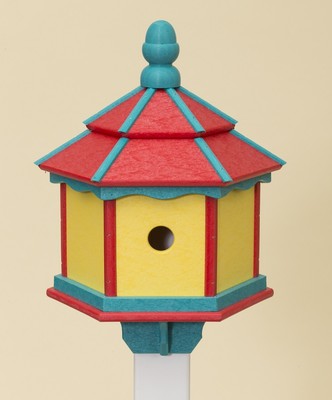
Credit: www.ebay.com
Materials and Construction Features to Look For
Size alone cannot make a bird house suitable. The box should be sturdy, breathable, resistant to moisture, and easy to open for inspection and cleaning. If you are buying one, check these construction details before focusing on decorative features.
Choose untreated, weather-resistant wood
Natural, untreated wood is a sensible choice for most bird houses. Cedar and pine are commonly used, and wood around 3/4 inch thick can provide useful insulation from outdoor temperature changes. Avoid pressure-treated lumber and interiors coated with paint, stain, or strong chemicals.
The surface does not need to be polished. Rough interior wood can help fledglings grip the sides when they climb toward the entrance. If the interior is very smooth, shallow horizontal grooves below the hole can provide a foothold, provided they do not create sharp splinters.
Ventilation and drainage
Small ventilation openings near the upper sides or under the roof allow warm, damp air to escape. Drainage holes in the floor let rainwater run out instead of pooling beneath the nest. These openings should be positioned so they improve airflow and drainage without becoming an easy access point for predators.
A removable or hinged front, side, or roof is useful because it allows the box to be inspected and cleaned. The access panel should close securely; a loose panel can let in rain or be opened by animals.
Weatherproofing without making the box unsafe
A sloped roof with an overhang sheds rain and provides shade around the entrance. Paint or sealant should be limited to the exterior, and a non-toxic, water-based product is preferable. Leave the interior untreated. Avoid dark exterior colors in locations exposed to intense sun because they may contribute to heat buildup.
Do not add a perch below the entrance. Cavity-nesting birds generally do not need one, and a perch can give squirrels, raccoons, and other predators an easier grip.
Placement, Height, and Predator Protection
The right-sized box can remain empty if it is mounted in an unsuitable location. Birds look for a site with appropriate habitat, a stable mounting surface, and protection from weather and predators. Placement should therefore be planned alongside the dimensions.
Choose a location near suitable habitat
Install the box in a relatively quiet area with the food, cover, and nesting habitat your target species uses. Bluebirds, for example, are associated with open lawns and fields, while wrens often benefit from nearby shrubs and dense cover. A birdbath or pond may attract birds to the general area, but the house should not be placed where standing water or heavy activity creates a disturbance.
A mix of sun and shade is usually preferable to a box exposed to strong afternoon heat all day. Orienting the entrance away from prevailing wind can help limit rain entry, although the best direction depends on the local site. Avoid locations immediately beside busy paths, outdoor equipment, or places where pets regularly patrol.
Mount the house securely
Bird houses may be attached to a pole, tree, or building, but they should not swing excessively in wind. Use outdoor-rated screws, brackets, or straps appropriate to the mounting surface. Avoid driving nails directly into a living tree when another secure option is available.
A smooth metal pole with a properly installed baffle can be easier to protect than a tree-mounted box. If you hang a box from a branch, use sturdy wire and check that the box remains stable and does not repeatedly strike the trunk.
Use height and baffles as part of a protection plan
Many backyard bird houses are mounted about 5 to 10 feet above the ground, but the suitable height varies by species and site. Height alone will not keep a box safe from cats, raccoons, snakes, or squirrels. Keep the house away from launch points such as fences, low branches, and stacked garden materials.
Predator guards and pole baffles can reduce climbing access. Check the guard after installation to make sure it is wide and positioned correctly for the pole and local predators. Also monitor nearby branches that could allow an animal to bypass the protection.

Credit: www.amazon.com
Sizing a House for Specific Birds
Choose the species first, then select the dimensions. A generic decorative house may look attractive but still have the wrong entrance, floor area, or placement for the birds in your region.
Hummingbird houses
Hummingbirds are not typical bird-house occupants. They usually build small open-cup nests rather than nesting in enclosed cavity boxes. If your goal is to attract hummingbirds, native nectar-producing plants, clean feeders, water, and sheltered vegetation are generally more relevant than a conventional bird house. Be cautious of products marketed as hummingbird houses: a small enclosed box does not automatically provide a suitable nesting site.
Bluebird boxes
Bluebird boxes commonly have an interior floor around 5 by 5 or 6 by 6 inches, an overall height in the range of roughly 8 to 12 inches, and an entrance around 1 1/2 inches for eastern bluebirds. The exact design should account for the local bluebird species and competing birds.
Bluebirds favor open areas where they can forage for insects, so a box facing a lawn, meadow, or other open habitat may be more appropriate than one placed deep inside dense woodland. Install multiple boxes only when there is enough territory to avoid excessive competition, and follow local spacing guidance.
Wren and nuthatch houses
Wrens generally use smaller cavities, often with a floor around 5 by 5 inches and an entrance close to 1 inch. Dense shrubs or brush nearby can provide useful cover. Nuthatches may use a similar compact floor area, but the correct entrance size depends on the species.
Because wrens can investigate several cavities, do not assume an empty box is defective after only a short time. Habitat, season, competition, and the location of natural nesting sites all affect occupancy.
Woodpecker houses
Woodpeckers may need a deeper cavity, a floor around 6 by 6 inches, and a larger entrance—often around 2 to 3 inches depending on the species. Do not use those dimensions as a universal woodpecker plan. A box for a small downy woodpecker should not be treated as interchangeable with one intended for a larger species.
When a target species is uncertain, consult a regional bird organization or a local nest-box plan before buying materials. Getting the entrance diameter right is usually more useful than simply increasing the box’s overall size.
Think of the box as one part of a habitat: food, cover, water, mounting location, and predator control all influence whether birds use it.
Common Bird House Size and Design Mistakes
Many unsuccessful bird houses are not failing because they are a few inches too short. They fail because the dimensions are mismatched to the species or because basic construction and placement details were overlooked.
Choosing a box that is too large or too small
An oversized cavity can be less appropriate for a small bird and may admit unwanted species. An undersized floor may not leave room for a nest and developing chicks. Match the interior floor and entrance to one target species instead of trying to make one box suitable for every bird.
Using the wrong entrance hole
A hole that is too large may invite competitors and predators; one that is too small may prevent the intended bird from using the box. Avoid guessing based on the bird’s apparent body size. Use a reliable species-specific measurement, and consider a hole guard only when it is part of an appropriate design.
Omitting ventilation and drainage
Without upper ventilation, heat and moisture can accumulate. Without floor drainage, rain or condensation can leave the nest damp. Add both features while building, and make sure the roof overhang limits direct rain entry.
Adding a perch or unsafe chemicals
Perches are unnecessary for most cavity nesters and can help climbing predators. Likewise, pressure-treated lumber, interior paint, and strong chemical treatments are poor choices for a nesting box. Keep the interior plain, dry, and easy to inspect.
Ignoring the mounting location
A box in full afternoon sun, exposed to prevailing wind, or within reach of a cat may not be used safely. Mount it firmly at an appropriate height, use predator protection where necessary, and place it near the habitat required by the target species.

Credit: www.amazon.com
Maintenance and Cleaning
A well-sized house still needs routine care. Regular inspection helps identify loose panels, blocked ventilation, water damage, parasites, or predator access. Choose a design that opens safely so you can maintain it without dismantling the mounting hardware.
When to clean a bird house
Clean the box in early spring before nesting begins, and inspect it between nesting attempts when local guidance and the birds’ activity make that possible. Never disturb an active nest, eggs, or young birds. After the season, remove old nesting material if the species and local wildlife rules permit it. Some birds may reuse a box, so check it carefully rather than assuming it is empty.
Safe cleaning methods
Wear gloves, remove debris, and scrub the interior with hot water and a mild, unscented soap if needed. Rinse thoroughly and let the box dry completely before closing or rehanging it. A diluted disinfecting solution may be appropriate for a visibly contaminated box, but follow the product directions, keep chemicals away from birds, and rinse away all residue. Do not use harsh fragrances, insecticides, or interior coatings.
Seasonal inspection
Check the roof, floor, entrance, screws, mounting hardware, drainage holes, and ventilation openings at least once a year. Repair cracks and loose parts before the next nesting season. Make sure a predator baffle remains secure and that new branches have not created a route to the box.
Frequently Asked Questions
What is a good general size for a bird house?
For many small backyard cavity nesters, start with an interior floor of about 4 to 6 inches square and an interior height of about 8 to 12 inches. These figures are only a starting point. The entrance diameter and the target species are more important than choosing the largest available box.
What entrance hole size should a bird house have?
It depends on the species. Common examples include approximately 1 inch for some wrens, 1 1/8 inches for some chickadees, 1 1/2 inches for eastern bluebirds, and 1 9/16 inches for tree swallows. Confirm the measurement for the birds in your region before cutting or buying a box.
How deep should a bird house be?
Many general-purpose boxes are about 8 to 12 inches deep, but depth should follow the target species’ nest-box plan. The entrance should not sit so low that eggs and chicks are exposed, and the roof should help keep rain from entering.
Does bird house size affect which birds use it?
Yes. Floor area, cavity depth, and especially entrance diameter influence which birds can use a box. However, habitat, season, competition, safety, and placement also affect occupancy. A correctly sized box may still remain empty if the surrounding environment does not suit the target species.
Conclusion
The right bird house is sized for a particular species, not simply made as large as possible. For many common small birds, an interior floor of roughly 4 to 6 inches square and a height of about 8 to 12 inches are useful starting points, but the entrance hole must also match the intended occupant.
When buying or building, check the interior measurements, entrance diameter, ventilation, drainage, untreated wood, secure access panel, and mounting plan. Place the box near suitable habitat, protect it from predators, and clean or inspect it only when doing so will not disturb an active nest. These details give birds a safer and more useful place to raise young.




