
If you’re keeping a cockatiel, you’ve probably wondered whether an automatic water dispenser could make daily care a little easier — or whether your bird will simply ignore it and go thirsty.
Cockatiels can and often do use automatic water dispensers, but acceptance varies by individual bird. Many cockatiels take to gravity-fed or bottle-style dispensers without much trouble, while others may be cautious at first. With a gradual introduction and the right dispenser type, most cockatiels can be trained to drink from one reliably.
How Cockatiels Drink and What That Means for Dispensers
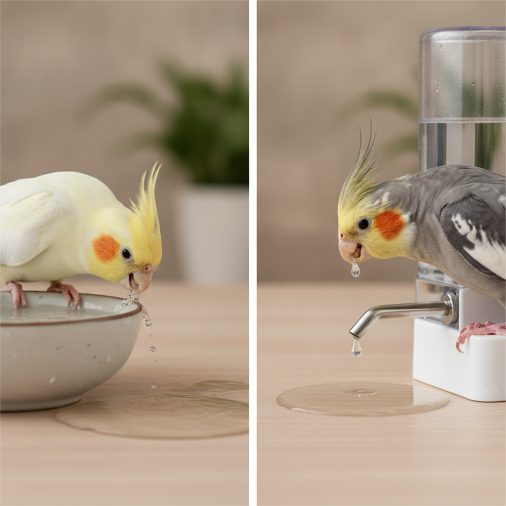
Cockatiels (Nymphicus hollandicus) are intelligent, curious birds that drink by scooping water with their lower beak and tilting their head back. This natural scooping motion means they prefer a water source wide enough to get their beak into comfortably.
Open dishes and small bowls work naturally with this behavior. Automatic dispensers work differently depending on their design, and that matters when you’re deciding which type to try.
A dispenser that produces a pool of accessible water at the base — like most gravity-fed cage dispensers — mimics the experience of a shallow bowl well enough that many cockatiels adapt without significant difficulty. Narrow-spout or nipple-style dispensers require cockatiels to learn a slightly different technique, which takes more patience.
Types of Automatic Water Dispensers and Cockatiel Compatibility
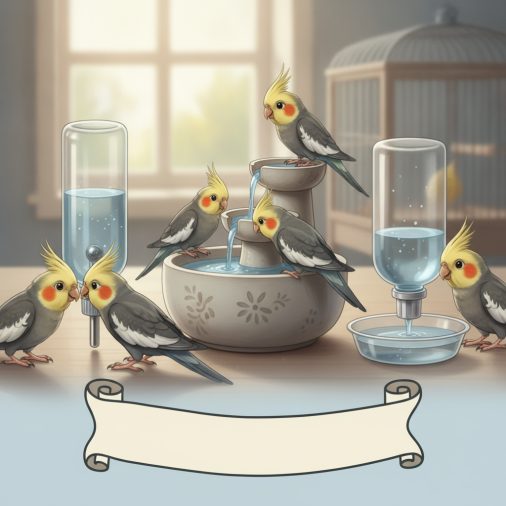
Not all automatic dispensers are equal when it comes to cockatiel use. Here’s how the most common styles compare:
| Dispenser Type | How It Works | Cockatiel Compatibility |
|---|---|---|
| Gravity-fed dish dispenser | Reservoir feeds a small open tray as water is consumed | High — mimics open bowl drinking |
| Cage-mounted bottle with spout | Bird presses or licks a ball bearing to release water | Moderate — requires training |
| Nipple-style dispensers | Bird presses a nipple valve to release drops | Lower — unnatural motion for cockatiels |
| Drip-style reservoir cups | Water drips slowly into a cup below | High — water pools naturally |
Gravity-fed dispensers with an open tray are generally the most cockatiel-friendly option. The water pools in a small dish just as it would in a regular cup, so the bird doesn’t need to learn a new technique.
Bottle dispensers with a ball-bearing spout are widely used for small birds, including cockatiels, and many birds do learn to use them — but they typically require deliberate training.
The Real Question: Will Your Cockatiel Accept One?
Cockatiels are creatures of habit. If a bird has spent its life drinking from an open bowl, a new dispenser can seem foreign or even suspicious at first. This is normal bird behavior, not a sign that the bird dislikes the product.
Some cockatiels approach a new dispenser within hours and investigate it out of curiosity. Others may avoid it for days. Individual personality plays a large role — bold, inquisitive birds often adapt faster than shy or older birds that are more set in their routines.
Age also matters. Young cockatiels that encounter a dispenser early in life often accept it without hesitation. Adult birds that have only known open water cups may need more encouragement and a longer adjustment period.
How to Introduce an Automatic Water Dispenser to a Cockatiel
Switching abruptly and removing the familiar water cup is one of the most common mistakes people make. Never do this without confirming the bird is actually drinking from the new source.
Follow these steps to introduce a dispenser safely:
- Place the dispenser inside the cage alongside the regular water cup. Let the bird explore it on its own terms without pressure.
- Draw attention to the water. Gently tap the spout or tray with your finger while the bird watches. Cockatiels are observant and often imitate what they see.
- Place a small treat or food near the dispenser. Millet spray positioned close to the dispenser can encourage investigation without forcing the interaction.
- Watch for actual drinking behavior. Curiosity and drinking are different. Look for the head-tilting, beak-scooping motion that confirms the bird is swallowing water.
- Keep both water sources available for at least 5–7 days. Only phase out the old cup once you’ve confirmed the bird drinks regularly from the dispenser.
- If using a bottle dispenser, touch the spout and let a drop appear so the bird can see and taste it. Some birds need this demonstration several times before connecting the spout to water.
Safety Considerations You Shouldn’t Skip
Water hygiene is a serious concern with any dispenser type, and automatic dispensers come with some specific risks worth knowing.
Reservoir dispensers can harbor bacteria and mold. Because the reservoir holds water for extended periods, it can become a breeding ground for harmful bacteria if not cleaned regularly. Many people mistakenly believe that automatic dispensers require less maintenance — in reality, they still need to be cleaned thoroughly every 1–2 days.
Check for flow blockages. Gravity-fed dispensers can become clogged with bird droppings, seed husks, or debris, which means the tray may run dry without the owner noticing. Check the dispenser daily to confirm water is actually flowing.
Bottle dispensers can create a vacuum seal. Some bottle-style dispensers occasionally stop dispensing water due to an air lock or vacuum effect. If a cockatiel appears lethargic, fluffed, or less active, dehydration should be ruled out promptly. Always visually verify water flow, not just the water level in the reservoir.
Use bird-safe, non-toxic materials. Avoid dispensers made from materials that could leach chemicals into water, especially when the dispenser is new. BPA-free plastic and stainless steel options are generally considered safer choices.
When Automatic Dispensers Work Well for Cockatiels
Automatic dispensers are genuinely useful in certain situations. They can maintain a consistent water supply overnight or during short periods when you’re away from home. They also help prevent the mess that open cups often create, since cockatiels frequently drop seeds, pellets, or debris into their water.
If you travel regularly or have a busy schedule, a gravity-fed dispenser can act as a buffer — though it’s never a substitute for daily bird care. Cockatiels still need fresh water changed at least once daily, even with a dispenser in place.
For cockatiels that consistently soil their open water cup with food, a gravity-fed dispenser can actually improve water quality by limiting how much debris falls into the drinking area.
Choosing the Right Dispenser for a Cockatiel
When selecting a dispenser, prioritize ease of cleaning over everything else. A dispenser you can thoroughly clean every day will always be safer than one that looks impressive but has narrow channels or hard-to-reach corners.
A wide-mouth reservoir that disassembles easily, a smooth interior surface with no crevices, and a tray large enough for a cockatiel to drink from comfortably are the most practical features to look for.
For cockatiels that need encouragement with enrichment and diet, you might also find it helpful to check out tips on how to make bird treats for cockatiels — a useful resource if you’re working on building trust with a hesitant bird during the dispenser training process.
Signs Your Cockatiel Is Not Drinking Enough
Dehydration in cockatiels can become serious quickly. Watch for these warning signs during any transition to a new water source:
- Fluffed feathers without obvious illness or cold temperature
- Reduced droppings or abnormally dark, concentrated urine
- Lethargy, reduced activity, or less vocalization than normal
- Loss of interest in food
- Dry or tacky appearance to the inside of the beak
If you notice any of these signs during the transition, return to an open water cup immediately and offer fresh water. Contact an avian veterinarian if symptoms persist or worsen.
FAQ
Can cockatiels learn to use a water bottle with a ball-bearing spout?
Yes, many cockatiels learn to use ball-bearing bottle dispensers with patient training. The process typically involves demonstrating the spout, letting the bird see water appear, and keeping a backup water cup available until you’re certain the bird is drinking consistently from the bottle.
How often should I clean an automatic water dispenser for a cockatiel?
Clean the dispenser — including the reservoir, tray, and any tubing — at least every 1–2 days. Cockatiels are susceptible to bacterial infections from contaminated water, and dispensers can harbor harmful microorganisms faster than open cups in a warm indoor environment.
Is an automatic water dispenser better than a regular water cup for cockatiels?
Neither is strictly better. Open cups are simple, familiar, and easy for most birds. Dispensers can reduce mess and maintain water supply between cleanings, but they require monitoring for blockages and regular cleaning. The right choice depends on your routine and your bird’s personality.
My cockatiel keeps dunking food in the water. Will a dispenser help?
A gravity-fed dispenser with a small tray can reduce food contamination compared to an open cup because there’s less surface area for the bird to splash around in. It won’t eliminate the behavior entirely, but many bird owners find it does help keep the water cleaner for longer.
Can I use an automatic dispenser as the only water source while I’m away for a day or two?
It’s not ideal to leave any bird unattended for extended periods, but if a short absence is unavoidable, a gravity-fed dispenser can provide backup water supply. Confirm the bird is drinking from it reliably before leaving, and have someone check on the bird whenever possible. A blocked dispenser could leave the bird without water for hours.
Are there automatic dispensers specifically designed for cockatiels or small parrots?
Several cage-mounted gravity dispensers and bottle waterers are sized for small parrots and cockatiels. Look for products designed for birds in the 80–120 gram size range, with tray openings wide enough for their beak and reservoirs that don’t require excessive force to access.
What if my older cockatiel refuses to use the dispenser at all?
Some older birds simply won’t adapt, and that’s okay. There’s no requirement to use a dispenser. A clean, fresh open water cup changed daily is a perfectly appropriate and reliable option for cockatiels of any age.
Practical Takeaway
Most cockatiels can learn to use an automatic water dispenser, especially gravity-fed styles with an open tray. The key is a gradual introduction, keeping the familiar water cup available throughout the transition, and confirming with your own eyes that the bird is actually drinking. Hygiene matters just as much — or more — with a dispenser as with a regular cup, so daily cleaning and daily flow checks should remain part of your routine regardless of which system you use. If your bird stubbornly refuses the dispenser, a simple open cup works just as well and is never a lesser option.




