
Have you ever tried to take a photo of a bird, only to have it suddenly fly away? You might wonder, can birds actually sense a camera?
Understanding how birds react to cameras can change the way you capture their beauty. You’ll discover surprising facts about birds’ senses and behavior. Keep reading to learn how to get closer to these amazing creatures without scaring them off. Your next perfect bird photo could be just a few tips away!
Bird Vision And Perception
Understanding how birds see and perceive their surroundings is key to answering whether they can sense a camera. Their vision is not just sharp but also uniquely tuned to different aspects of light and color. This gives birds abilities that far surpass human vision in many ways, which might explain their reactions to unfamiliar objects like cameras.
How Birds See The World
Birds have eyes positioned on the sides of their heads, giving them a wide field of view—often close to 300 degrees. This helps them spot predators and food from almost any angle without moving their heads much.
They also have a higher density of photoreceptor cells in their retinas, which means they can detect tiny movements and details better than humans. Imagine trying to sneak up on a bird with a camera; their sharp vision makes it tough to stay hidden.
Visual Acuity Compared To Humans
Birds like hawks and eagles have visual acuity up to 8 times better than humans. This means they can see small objects clearly from hundreds of feet away.
Even common birds have better detail vision than you might expect. If you hold a camera too close or move it too suddenly, they can notice immediately. Have you ever seen a bird freeze or fly off when you raise a camera? That sharp eyesight is the reason.
Color Perception In Birds
Birds see a broader range of colors than humans because they have four types of color receptors, compared to our three. This includes ultraviolet light, which is invisible to us.
This ability lets birds detect subtle color changes in feathers and surroundings, helping them identify friends, foes, or food. If a camera’s lens or flash reflects UV light, a bird might sense it as something unusual or threatening.
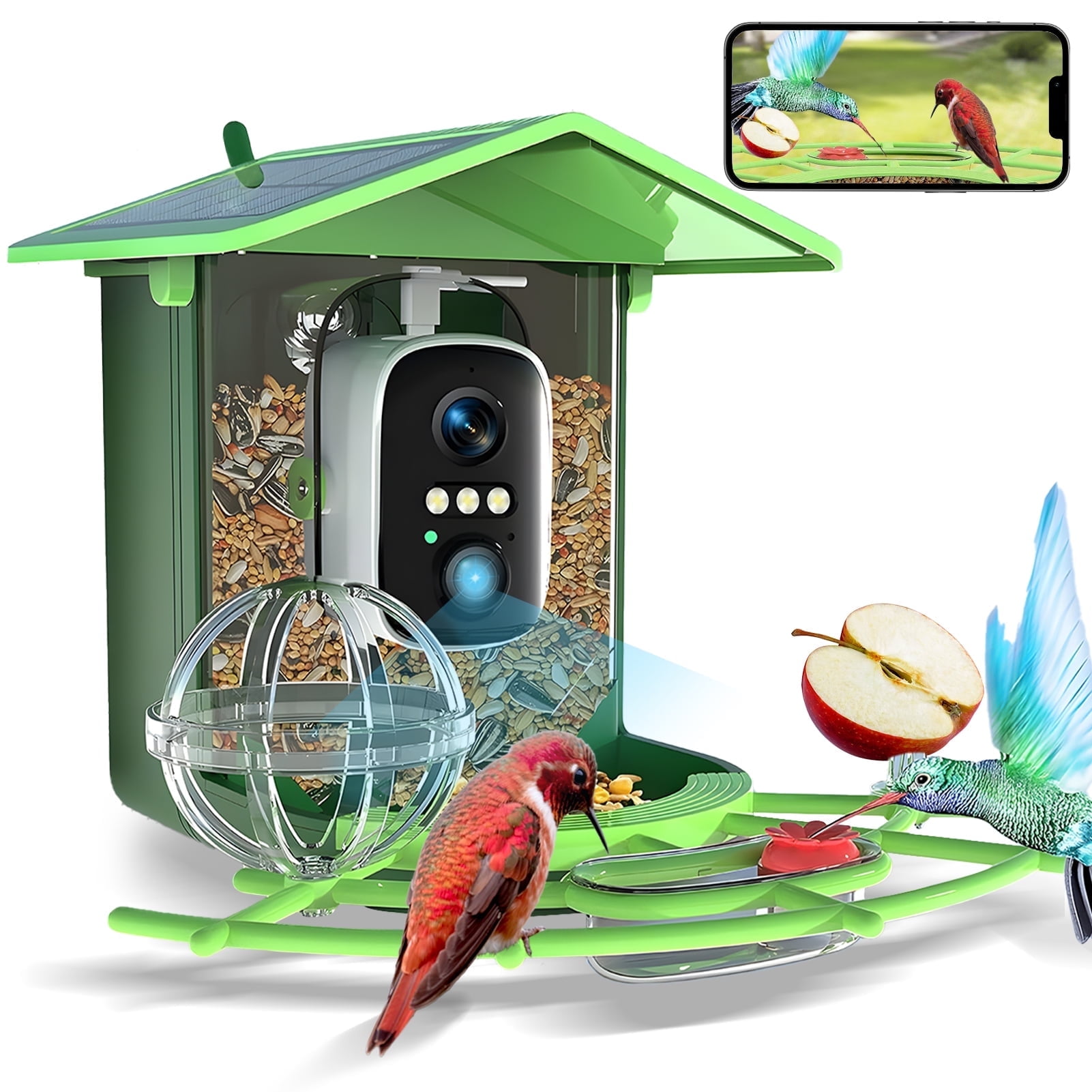
Credit: www.walmart.com
Birds’ Reaction To Cameras
Birds show a range of reactions to cameras in their environment. Their behavior changes based on camera type and how it is used. Understanding these reactions helps photographers capture better images without disturbing the birds.
Behavior Around Stationary Cameras
Many birds get used to cameras that stay still for long periods. They often ignore these cameras after a short time. Some birds even approach stationary cameras curiously. This allows photographers to get close and take natural shots.
Response To Flash And Movement
Bright flashes can startle birds, causing them to fly away quickly. Sudden camera movements also create fear and stress. Birds may avoid areas where cameras flash or move often. Using natural light and minimizing movement helps reduce this reaction.
Impact Of Camera Size And Noise
Large cameras with loud shutters can scare birds easily. Small, quiet cameras are less likely to disturb them. Lightweight cameras allow more stealthy photography. Choosing the right camera size and noise level is important for bird-friendly photo sessions.
Scientific Studies On Birds And Cameras
Scientific studies explore if birds can sense cameras around them. These studies help us understand bird behavior and their interaction with technology. Researchers observe birds in natural settings and controlled environments to gather data.
They focus on how birds react to camera presence. Do birds notice cameras? Do cameras affect their behavior? These questions guide many experiments.
Research Findings On Bird Awareness
Research shows mixed results about bird awareness of cameras. Some birds seem curious or cautious near cameras. Others ignore them completely.
Birds rely on their vision to detect threats. Cameras with visible lenses or reflections might catch their attention. Some species react more than others.
Experiments With Camera Traps
Camera traps help study birds without human disturbance. They capture photos or videos when birds move close.
Experiments show that many birds do not avoid camera traps. They continue normal activities near these devices. This suggests limited awareness of cameras as threats.
Limitations Of Current Studies
Current studies face challenges in proving bird awareness. Small sample sizes and short observation times limit conclusions.
Bird species vary widely in behavior and sensitivity. More research is needed across different environments and species.
Practical Tips For Bird Photography
Bird photography is a rewarding challenge that tests your patience and skill. Capturing birds without scaring them away requires more than just a good camera. Understanding how to approach and photograph birds practically can improve your shots significantly.
Minimizing Disturbance
Birds are easily startled by sudden movements and unfamiliar objects. Move slowly and quietly to avoid scaring them off. Avoid direct eye contact, as many birds perceive it as a threat.
Try to keep a reasonable distance and use a zoom lens instead of getting too close. Have you noticed how birds behave differently when you wear bright colors versus neutral tones? Wearing earth-colored clothing helps you blend into the environment.
Using Camouflage And Hides
Camouflage gear and hides can be game-changers. Setting up a hide allows you to stay concealed while waiting for the perfect shot. You can use natural foliage or specialized blinds to break your outline.
Try placing your hide near bird feeders or water sources to increase your chances of a close encounter. Patience is key here—sometimes you’ll wait quietly for long periods. Have you ever tried using a ghillie suit or a camo net? They can make a huge difference in how comfortable the birds feel around you.
Best Camera Settings For Wildlife
Fast shutter speed is crucial to freeze bird movements. Aim for at least 1/1000th of a second to capture sharp images of flying or hopping birds. Use continuous autofocus mode to keep your subject in focus as it moves.
Set your camera to burst mode to take multiple shots quickly and increase the chance of getting the perfect frame. Adjust ISO to balance light without adding too much noise—higher ISO in low light, but keep it as low as possible. Have you experimented with aperture settings? A wider aperture (f/4 or f/5.6) helps isolate the bird from the background for stunning portraits.
Unexpected Bird Behaviors Around Cameras
Birds often display surprising behaviors when they encounter cameras. These reactions can range from curious approaches to sudden retreats. Observing these actions closely can reveal how birds perceive and react to unfamiliar objects in their environment.
Curiosity And Investigation
Many birds show interest in cameras, especially if the device is new to their surroundings. They might approach closely, peck at the lens, or circle around the camera to understand what it is. Once, while photographing in my backyard, a robin repeatedly inspected my camera, almost as if it was trying to figure out if it was a threat or a new perch.
If you notice birds investigating your camera, try to remain still. This allows you to capture natural behavior without disturbing them. Could your calm presence encourage more intimate wildlife moments?
Avoidance And Alarm Signals
Not all birds react with curiosity. Some display clear signs of discomfort or alarm near cameras. You might see quick flights away, raised feathers, or distinct alarm calls signaling danger to nearby birds.
This reaction often happens when the camera has a flash or makes sudden noises. To minimize disturbance, consider using silent modes and avoid bright flashes. How might adjusting your gear help build trust with your avian subjects?
Adaptation Over Time
Birds can grow accustomed to cameras if they are present regularly and do not pose a threat. Over days or weeks, their wariness often decreases, leading to more natural and relaxed behavior. I’ve noticed this when setting up a stationary camera near a feeding spot; initially, birds were hesitant but later returned confidently.
Consistency in your approach and patience can lead to better photo opportunities and less stress for the birds. What strategies will you try to help your feathered friends get comfortable around your equipment?

Credit: photzy.com

Credit: www.amazon.com
Frequently Asked Questions
Can Birds Detect Camera Lenses?
Birds can sometimes notice camera lenses due to reflections or glare. They may react to shiny surfaces or movements near them. However, most birds do not specifically recognize cameras as threats.
Do Birds Get Scared Of Camera Flashes?
Yes, sudden camera flashes can startle birds. Bright flashes may mimic predator eyes or sudden light changes. Photographers often avoid using flash to prevent disturbing birds.
How Do Birds React To Camera Sounds?
Birds may be sensitive to shutter clicks or camera noises. Loud or unfamiliar sounds can cause birds to fly away. Using silent or quiet cameras helps minimize disturbance.
Can Birds Recognize Humans With Cameras?
Birds often associate humans carrying cameras with less threat if accustomed. Some birds become indifferent to cameras over time. Habituation reduces their fear response to camera presence.
Conclusion
Birds often notice cameras but do not fully understand them. Their reactions depend on the camera’s size and movement. Some birds may fly away, while others stay calm. Watching birds closely helps photographers capture natural moments. Using quiet, slow camera moves keeps birds comfortable.
This knowledge improves bird photography and respect for wildlife. Keep practicing and observe how birds respond to cameras. Patience and care make the difference in great photos.




