
Are you ready to create a cozy home for your feathered friends? With A Frame Bird House Plans, you can build a charming and sturdy shelter that birds will love.
Imagine watching colorful birds visit your backyard, chirping happily as they nest inside a house you made yourself. This guide will show you simple steps and smart tips to craft the perfect A frame birdhouse, even if you’re new to building.
Keep reading, and you’ll discover how easy and rewarding it is to bring more life and joy to your outdoor space.

Credit: www.shopsmith.com
Choosing Materials
Choosing the right materials is key to building a strong A Frame bird house. The materials affect how long the bird house lasts and how safe it is for birds. Quality materials keep the bird house sturdy and protect birds from weather.
Picking materials that resist moisture and decay helps the bird house stay in good shape. Some woods are better for outdoor use because they do not rot easily. Also, the right tools and supplies make building easier and the final product neat.
Wood Types For Durability
Choose wood that can stand rain, sun, and wind. Cedar is a top choice because it resists rot and insects. Pine is easy to find and work with but needs treatment to last. Redwood is strong and looks nice but costs more.
Avoid soft woods that break or decay fast. Use untreated wood to keep birds safe from chemicals. Smooth the wood edges to protect small birds from injury. Thickness matters; thicker wood gives better insulation and strength.
Essential Tools And Supplies
Have these tools ready to build your bird house easily:
- Saw for cutting wood pieces to size
- Hammer and nails or a drill with screws
- Measuring tape and pencil for accuracy
- Sandpaper to smooth rough edges
- Wood glue for extra hold
Use non-toxic paint or sealant if you want to add color. Avoid paints that could harm birds. Keep tools sharp and clean for safety and better results.
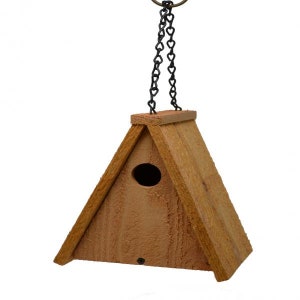
Credit: www.etsy.com
Designing Your A Frame
Designing your A Frame bird house requires careful thought to make it inviting and safe. The shape is simple yet effective, offering shelter and protection. Focus on size, airflow, and moisture control to keep birds comfortable. A well-designed house attracts birds and supports their nesting needs.
Dimensions For Different Birds
Size matters for different bird species. Small birds need cozy spaces, while larger birds require more room. Here are common dimensions to consider:
| Bird Species | Floor Size (inches) | Entrance Hole Diameter (inches) | Height (inches) |
|---|---|---|---|
| Chickadees | 4 x 4 | 1 1/8 | 8 |
| Wrens | 4 x 4 | 1 1/8 | 8 |
| Nuthatches | 5 x 5 | 1 1/4 | 9 |
| Bluebirds | 6 x 6 | 1 1/2 | 10 |
Choose dimensions that match the birds in your area. Adjust size for comfort and safety.
Ventilation And Drainage Tips
Good airflow prevents heat and moisture buildup inside the bird house. Ventilation holes near the top allow fresh air to enter. Add small drainage holes at the bottom to let water escape. Keep holes small to stop predators and rain from entering.
- Drill 2-3 ventilation holes near the roof peak.
- Create 2-3 drainage holes in the floor.
- Position the house under shade to reduce heat.
- Use untreated wood to avoid harmful chemicals.
Proper ventilation and drainage help maintain a dry, safe home. Birds prefer fresh air and dry nests.
Cutting And Assembly
Cutting and assembling your A Frame bird house is where your project truly takes shape. Accuracy during cutting sets the foundation for a sturdy and attractive bird house. Careful assembly ensures the structure withstands weather and provides a cozy home for birds.
Step-by-step Cutting Guide
Start by gathering quality wood, ideally cedar or pine, as they resist rot well. Measure twice, cut once—this advice is crucial here. Mark all pieces clearly before cutting to avoid mistakes.
- Cut two identical side panels with a steep angle on top to form the A frame.
- Cut a back panel that matches the height of the side panels.
- Cut a front panel with an entrance hole sized for your target bird species.
- Prepare a bottom panel that fits snugly inside the frame.
- Cut a roof piece that overlaps the sides to protect against rain.
Using a sharp saw or a power tool will give you clean edges. Sand each piece lightly to remove splinters, making the bird house safe for its future occupants.
Joining Techniques For Stability
Choosing the right joining method affects your bird house’s durability. Nails might be quick, but screws provide stronger, lasting hold.
- Use wood glue along edges before screwing panels together to add extra strength.
- Clamp pieces as you join them to keep everything aligned.
- Add small corner braces inside the frame for additional support.
- Ensure the roof is securely fastened but can be removed for cleaning.
Have you ever struggled with a wobbly project? Using these joining techniques avoids that frustration. You want your bird house to endure wind and rain, not collapse at the first storm.
Finishing Touches
Finishing touches bring your A Frame bird house plans to life. These small details protect the birdhouse and make it inviting for birds. Proper finishing ensures durability and safety for your feathered friends. Focus on painting, weatherproofing, and adding key features like perches and entry holes.
Painting And Weatherproofing
Use non-toxic paint made for outdoor use. This protects wood from rain, sun, and wind. Choose light colors to keep the birdhouse cool inside. Avoid painting the inside to keep it safe for birds.
Apply a clear, water-resistant sealant after painting. This adds extra protection without harming birds. Let each layer dry completely before adding the next. Weatherproofing extends the life of your birdhouse and keeps birds comfortable.
Adding Perches And Entry Holes
Perches give birds a place to land and rest. Use small, smooth sticks or dowels. Attach them securely near the entry hole but not too close. This helps birds enter easily without predators reaching in.
Entry holes should fit the type of birds you want to attract. Use a drill bit that matches the bird’s size. Smooth the edges to prevent injury. A properly sized hole keeps larger birds and predators out.
Placement And Maintenance
Proper placement and regular maintenance keep your A Frame bird house safe and inviting. Birds need a quiet, secure spot to nest. Clean houses prevent disease and encourage repeat visits. Small actions make a big difference in bird health and happiness.
Best Locations In Your Yard
Choose a spot that is calm and away from heavy foot traffic. Place the bird house 5 to 10 feet above the ground. Use a tree or pole for mounting to avoid predators. Face the house entrance away from prevailing winds. Avoid areas with direct afternoon sun to keep it cool.
- Near bushes or shrubs for shelter
- Shaded but not too dark
- Clear flight path to the entrance
- Away from bird feeders to reduce competition
Cleaning And Seasonal Care
Clean the bird house at least once a year, ideally in early spring. Remove old nests and debris to prevent parasites. Use mild soap and water, then rinse thoroughly. Let it dry before closing or reinstalling. Inspect for damage and fix cracks or loose parts. In winter, avoid disturbing the house but clear snow if it blocks the entrance.

Credit: www.youtube.com
Attracting Birds
A Frame Bird House Plans offer a simple way to attract birds to your garden. These plans provide easy-to-follow steps for building a cozy birdhouse. Create a welcoming space for feathered visitors with minimal materials and effort.
Attracting birds to your A Frame Bird House can transform your backyard into a lively, colorful sanctuary. The sound of birds chirping and the sight of them flitting about can bring joy and tranquility to your home. But how do you make your birdhouse the go-to destination for these feathered friends? The secret lies in creating an inviting environment that meets their needs.Choosing Bird-friendly Plants
Selecting the right plants can significantly boost your bird-attracting efforts. Native plants are a fantastic choice because they offer familiar food sources and shelter for local bird species. Consider planting berry-producing shrubs like elderberry or serviceberry, which provide a natural food source throughout different seasons. Incorporate a mix of trees, shrubs, and flowering plants. This variety not only offers diverse feeding options but also provides nesting materials and protection from predators. A dense shrub or a tall tree can be a safe haven for birds to rest and nest.Feeding And Watering Tips
Supplementing natural food sources with feeders can encourage more birds to visit. Opt for a variety of feeders to accommodate different bird species. Tube feeders, platform feeders, and suet holders can attract everything from small finches to larger woodpeckers. Don’t overlook the importance of water. A simple birdbath can make your yard more appealing, especially during hot weather when water sources are scarce. Keep the water clean and fresh to prevent the spread of diseases and ensure that it’s shallow enough for birds to bathe safely. Have you ever noticed how a small change can make a big difference? Adding a few bird-friendly features could be all it takes to turn your garden into a birdwatcher’s paradise. What’s stopping you from giving your feathered visitors a warm welcome?Frequently Asked Questions
What Materials Are Needed For A Frame Bird House Plans?
You need wood, nails, screws, waterproof glue, sandpaper, and paint. Use untreated wood to ensure bird safety. Basic tools like a saw and drill are essential for assembly.
How Do I Build A Simple A Frame Bird House?
Cut wood panels into triangles and a base. Assemble sides with nails or screws. Attach a roof and drill entrance holes. Sand edges smooth to prevent bird injuries.
What Bird Species Prefer A Frame Bird Houses?
Small birds like chickadees, wrens, and finches prefer A Frame houses. The compact design offers good shelter and protection from predators and weather.
How To Maintain An A Frame Bird House?
Clean the bird house annually after nesting season. Remove old nests and debris. Inspect for damage and repaint with non-toxic paint if needed to prolong its life.
Conclusion
Building an A frame bird house brings joy to any garden. These simple plans make it easy to create a safe home. Birds love the cozy shape and shelter from weather. You can enjoy watching birds up close every day.
Try these plans and add charm to your yard. A small project with big rewards. Start building today and welcome nature’s friends.




