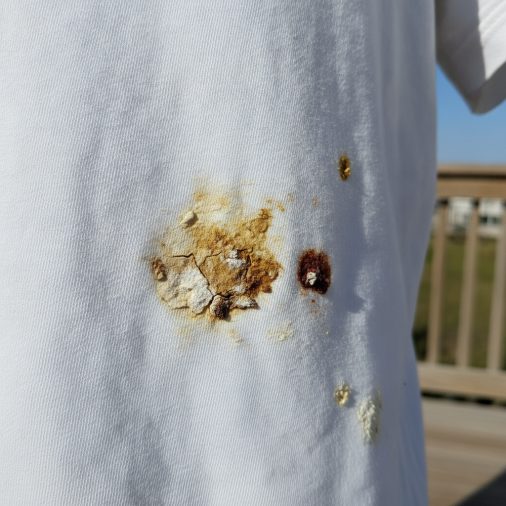
Getting hit by a seagull overhead is almost a rite of passage at the beach. The problem is that seagull droppings often dry to a stubborn brown or yellow stain, and white fabric makes every trace painfully visible.
Scrape off as much of the dried poop as possible without rubbing it in, then soak the stain in cold water before applying a liquid laundry detergent or enzyme-based stain remover. Let it sit for 10–15 minutes, gently work the fabric, then rinse and repeat if needed before washing on a cool cycle. Never use hot water or a hot dryer until the stain is completely gone.
Why Seagull Droppings Look Brown or Yellow When Dry
Fresh seagull droppings are usually white and watery with a darker center. Once they dry on fabric, they often shift to a yellow, brown, or tan color. That color change happens because seagulls eat a highly varied diet — fish, crustaceans, scraps, berries, and almost anything they can scavenge.
The pigments from these foods, combined with uric acid and bile from the bird’s digestive system, can oxidize as the droppings dry. That oxidation is what gives dried seagull poop its distinctive yellowish or brownish tint on fabric. The longer it sits and oxidizes, the more set the stain becomes.
On white fabric specifically, even a light residue shows up clearly because there’s no color to mask it.
The Biggest Mistake to Avoid First
The single most common mistake people make is rubbing dried bird poop with a wet cloth the moment they notice it. Rubbing pushes the material deeper into fabric fibers and spreads the stain wider. On white fabric, this can turn a small spot into a large, harder-to-remove smear.
Instead, always work from the outside of the stain inward, and use a gentle blotting or lifting motion rather than side-to-side scrubbing. That applies at every step of the removal process.
Step-by-Step: Removing Dried Seagull Poop from a White Shirt
These steps work for most white cotton and cotton-blend shirts, which are the fabric types most people wear in environments where seagulls are common.
1. Let it dry completely if it hasn’t already.
It may feel counterintuitive, but trying to remove wet or semi-wet bird droppings often smears them further. If the dropping is still moist, let it dry fully before proceeding.
2. Scrape off the solid residue.
Use a dull knife, the edge of a credit card, or a stiff piece of cardboard to gently lift the dried material. Work carefully and lift upward rather than dragging across the fabric. Remove as much dry material as you can before adding any liquid.
3. Rinse from the back of the fabric.
Hold the stained area under cold running water, with the water flowing from the inside of the shirt outward through the fabric. This pushes the stain out rather than deeper in. Use cold water only — hot water can bond proteins in the droppings to the fabric fibers.
4. Apply an enzyme-based stain remover or liquid laundry detergent.
Work a small amount directly into the stain with your fingertip or a soft toothbrush using gentle circular motions. Enzyme-based products are especially effective because they break down the biological compounds in bird droppings — the proteins, uric acid, and organic pigments that cause staining. A product like Zout Triple Enzyme Formula Laundry Stain Remover is well suited to this kind of stain.
5. Let it soak for 10–15 minutes.
Don’t skip this step. The product needs time to penetrate and break down the stain at the fiber level. Resist the urge to rinse it off immediately.
6. Rinse thoroughly with cold water.
Check whether the stain has lifted. If it’s faded but still visible, repeat steps 4 and 5 before moving on.
7. Wash the shirt on a cool or warm cycle.
Once the stain is no longer visible, launder the shirt as normal according to its care label. Avoid the hot cycle until you’ve confirmed the stain is gone.
8. Check before drying.
Before placing the shirt in the dryer, inspect the stain area while the fabric is still wet. Heat from the dryer can permanently set any remaining residue. If you see any trace of the stain, treat and wash again.
When the Stain Has Already Turned Yellow After Washing
If the shirt went through the dryer before the stain was fully removed, or if the stain has been sitting for a while, the yellow or brown discoloration may feel more stubborn. In this case, a few additional approaches can help.
White distilled vinegar applied directly to the stain and left for 15–20 minutes can help loosen the uric acid component. Follow with a rinse and enzyme detergent treatment.
Oxygen-based bleach (not chlorine bleach) is a good option for white fabric specifically. Products containing sodium percarbonate release hydrogen peroxide when dissolved in water, which can break down organic staining without the fiber damage or yellowing risk that chlorine bleach can cause. OxiClean Versatile Stain Remover is a widely available oxygen bleach product that works well for this type of stain. Mix according to the package instructions, soak the stained area for 30 minutes to several hours, then rinse and launder normally.
Avoid chlorine bleach as a first response. While it can work on white cotton, it can weaken fabric fibers with repeated use and may react with certain stain components in ways that make yellowing worse rather than better.
Does the Type of White Fabric Change the Approach?
Fabric type matters more than many people expect. Cotton and cotton blends are the most forgiving — they tolerate cold water soaking, enzyme cleaners, and oxygen bleach well.
Linen behaves similarly to cotton and generally responds well to the same approach, though it wrinkles easily when wet so handle it gently. Synthetic fabrics like polyester, nylon, or blends labeled performance or moisture-wicking require a gentler touch — skip prolonged soaking and test any product on a hidden area first. Delicate white fabrics like silk or wool need professional dry-cleaning, especially if the stain has dried and set.
| Fabric Type | Cold Water Soak | Enzyme Cleaner | Oxygen Bleach | Notes |
|—|—|—|—|—|
| Cotton / cotton blend | Yes | Yes | Yes | Most forgiving option |
| Linen | Yes | Yes | Yes | Handle gently when wet |
| Polyester / synthetic | Brief rinse only | Yes (test first) | Diluted, test first | Avoid prolonged soaking |
| Performance / athletic | Brief rinse | Yes | Avoid | Follow care label |
| Silk / wool | No | No | No | Professional cleaning recommended |
Why Seagull Droppings Can Be Harder to Remove Than Other Bird Droppings
Seagulls are large birds with a high-protein, high-fat diet. Their droppings tend to be more concentrated and larger in volume than those from smaller songbirds. The uric acid content is significant, and when combined with fish-derived pigments and organic oils, the dried stain bonds more stubbornly to fabric.
Songbird droppings, by contrast, are often lighter and more watery because many small birds eat mostly seeds and insects. Seagull droppings are more likely to leave the kind of brown or yellow residue that requires multiple treatment rounds to fully remove.
If you find yourself dealing with other types of bird droppings on clothing, the general process for removing dried bird poop from clothes follows the same core principles — scrape, cold rinse, enzyme treat, and wash cool.
Quick Fixes When You’re Away from Home
Getting hit by a seagull at the beach, a marina, or a boardwalk means you probably don’t have stain remover on hand. A few practical on-the-spot approaches can prevent the stain from setting further until you can treat it properly.
– Let the dropping dry before touching it, even if that takes a few minutes.
– Scrape off what you can with a card or napkin.
– Blot gently with cold water — avoid rubbing.
– If available, a small amount of hand soap or dish soap worked gently into the stain and rinsed with cold water can help slow oxidation until you get home.
– Avoid rinsing with warm or hot water from a tap or shower.
The sooner you do a proper treatment, the better. But preventing heat and rubbing in the first few minutes makes a real difference in how much the stain sets.
Hygiene and Safety When Handling Bird Droppings
Bird droppings can carry bacteria and, in rare cases, pathogens such as Salmonella or Chlamydophila psittaci. Seagull droppings specifically are not generally considered high-risk to healthy adults, but it’s sensible to wash your hands thoroughly after handling soiled clothing, and to avoid touching your face during the process.
Work in a well-ventilated area if you’re scraping dried material, as fine dry particles can become airborne. Rinsing the stain before scraping can reduce this. This is a minor concern for casual outdoor exposure, but worth keeping in mind rather than dismissing entirely. For a broader look at whether bird droppings can cause lasting damage to clothing, the topic of whether bird poop bleaches clothes covers the chemistry involved in more detail.
FAQ
Why does seagull poop turn brown or yellow on my white shirt?
The color comes from a combination of uric acid, digestive bile, and pigments from seagull food sources like fish, crustaceans, and scavenged scraps. As the droppings dry and oxidize on fabric, these compounds shift from white to yellow or brown. White fabric makes the color change much more visible than it would be on darker clothing.
Can I use bleach to remove dried seagull poop from a white shirt?
Oxygen-based bleach is a safer and more effective choice for white fabric. It breaks down organic staining without the fiber damage risk that chlorine bleach can cause over time. If you do use chlorine bleach, follow the product instructions carefully and avoid it on synthetic or delicate fabrics. Always check the shirt’s care label first.
How long can I wait before treating a seagull poop stain on clothing?
The sooner you treat it, the easier removal will be. Fresh or recently dried stains respond quickly to enzyme cleaners and cold water. Stains that have sat for days or gone through a dryer cycle are significantly harder to remove and may require repeated soaking with an oxygen bleach solution.
Will dish soap work in a pinch for seagull poop on white clothes?
Dish soap can lift some surface-level staining, especially if the stain is fresh. It isn’t as effective as an enzyme-based laundry product for dried or set stains, but it’s a reasonable temporary measure when proper stain remover isn’t available. Follow up with a full enzyme treatment as soon as you can.
Does hot water help break down dried bird poop stains faster?
No — hot water is one of the most common mistakes when treating bird droppings. Heat can set protein-based stains into fabric fibers, making them much harder to remove. Always use cold water throughout the soaking and rinsing process, and avoid the dryer until you’ve confirmed the stain is completely gone.
Is seagull poop harder to remove than other bird droppings?
Generally yes. Seagulls are large birds with a high-protein diet, and their droppings tend to be more concentrated and pigment-rich than those from smaller seed-eating birds. The combination of fish-derived oils, uric acid, and bile pigments makes seagull stains particularly stubborn on white fabric. For general guidance on tackling different types of bird stains, the process of getting bird poop out of white clothes covers the full range of situations.
My shirt went through the dryer before I noticed the stain. Is it ruined?
Not necessarily, but the stain will be harder to remove. Soaking in an oxygen bleach solution like OxiClean for several hours before rewashing gives you the best chance of lifting a heat-set stain. Repeat the treatment if needed before drying again.
Practical Takeaway
Dried seagull poop on a white shirt looks alarming, but it’s rarely permanent if you handle it correctly. The two things that matter most are using cold water at every stage and avoiding the dryer until the stain is genuinely gone. Enzyme-based stain removers do the heavy lifting, and oxygen bleach gives you a reliable second option for stubborn yellow or brown residue. If a stain survives multiple rounds of treatment, a professional cleaner is worth considering before writing the shirt off entirely.