
Finding a small bird hopping awkwardly or holding one leg up can be distressing. Whether it’s a sparrow, finch, or wren, knowing what to do in those first moments can genuinely make a difference between survival and a worsening injury.
If you find a small bird with a broken leg, the most important steps are to keep it calm, warm, and contained while you arrange professional care. You should not attempt to set or splint the bone yourself unless you have specific training. Home care is a temporary bridge to a wildlife rehabilitator or avian vet—not a replacement for one.
How to Tell If a Small Bird Actually Has a Broken Leg
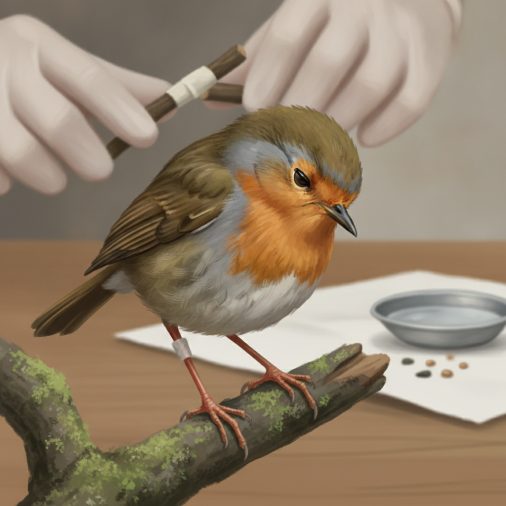
Not every bird that holds a leg up is injured. Birds sometimes tuck one leg against their body to conserve heat, especially in cold weather. A genuinely injured leg, however, often looks visibly abnormal.
Signs that may suggest a broken leg include a limb hanging loosely at an unnatural angle, visible swelling or bruising, the bird being unable to bear any weight on the leg, or obvious bone visible through the skin. A bird in pain will also typically appear fluffed up, lethargic, and reluctant to fly away even when approached closely.
Keep in mind that leg injuries in small birds can range from a simple fracture to a compound fracture where bone breaks through the skin. Compound fractures are far more serious and require urgent veterinary attention. If you see exposed bone or an open wound, treat the situation as an emergency.
Why Small Birds Break Legs
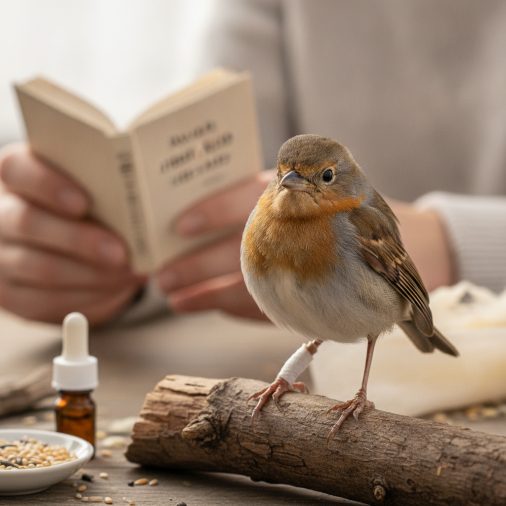
Understanding how the injury likely happened can help you assess the situation and reduce further risk.
Common causes include:
- Window collisions — One of the most frequent causes. A bird strikes glass at speed and may fracture a leg on impact or on landing.
- Cat or predator attacks — Cats in particular cause leg injuries during capture. Even if the bird escapes, puncture wounds from claws can accompany the fracture.
- Getting tangled — String, fishing line, netting, or loose wire can wrap around a leg and cause fractures or cut off circulation.
- Nest falls — Young birds (nestlings and fledglings) may fall and injure a leg on impact.
- Vehicle strikes — Birds feeding on roadsides are vulnerable to being clipped by passing traffic.
If the injury involves a cat attack, the bird needs a vet immediately even if the leg looks like the only problem. Cat saliva carries bacteria that can cause fatal infection within hours.
What to Do First: Safe Capture and Containment
Approaching an injured bird requires patience and calm movement. A frightened bird will burn energy it cannot afford to lose.
Step-by-step first response:
- Wear thin gloves if possible, or use a light cloth or paper towel. This protects both you and the bird.
- Approach slowly and gently place your cupped hands over the bird from above, covering its wings against its body.
- Hold it loosely but securely—firm enough that it cannot flap and injure itself further, but not so tight that you restrict breathing.
- Place the bird into a small cardboard box lined with a soft, breathable cloth such as an old T-shirt or paper towels. Avoid fluffy materials like cotton balls, which can snag toes.
- Poke small air holes in the box lid and keep the container in a quiet, dim, warm area away from pets, children, and loud noise.
Darkness and quiet reduce stress significantly. A calm bird uses less energy and is less likely to injure itself further by thrashing around.
Keeping the Bird Warm and Stable
Small birds lose body heat rapidly, especially when injured and in shock. Maintaining warmth is one of the most important things you can do at home.
Place the box near a gentle heat source, such as a heating pad set to its lowest setting placed under half of the box—never the whole base. This gives the bird the option to move away from heat if it becomes too warm. The target temperature inside the box should feel comfortably warm to your hand, roughly 85–90°F (29–32°C) for most small songbirds.
Do not use heat lamps, hair dryers, or place the box in direct sunlight. Overheating is a genuine danger.
Should You Splint a Small Bird’s Leg at Home?
This is one of the most common questions, and the honest answer is: almost certainly not.
Splinting a bird leg requires knowing exactly where the fracture is, having the correct materials, and understanding bird anatomy. A poorly applied splint can cut off circulation and cause the bird to lose the leg entirely. It can also cause the fracture to shift position and heal incorrectly, leaving the bird permanently disabled.
If you genuinely cannot reach a vet or rehabilitator for an extended period—more than 12 to 24 hours—and the bird is otherwise stable, some wildlife care resources suggest that a small piece of vet wrap (a self-adhesive bandage) can be used to gently support a lower leg fracture as a temporary measure. However, this requires knowing the fracture location and applying extremely light, even pressure. Wrapping too tightly causes more harm than no splint at all.
For most people in most situations, the safest course is supportive care: warmth, calm, darkness, and getting the bird to a professional as quickly as possible. You can read more about the specifics of how to treat a bird with a broken leg including when professional intervention is genuinely necessary.
Food and Water: What to Offer and What to Avoid
A bird in shock often will not eat or drink for several hours. Do not try to force-feed it or push water into its beak—this can cause aspiration (liquid entering the lungs), which is life-threatening.
If the bird is alert and active after an hour or two, you can offer:
- A very shallow bottle cap or dish lid of clean water placed inside the box
- Small seeds appropriate to the species—millet or finely cracked sunflower for sparrows and finches, for example
- Mealworms for insect-eating species such as wrens or warblers
Do not offer bread, milk, alcohol-based products, or human food. These are genuinely harmful to birds.
Keep the food and water dish small and low, so the bird does not need to balance on its injured leg to reach them. If the bird is not eating after several hours of calm conditions, that alone is a reason to escalate veterinary contact.
Contacting a Wildlife Rehabilitator
In most countries, wild birds are protected by law and are technically not legal to keep in long-term home care without a permit. This is not a bureaucratic technicality—it exists because birds have complex medical needs that the average person cannot meet at home.
A licensed wildlife rehabilitator can assess the fracture, apply a proper splint or bandage, provide pain management, and give the bird a realistic chance at release. Many work on a donation basis.
To find help quickly:
- In the United States: Contact the NWRA (National Wildlife Rehabilitators Association) or search the Wildlife Rehabilitator directory at NWRA.org. The Humane Society also maintains a state-by-state list.
- In the UK: The RSPCA or local wildlife hospitals such as Tiggywinkles Wildlife Hospital.
- In Canada: Contact your provincial wildlife service or search through the Canadian Wildlife Health Cooperative.
- In Australia: WIRES (Wildlife Information, Rescue and Education Service) operates nationally.
When you call, describe the species if you can identify it, the visible injury, and what happened. They will advise on immediate care and collection.
What Happens to Small Birds With Broken Legs
Outcomes depend on the type and location of the fracture, how quickly care is received, and the species involved. Small songbirds have light, hollow bones that can heal relatively well with proper immobilization—but only if the fracture is clean and caught early.
Compound fractures, infections from cat bites, and fractures involving the upper leg (femur) generally have a poorer outlook. A bird that cannot bear weight on its leg long-term may still survive in a sanctuary environment even if it cannot be released to the wild.
In practice, the single biggest factor in outcome is time. A bird treated within hours of injury has a significantly better chance than one left alone for a day or more.
Common Mistakes to Avoid
Even well-meaning people can unintentionally harm an injured bird. These are the most frequent errors:
- Attempting to set the bone manually — This causes extreme pain and often makes the injury worse.
- Offering water with a dropper or syringe — Aspiration risk is high. Let the bird drink on its own from a shallow dish.
- Keeping the bird in a bright, noisy environment — Stress alone can kill small birds in shock.
- Releasing the bird too soon — A bird that can flutter but cannot stand properly is not ready. It will fall prey to a cat or starve.
- Using a wire or mesh cage — Injured birds can easily fracture toes or wings pushing against wire. A cardboard box is genuinely better for short-term containment.
- Waiting too long to seek help — Twelve to twenty-four hours is a reasonable maximum for home care before the situation becomes critical.
FAQ
Can a bird survive with a broken leg if left untreated?
It depends on the fracture type and location. Some birds do survive minor leg injuries without intervention, particularly if the break is low on the leg and does not become infected. However, untreated fractures often heal in a distorted position that makes perching or walking difficult, and infection is a serious ongoing risk. Survival without care is possible but far from guaranteed.
How long does it take for a small bird’s broken leg to heal?
With proper splinting and care from a rehabilitator, minor fractures in small songbirds can begin to stabilize within two to three weeks. Full healing typically takes four to six weeks, though this varies by species, age, and fracture severity. Young birds generally heal faster than adults.
Should I try to catch a wild bird with a broken leg that’s still moving around?
If the bird is still mobile, it may be attempting to find shelter on its own. However, a bird that cannot fly and has a visible leg injury is extremely vulnerable to predators. Gentle capture and temporary containment while you contact a rehabilitator is usually the safer choice.
What does it mean if a bird is sitting on the ground with one leg up?
This is not always a sign of injury. Birds naturally tuck one leg up to conserve body heat, particularly in cool weather. Look for other signs of injury: unusual angle of the leg, inability to use the leg when walking, swelling, or an overall lethargic and fluffed-up appearance. A healthy bird will typically fly away when you approach closely.
Is there a difference in treating pet birds versus wild birds with broken legs?
Yes, meaningfully so. A pet bird—such as a canary, finch, or budgerigar—should be taken to an avian veterinarian as quickly as possible, but you have more time to arrange this safely. Wild birds are under much greater physiological stress from handling and confinement, and the legal framework around their care is different. Pet birds may also tolerate short-term observation at home better than wild birds, which can die from capture stress alone.
Can I use a popsicle stick to splint a small bird’s leg?
This is sometimes mentioned in home care instructions, but in practice it is very difficult to do safely. A popsicle stick is generally too large and heavy for the leg of most small songbirds. If you have genuine experience with bird care and cannot access help, a thin strip of soft foam or self-adhesive vet wrap applied very lightly is a better option. When in doubt, skip the splint and focus on warmth and calm.
How do I know if the bird is in pain?
Birds instinctively hide signs of pain and weakness as a survival mechanism. Signs that suggest significant discomfort include constant shifting or restlessness, rapid shallow breathing, keeping the eyes half-closed, and complete refusal to eat even after calming down. These are reasons to escalate care urgently rather than wait.
Final Thoughts
The most useful thing you can do for a small bird with a broken leg is act quickly, stay calm, and resist the urge to intervene beyond what the situation actually requires. Warmth, quiet, and a dark, secure container will stabilize most birds long enough to get them to someone qualified to help. The single call to a wildlife rehabilitator or avian vet will do more for that bird than any home splinting attempt. Speed genuinely matters—every hour counts when a small bird is injured and stressed.




