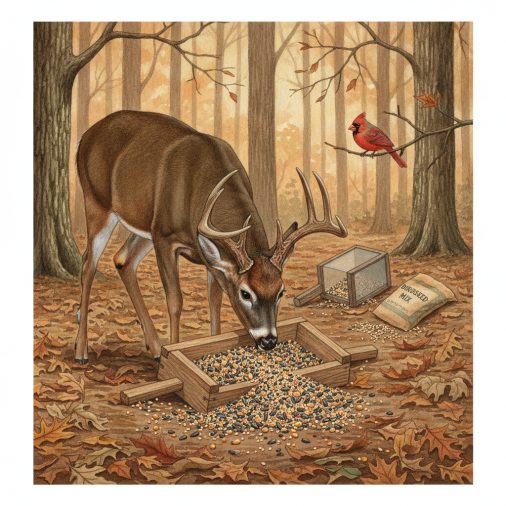
If you’ve ever walked outside to find your bird feeder ransacked or noticed your seed supply vanishing faster than usual, deer may be the culprit — especially if you live near woods, fields, or suburban green spaces.
Yes, deer absolutely eat birdseed. They are particularly drawn to sunflower seeds, corn, and millet — all common ingredients in standard wild bird seed mixes. Deer are opportunistic feeders with a flexible diet, and a bird feeder offers an easy, high-calorie meal. This is one of the most common wildlife conflicts backyard birders face, especially during fall and winter when natural food sources are scarce.
Why Birdseed Is So Attractive to Deer
Deer are not picky eaters. They’re browsers and grazers by nature, meaning they sample a wide variety of plant material depending on what’s available. Birdseed, from their perspective, is essentially a concentrated pile of nutritious food sitting at an accessible height — sometimes even at ground level.
The calorie density is part of the appeal. Sunflower seeds, which appear in most standard backyard seed mixes, are rich in fats and proteins. Cracked corn is another magnet. Deer have strong nutritional instincts, and both of these seeds offer genuine energy value, particularly during colder months when deer are working hard to maintain body condition.
Millet, safflower, and peanut pieces — also common in bird mixes — are equally appealing. In practice, there’s very little in a typical bird feeder that deer will turn away from.
When Deer Are Most Likely to Visit Your Feeders
Deer visits to bird feeders are not random. They tend to follow predictable patterns based on season, food availability, and deer behavior.
Fall and winter are when problems peak. As natural vegetation dies back and mast crops (acorns and nuts) become depleted, deer actively search for calorie-rich alternatives. A bird feeder filled with sunflower seeds can become a nightly destination.
Spring sometimes brings hungry deer as well, particularly does (female deer) that are pregnant or nursing fawns and need extra nutrition. By summer, natural food is typically abundant enough that deer rarely bother with feeders.
Deer are most active at dawn and dusk, which aligns with the times many birders notice their feeders disturbed or seed missing. They may also visit at night, leaving backyard birders puzzled about unexplained seed loss. Ground-level spilled seed is often what draws deer in initially — once they associate the area with food, they’ll return regularly.
How Deer Access Bird Feeders
Most standard hanging feeders are not out of reach for deer. White-tailed deer (Odocoileus virginianus), the most common deer species across North America, can reach well over five feet when stretching their necks. A feeder hanging at six feet offers minimal protection.
Platform feeders and tray feeders placed at low heights are the easiest targets. Tube feeders and hopper feeders on poles are more vulnerable than people expect — deer will push, knock over, or tip feeders to access spilled seed on the ground even when they can’t reach the feeder opening directly.
Seed that falls to the ground during normal bird feeding activity creates a secondary feeding zone that deer readily exploit. This is often how the habit starts: a deer discovers ground-spilled seed, then escalates to targeting the feeder itself.
The Ripple Effect on Your Bird Feeding Setup
Beyond the obvious problem of lost seed, deer visits create several secondary issues worth knowing about.
Deer are heavy animals. They can knock over pole-mounted feeders, bend shepherd’s hooks, or break feeder components entirely. Repeated pressure on a feeder pole or post can damage it over time.
Deer also introduce competition that disrupts normal bird activity. When a deer is present near a feeder, birds tend to scatter and stay away until the deer leaves. If deer visit frequently, birds may start avoiding the area altogether, which defeats the purpose of the feeder.
There’s also a hygiene concern. Deer can contaminate seed with saliva or droppings, which may introduce bacteria or parasites into the feeding area. Moldy or contaminated seed is a genuine health risk for birds, so checking for signs of spoilage after deer visits is worth doing.
Proven Ways to Keep Deer Away from Bird Feeders
Discouraging deer without eliminating your bird feeding setup requires a combination of feeder placement strategy and physical deterrents. No single method works perfectly in every situation, but several approaches are consistently effective.
Raise the feeder height. Mount feeders on poles at least 7–8 feet off the ground and use a baffle — a cone- or cylinder-shaped barrier — to prevent deer from nosing the pole upward. Pole baffles designed for squirrels often work reasonably well against deer too, though a dedicated deer-height strategy is more reliable.
Use a weight-sensitive feeder. Feeders like the Squirrel Buster Plus Wild Bird Feeder close seed ports when heavier animals apply pressure. While primarily designed for squirrels, the mechanism can discourage deer that push against the feeder.
Limit ground spillage. Using a no-waste seed mix or a feeder with a seed catcher tray reduces the amount of seed reaching the ground. Less ground-level seed means fewer initial attractants for deer.
Try deer-resistant seed types. Safflower seeds and Nyjer (thistle) seeds are generally less appealing to deer than sunflower seeds or corn. Switching part of your seed mix to these options — while still attracting birds like northern cardinals, American goldfinches (Spinus tristis), and chickadees — can reduce deer interest without sacrificing bird activity.
Use motion-activated deterrents. Motion-activated sprinklers or lights can startle deer and disrupt their routine visits. These work best when deer haven’t yet firmly established a feeding habit at your location.
Fence the area. A physical barrier of at least 8 feet is the most reliable deer deterrent, though it’s impractical for many backyard setups. Even a small fenced enclosure around your feeder pole can prevent direct access.
Does Birdseed Harm Deer?
Birdseed is not toxic to deer, but it’s not an ideal food for them either. Deer have digestive systems designed primarily for fibrous vegetation. A diet heavy in concentrated seeds — especially corn — can cause digestive upset.
Intentionally feeding deer is actually discouraged or illegal in many states and municipalities because it encourages habituation, increases deer-vehicle collisions, and can spread diseases like chronic wasting disease (CWD) among deer populations. If deer are visiting your feeder, the goal should generally be deterrence rather than accommodation.
While birdseed won’t cause acute harm from occasional visits, deer that regularly consume large quantities of concentrated seed are not thriving on an optimal diet. Keeping deer away is better for the deer as well as for your birds. For more on how deer interact with your backyard feeding setup, the guide on deer eating from bird feeders covers the behavior and practical solutions in detail.
Other Wildlife That May Be Raiding Your Feeders
If you’re experiencing unexplained seed loss, deer aren’t always the only suspect. Backyard feeders attract a range of wildlife, and identifying the right culprit helps you choose the right solution.
Squirrels are the most common feeder raiders. Raccoons are also skilled at accessing feeders, especially at night. And mice eating bird seed is a surprisingly common issue — they’re attracted to seed spilled on the ground and can move inside structures if feeders are near a home.
Wildlife
Primary Attraction
Most Active Time
Key Deterrent
White-tailed deer
Sunflower seeds, corn, millet
Dawn, dusk, night
Height + baffles + motion deterrents
Squirrels
Sunflower seeds, nuts
Daytime
Squirrel baffles, weight-sensitive feeders
Raccoons
Suet, seeds, scraps
Night
Removing feeders at night, secure mounting
Mice/rats
Ground-spilled seed
Night
Seed catchers, minimize ground spillage
Bears (where present)
All seed types, suet
Spring–fall
Remove feeders entirely during active season
Identifying tracks, timing of visits, and patterns of disturbance can help narrow down which animals are affecting your setup.
Should You Stop Feeding Birds Entirely to Avoid Deer?
Stopping bird feeding is rarely necessary. The goal is managing the feeding environment, not eliminating it. Most backyard birders successfully keep deer at bay with a combination of feeder height, baffles, and seed selection adjustments.
In areas with very high deer pressure — dense suburban deer populations or rural properties near active deer corridors — additional measures like motion deterrents or temporary fencing may be needed. In truly high-pressure situations, bringing feeders inside at dusk and putting them back out in the morning is a simple, effective solution that many birders use seasonally.
Frequently Asked Questions
Do deer eat sunflower seeds from bird feeders?
Yes. Sunflower seeds are among the most attractive seeds for deer. Both black-oil sunflower seeds and striped sunflower seeds are high in fat and protein, making them a preferred target. If sunflower seeds are the main component of your mix, deer are more likely to investigate your feeder.
What birdseed do deer not like?
Deer tend to show less interest in safflower seeds and Nyjer (thistle) seeds. Switching to these options can reduce deer visits while still attracting a good variety of songbirds. That said, no seed is completely deer-proof, and a hungry deer in winter may eat nearly anything available.
How high should a bird feeder be to keep deer away?
A height of at least 7–8 feet provides meaningful protection, but deer can reach surprisingly high when motivated. Combining height with a pole baffle is more effective than relying on height alone.
Will deer hurt birds or scare them away permanently?
Deer don’t typically prey on birds, but their presence disrupts feeding activity. Birds will usually return once the deer leaves. Frequent deer visits can, however, cause birds to become more cautious about using a particular feeder over time, especially if disturbance is frequent or unpredictable.
Why are deer suddenly visiting my yard when they never did before?
Changes in local food availability, nearby construction disturbing habitat, a particularly harsh winter, or a new neighbor stopping their own deer feeding can all redirect deer into your yard. Once deer discover a food source, they communicate those locations within the local herd and return regularly.
Can deer damage my bird feeder or feeding setup?
Yes. Deer can knock over pole-mounted feeders, bend shepherd’s hooks, and break plastic feeder components. Repeated visits from deer cause more cumulative physical damage than most other wildlife. Using a heavy-gauge steel pole and secure mounting is worthwhile if deer are a persistent problem.
Is it dangerous to have deer near my bird feeding area?
For most backyard setups, deer are a nuisance rather than a safety hazard. However, during the rut (breeding season in fall), bucks can be unpredictable, and habituation to humans is never ideal for any wild animal. Maintaining a respectful distance and not hand-feeding deer is always advisable.
Practical Takeaway
Deer eating birdseed is a genuinely common backyard birding challenge, particularly in fall and winter. The most effective response combines raising feeder height, using pole baffles, minimizing ground spillage, and choosing seed types that are less appealing to deer.
Switching partially or fully to safflower seeds or Nyjer seed is one of the simplest adjustments — it reduces deer interest without sacrificing the songbird activity you’re trying to attract. If deer pressure is severe, bringing feeders in at night costs nothing and eliminates most nocturnal visits entirely.
Persistence matters. Deer are creatures of habit, and breaking an established visiting pattern takes consistent effort for at least a few weeks. Stay with it and adjust your approach based on what you observe.