
Your bird bath is more than just a pretty garden feature—it’s a vital oasis for birds seeking water and comfort. But did you know that a dirty bird bath can actually harm the very birds you want to attract?
If you want to keep your feathered friends healthy and happy, knowing how to clean a bird bath properly is key. In this guide, you’ll discover simple, effective steps to keep your bird bath sparkling clean and inviting all year round.
Ready to make your backyard a safe haven for birds? Let’s get started!

Credit: www.express.co.uk
Gather Cleaning Supplies
Gathering the right supplies makes cleaning a bird bath easier and safer. Having everything ready avoids delays and ensures a thorough clean. This step helps keep the bird bath inviting and healthy for birds.
Essential Tools
- Soft-bristle brush or sponge to scrub gently
- Bucket for mixing cleaning solution
- Garden hose or watering can for rinsing
- Rubber gloves to protect your hands
- Old towels or cloths for drying
Safe Cleaning Agents
- White vinegar to remove algae and mineral deposits
- Mild dish soap without harsh chemicals
- Baking soda as a gentle scrubbing aid
- Water only for simple rinsing
Empty And Remove Debris
Emptying your bird bath and removing debris is the first crucial step to keeping it clean and inviting for birds. Stagnant water can quickly turn into a breeding ground for mosquitoes and algae. Clearing out old water and grime sets the stage for a fresh refill that attracts feathered visitors.
Drain Old Water
Start by completely draining the old water from your bird bath. If your bird bath has a drain plug, open it to let the water flow out. Otherwise, use a small bucket or cup to scoop out the water carefully.
Make sure to get as much water out as possible to prevent leftover murky water from spoiling the new fill. Have you noticed how quickly water can become cloudy when left standing? Removing it promptly stops that from happening.
Clear Leaves And Dirt
Once the water is gone, it’s time to remove any leaves, twigs, or dirt that have settled in the basin. Use a small net, your hands, or a soft brush to gently sweep out debris without scratching the surface.
Pay special attention to corners and crevices where grime tends to accumulate. This step might seem small, but it greatly improves water quality and bird safety. What kinds of debris do you usually find in your bird bath after a windy day?
Scrub The Basin
Scrubbing the basin is a key part of cleaning a bird bath. It removes dirt, algae, and bird droppings. A clean basin keeps water fresh and safe for birds. Proper scrubbing helps prevent bacteria growth and keeps birds healthy.
Use A Brush Or Sponge
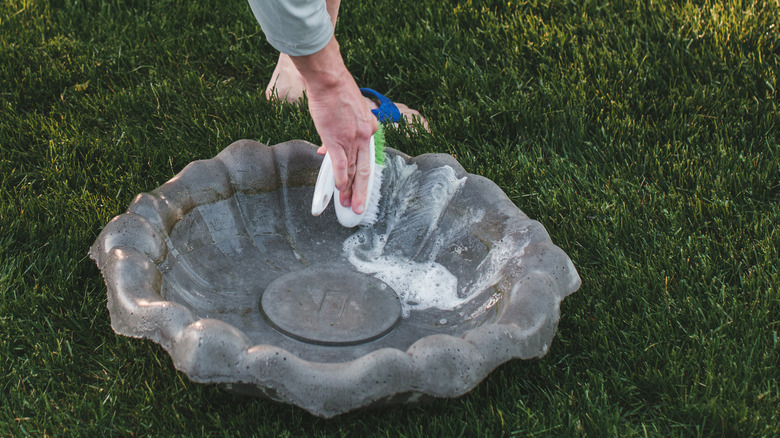
Choose a soft brush or sponge to scrub the basin. Avoid harsh tools that may scratch the surface. Scrubbing gently removes dirt without damaging the bird bath. Focus on all areas, including corners and edges. Rinse the brush or sponge often to remove debris.
Focus On Stubborn Stains
Some stains need extra attention. Use a paste made from baking soda and water to scrub tough spots. Let the paste sit for a few minutes before scrubbing. For hard algae, a diluted vinegar solution helps break it down. Rinse well after treating stains to remove residue.
Credit: www.housedigest.com
Disinfect The Bird Bath
Disinfecting your bird bath is key to keeping it safe and inviting for your feathered visitors. Regular cleaning prevents harmful bacteria and algae buildup that can make birds sick. Let’s look at simple ways to disinfect your bird bath effectively using common household items.
Use Vinegar Or Bleach Solution
Vinegar is a natural disinfectant that’s safe and gentle. Mix one part white vinegar with nine parts water. Pour this solution into the bird bath and scrub with a brush to remove dirt and algae.
If you prefer a stronger disinfectant, a bleach solution works well. Use one tablespoon of bleach per gallon of water. Let the solution sit in the bird bath for about 10 minutes, but never longer, to avoid damage.
Remember to wear gloves when handling bleach and never mix bleach with vinegar or other cleaners. These simple solutions kill germs without harsh chemicals that could harm birds.
Rinse Thoroughly
After disinfecting, rinsing is crucial. Rinse the bird bath multiple times with clean water to remove all traces of vinegar or bleach. Any leftover residue can be harmful to birds drinking or bathing.
Take your time here—imagine how you’d feel drinking from a cup that still tastes like bleach. Use a hose or buckets of fresh water to ensure every surface is clean and safe.
Have you ever skipped rinsing and noticed a drop in bird visitors? Proper rinsing helps keep your bird bath a welcoming spot for birds day after day.
Refill With Fresh Water
Refilling your bird bath with fresh water is key for keeping birds healthy and happy. Clean water encourages birds to visit often. It also prevents germs and algae from growing. Regularly replacing old water keeps the bath inviting and safe.
Choose Clean Water
Use water free from chemicals and dirt. Tap water is usually fine but let it sit for a few hours to lose chlorine. Rainwater is excellent if collected safely. Avoid using water that smells or looks cloudy. Clean water helps prevent diseases in birds.
Maintain Water Level
Keep the water shallow, about 1 to 2 inches deep. This depth is safe and easy for birds to drink and bathe. Check the water level daily, especially in hot weather. Refill as needed to keep it fresh and full. A steady water level stops mosquitoes from breeding.

Credit: www.youtube.com
Regular Maintenance Tips
Keeping a bird bath clean is crucial for the health of visiting birds. Regular maintenance ensures a fresh water supply and prevents harmful bacteria. Clean bird baths attract more wildlife to your garden. Let’s explore some simple maintenance tips.
Frequency Of Cleaning
Bird baths need regular cleaning to stay inviting. Clean them at least once a week. If many birds visit, consider cleaning every few days. Regular cleaning removes dirt, algae, and droppings. This prevents disease and keeps water fresh.
Prevent Algae Growth
Algae can make bird baths unsightly and unhealthy. To prevent algae, place the bath in a shaded area. Sunlight promotes algae growth. Change the water often to discourage algae. Scrub the basin with a brush and water to remove algae. Avoid using harsh chemicals. They can harm birds. Baking soda or vinegar are safe cleaning options.
Frequently Asked Questions
How Often Should I Clean My Bird Bath?
Clean your bird bath weekly to prevent algae and bacteria buildup. Frequent cleaning keeps the water fresh and safe for birds.
What Is The Best Cleaning Solution For Bird Baths?
Use a mixture of one part white vinegar to nine parts water. It effectively removes dirt and kills harmful bacteria without harming birds.
Can I Use Bleach To Clean A Bird Bath?
Yes, but dilute bleach properly (one tablespoon per gallon). Rinse thoroughly to remove all residue before refilling to keep birds safe.
How Do I Prevent Algae Growth In Bird Baths?
Place the bird bath in a shaded area and clean it regularly. Changing the water frequently also reduces algae and keeps birds healthy.
Conclusion
Cleaning a bird bath keeps birds healthy and happy. Regular cleaning stops dirt and algae from growing. Use mild soap and warm water for best results. Rinse well to remove all soap traces. Clean at least once a week, especially in hot weather.
A clean bird bath attracts more birds to your garden. Enjoy watching birds drink and bathe safely every day. Simple care makes a big difference for your feathered friends. Keep the water fresh and clear for a lively bird bath.




