
Have you ever noticed how people with similar interests and habits naturally come together? This idea is captured perfectly in the phrase “Birds of a feather flock together.”
But what does it really mean, and why does it matter to you? Understanding this simple saying can reveal a lot about how you choose your friends, work with others, and even make important decisions. Keep reading to discover how this timeless truth shapes your life and how you can use it to your advantage.
Origin Of The Phrase
The phrase “Birds of a Feather Flock Together” is a popular saying. It means people with similar interests or traits tend to group together. This idea has been around for centuries. Its origin reveals much about human nature and social behavior.
Early Uses In Literature
The phrase dates back to the 16th century. It first appeared in English writings during the 1500s. Writers used it to describe natural behavior in animals. Over time, it became a metaphor for human relationships.
Connection To Nature
People noticed birds of the same kind often fly in groups. This natural observation inspired the phrase. It reflects how living beings prefer familiar company. The phrase captures this instinctive behavior clearly.
Evolution Of Meaning
Originally, the phrase focused on birds only. Later, it expanded to describe human social patterns. It highlights how people seek comfort among like-minded individuals. The saying remains relevant in modern society.
Literal Meaning
The phrase “Birds of a feather flock together”literally describes how birds of the same species tend to group and fly together. This behavior helps them stay safe, find food, and navigate during migration. It’s a simple observation from nature that captures the natural tendency of similar beings to stick close.
Imagine watching a flock of sparrows darting in sync across the sky. Their uniform movement isn’t random; it’s a protective and social strategy. This literal meaning reflects how birds rely on each other for survival by gathering with their own kind.
Why Birds Group Together
Birds flock to:
- Increase safety:A larger group means fewer chances of being caught by predators.
- Share information:They communicate about food sources or dangers.
- Help with navigation:Especially during long migrations, staying together keeps them on the right path.
Have you noticed how even in your daily life, you naturally gravitate towards people who share your interests or values? The literal meaning of this phrase highlights that this is not just a human habit but a deep-rooted instinct in the animal kingdom too.
How The Literal Meaning Connects To Us
Seeing birds flock together invites you to reflect on your own social circles. Just like birds, you might find comfort and strength when you surround yourself with people who understand and support you. This behavior isn’t just about similarity; it’s about creating a sense of belonging and security.
Next time you feel drawn to a particular group or community, ask yourself what qualities or values are pulling you in. Is it shared passion, goals, or simply the comfort of familiarity? The literal meaning of this phrase can help you understand why those connections feel natural and important.
Figurative Interpretation
The phrase “Birds of a Feather Flock Together” is more than just a simple observation about nature. Its figurative meaning offers deep insight into human behavior and social dynamics. Understanding this can help you become more aware of the company you keep and how it shapes your life.
How Shared Interests Shape Relationships
You naturally gravitate toward people who share your values, hobbies, or goals. This creates a sense of belonging and comfort. Think about your closest friends—chances are, you bonded over common interests or similar outlooks.
Have you noticed how your mood often reflects the people around you? That’s because shared interests build strong emotional connections. It’s easier to communicate and support each other when you’re on the same wavelength.
Impact On Personal Growth And Mindset
Your social circle can either push you forward or hold you back. Surrounding yourself with motivated and positive people often inspires you to improve. On the other hand, negative influences can drain your energy and limit your potential.
Ask yourself: Do the people you spend time with challenge you to be better? The company you keep has a direct effect on your habits, attitudes, and even your success.
Recognizing And Choosing Your Flock
Being mindful of who you connect with helps you build a supportive and enriching network. Sometimes, you might outgrow certain groups as your goals and values evolve. That’s a natural part of personal development.
Consider evaluating your current relationships. Are they helping you become the person you want to be? Taking control of your social environment can lead to more fulfilling and meaningful connections.

Credit: www.cornwallseawaynews.com
Psychological Insights
Understanding why people tend to group with similar others reveals deep psychological reasons. These insights explain how individuals form bonds and maintain social connections. The idea of “birds of a feather flock together” is rooted in how our minds work and how social groups operate.
Social Identity Theory
People define themselves by the groups they belong to. This creates a sense of belonging and self-worth. Group membership shapes how people see themselves and others. Shared traits and values make group members feel connected. This connection strengthens loyalty and trust within the group.
Group Dynamics
Groups influence how members behave and think. Similar people tend to form groups naturally. These groups create norms and rules that guide behavior. Cooperation and support increase within these groups. Groups also offer safety and reduce social anxiety. This makes people prefer groups with like-minded individuals.
Cognitive Biases
Our brains favor information that supports existing beliefs. This is known as confirmation bias. People seek others who share their views to avoid conflict. Similarity helps reduce uncertainty and makes communication easier. This bias strengthens the tendency to stick with similar others. It creates comfort and predictability in social interactions.
Examples In Everyday Life
Birds of a Feather Flock Together is a saying many know. It means people with similar traits or interests often gather. This idea shows up in our daily lives. From friendships to hobbies, people connect based on commonalities. Let’s explore how this happens in different areas.
Friendship Circles
Friends often share similar personalities. They enjoy the same activities or values. In school, students bond over shared likes like music or sports. At parties, people with similar tastes in movies or books find each other. These shared interests form strong bonds.
Workplace Relationships
At work, colleagues often group by similar work ethics or goals. Those who value teamwork may gather for projects. Employees who enjoy innovation might form teams to brainstorm new ideas. This creates a supportive and productive environment. It leads to better collaboration and understanding.
Hobbies And Interests
Hobbies bring people together. Birdwatchers often meet to observe birds. Book lovers join clubs to discuss their favorite reads. Even in sports, fans gather to cheer for their team. These groups form because of shared passions. They create a sense of belonging and community.
Cultural Variations
Understanding the phrase “Birds of a feather flock together” requires looking at how different cultures interpret and live this idea. Social bonds and friendships don’t form the same way everywhere. Cultural backgrounds deeply influence who we choose to connect with and why.
Cultural Differences In Social Grouping
In many Western cultures, people often choose friends based on shared interests or hobbies. This approach supports individuality and personal freedom. You might notice that your friends have very different family backgrounds or beliefs, but you connect over common activities.
On the other hand, some Eastern cultures emphasize family ties and community roles when forming social groups. Here, similarities in background, values, or social status weigh more heavily. This creates tight-knit groups where everyone shares common goals and traditions.
How Language Shapes Connection
Language plays a huge role in how you identify your “flock.” If you speak the same dialect or share slang, you instantly feel closer. This can be seen in immigrant communities where speaking the native language helps maintain cultural bonds.
Think about how you feel more comfortable around people who understand your jokes or expressions. That comfort is a powerful force in keeping people together.
Impact Of Urban Vs. Rural Settings
In urban areas, diversity is common, so “birds” often flock based on interests or professions rather than background. You might work with people from all over the world and still form strong friendships.
In rural settings, shared history and family lineage often define social groups. Here, your “flock” might be your neighbors or relatives who have lived nearby for generations.
Question To Reflect On
Have you ever found yourself drawn to people completely different from you, or do you mostly stick with those who share your background? Why do you think that is?
Benefits Of Similarity In Groups
Groups with similar members often enjoy many benefits. People tend to feel more comfortable and understood. Sharing common interests or backgrounds helps build trust quickly. This similarity can make communication easier and clearer. It creates a natural bond that strengthens group unity.
When people share values or goals, they work better together. Conflicts reduce because members think alike. The group can focus on tasks without distractions. Similarity also encourages support and cooperation. Members feel safe to express themselves openly.
Enhanced Communication And Understanding
Similar groups speak a common language, literally or figuratively. They use shared terms and ideas that others might not get. This leads to fewer misunderstandings and clearer messages. People listen more carefully to those who think like them. It makes group discussions smoother and more productive.
Stronger Trust And Cooperation
Trust grows faster among similar individuals. When people share experiences or beliefs, they assume good intentions. This trust helps members rely on each other. Cooperation increases because everyone works toward shared goals. The group becomes more effective and cohesive over time.
Increased Motivation And Engagement
Groups with similar interests boost motivation. Members feel excited to contribute and participate. They encourage each other and celebrate small wins. This positive energy keeps the group active and focused. People stay committed because they feel they belong.
Reduced Conflict And Stress
Similarity lowers the chance of arguments. When views align, fewer disagreements happen. This creates a peaceful and friendly atmosphere. Members spend less time resolving conflicts and more time working. Stress decreases, making the group a happy place to be.
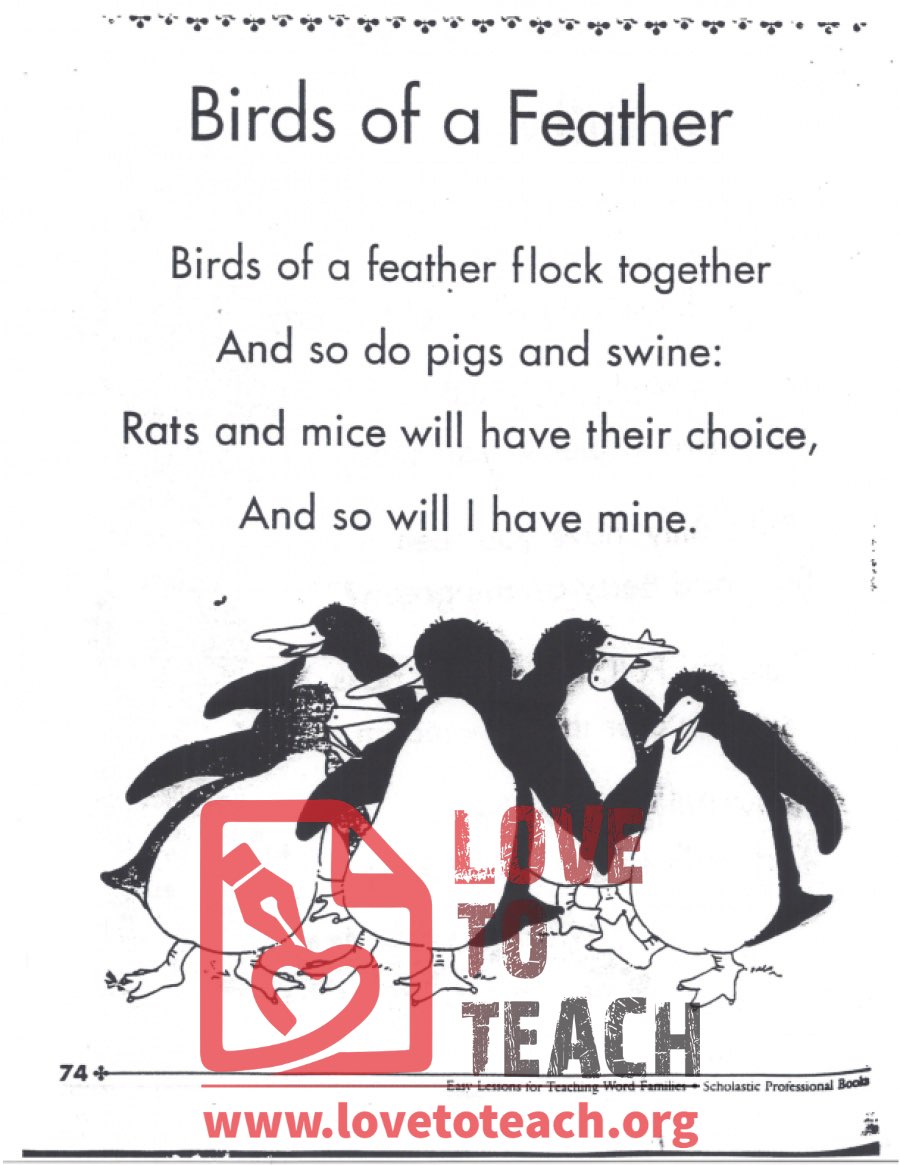
Credit: www.lovetoteach.org
Potential Drawbacks
While the phrase “Birds of a Feather Flock Together” suggests comfort, it also has drawbacks. Sticking to like-minded groups may lead to negative outcomes. Let’s explore these potential pitfalls.
Echo Chambers
Echo chambers limit exposure to different ideas. People hear only what they agree with. This reinforces their beliefs without challenge. It creates a bubble of sameness. Discussions become repetitive. There’s no room for growth or learning.
Limited Perspectives
Relying on similar minds restricts viewpoints. Diverse opinions broaden understanding. Without them, thinking becomes narrow. It limits creativity and innovation. New solutions arise from different ideas. A lack of varied perspectives stifles progress.
Encouraging Diversity
Diversity often challenges the natural tendency of “birds of a feather flock together.” Encouraging diversity means opening your circle to people who think, act, and live differently. This can create richer experiences, broader perspectives, and unexpected opportunities.
Understanding The Value Of Different Perspectives
When you surround yourself with similar people, you may miss out on new ideas. Different backgrounds bring fresh solutions to old problems. Have you ever noticed how a simple change in viewpoint can spark creativity?
Try to listen actively to opinions that differ from yours. This practice can expand your thinking and improve decision-making. It’s not about agreement but about learning and growth.
Building Inclusive Spaces
Creating an environment where everyone feels welcome is key. This means respecting differences and ensuring everyone has a voice. How often do you check if your group includes diverse thoughts and experiences?
Simple actions like inviting quieter voices to speak or sharing tasks evenly can make a big difference. Inclusive spaces encourage participation and build stronger connections.
Challenging Your Own Comfort Zone
It’s natural to stick with familiar people, but pushing beyond that can be rewarding. Meeting someone with a different lifestyle or viewpoint might feel uncomfortable at first. What if that discomfort leads to new friendships or ideas?
Try attending events or joining groups outside your usual interests. You may find unexpected common ground and enrich your personal and professional life.
Practical Ways To Encourage Diversity
- Invite a colleague from a different department to lunch.
- Join clubs or online communities outside your usual circles.
- Read books or watch films from diverse cultures.
- Ask questions to understand others’ experiences better.
- Reflect on your own biases and be open to change.
Encouraging diversity is not about forcing change but about choosing growth. How will you step beyond your flock today?

Credit: stock.adobe.com
Frequently Asked Questions
What Does “birds Of A Feather Flock Together” Mean?
This phrase means people with similar interests or characteristics tend to group together. It highlights natural social bonding based on shared traits or values.
Why Do Similar People Prefer To Stay Together?
People feel comfortable and understood among those who share their interests and values. This creates stronger social bonds and mutual support.
How Does This Phrase Apply In Real Life?
In daily life, people form friendships, teams, or communities with like-minded individuals. It helps in collaboration and emotional connection.
Is “birds Of A Feather” A Scientific Concept?
While mainly a proverb, it aligns with social psychology. Humans naturally seek others who reflect their identity and beliefs.
Conclusion
People often choose friends who share similar interests and values. This saying shows how we naturally group with like-minded individuals. Being around those who think alike brings comfort and support. It also helps us grow by sharing ideas and experiences.
Understanding this can improve how we connect with others. Remember, your circle reflects who you are. Choose wisely and enjoy the company that lifts you up. Birds of a feather truly flock together.




